Thank you for visiting SNEWPapers!
Sign up free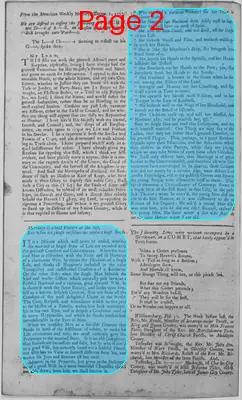
Literary
February 10, 1738
The Virginia Gazette
Richmond, Williamsburg, Richmond County, Virginia
What is this article about?
An essay debating whether married or single life offers greater comforts, favoring marriage as a source of faithful companionship. It quotes Proverbs on the virtuous wife and notes ancient Spartan incentives for marriage.
Clipping
OCR Quality
95%
Excellent
Full Text
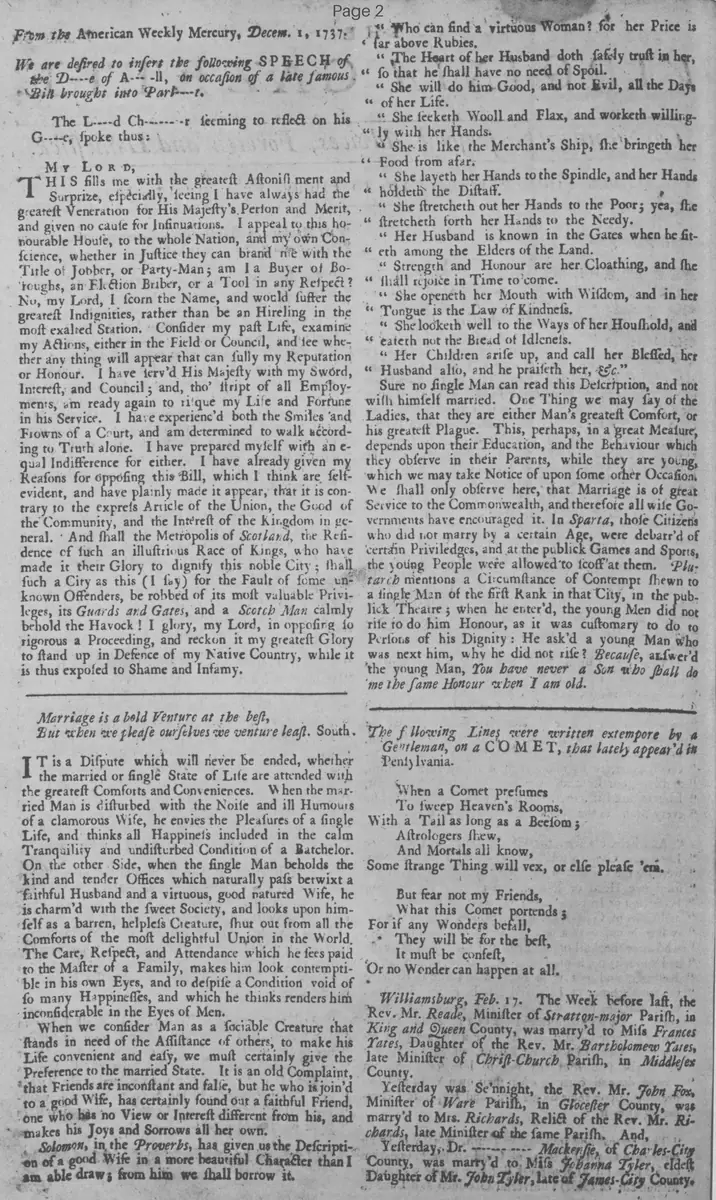
Marriage is a bold Venture at the best,
But when we please ourselves we venture least. South.
It is a Dispute which will never be ended, whether the married or single State of Life are attended with the greatest Comforts and Conveniences. When the married Man is disturbed with the Noise and ill Humours of a clamorous Wife, he envies the Pleasures of a single Life, and thinks all Happiness included in the calm Tranquility and undisturbed Condition of a Batchelor. On the other Side, when the single Man beholds the kind and tender Offices which naturally pass betwixt a faithful Husband and a virtuous, good natured Wife, he is charm'd with the sweet Society, and looks upon himself as a barren, helpless Creature, shut out from all the Comforts of the most delightful Union in the World. The Care, Repose, and Attendance which he sees paid to the Master of a Family, makes him look contemptible in his own Eyes, and to despise a Condition void of so many Happinesses, and which he thinks renders him inconsiderable in the Eyes of Men.
When we consider Man as a sociable Creature that stands in need of the Assistance of others, to make his Life convenient and easy, we must certainly give the Preference to the married State. It is an old Complaint, that Friends are inconstant and false, but he who is join'd to a good Wife, has certainly found out a faithful Friend, one who has no View or Interest different from his, and makes his Joys and Sorrows all her own.
Solomon, in the Proverbs, has given us the Description of a good Wife in a more beautiful Character than I am able draw; from him we shall borrow it.
Who can find a virtuous Woman? for her Price is far above Rubies.
The Heart of her Husband doth safely trust in her, so that he shall have no need of Spoil.
She will do him Good, and not Evil, all the Days of her Life.
She seeketh Wooll and Flax, and worketh willingly with her Hands.
She is like the Merchants Ship, she bringeth her Food from afar.
She layeth her Hands to the Spindle, and her Hands holdeth the Distaff.
She stretcheth out her Hands to the Poor; yea, she stretcheth forth her Hands to the Needy.
Her Husband is known in the Gates when he sitteth among the Elders of the Land.
Strength and Honour are her Cloathing, and she shall rejoice in Time to come.
She openeth her Mouth with Wisdom, and in her Tongue is the Law of Kindness.
She looketh well to the Ways of her Household, and eateth not the Bread of Idleness.
Her Children arise up, and call her Blessed, her Husband also, and he praiseth her, &c.
Sure no single Man can read this Description, and not wish himself married. One Thing we may say of the Ladies, that they are either Man's greatest Comfort, or his greatest Plague. This, perhaps, in a great Measure, depends upon their Education, and the Behaviour which they observe in their Parents, while they are young, which we may take Notice of upon some other Occasion. We shall only observe here, that Marriage is of great Service to the Commonwealth, and therefore all wise Governments have encouraged it. In Sparta, those Citizens who did not marry by a certain Age, were debarr'd of certain Privileges, and at the publick Games and Sports, the young People were allowed to scoff at them. Plutarch mentions a Circumstance of Contempt shewn to a single Man of the first Rank in that City, in the publick Theatre; when he enter'd, the young Men did not rise to do him Honour, as it was customary to do to Persons of his Dignity: He ask'd a young Man who was next him, why he did not rise? Because, answer'd the young Man, You have never a Son who shall do me the Same Honour when I am old.
But when we please ourselves we venture least. South.
It is a Dispute which will never be ended, whether the married or single State of Life are attended with the greatest Comforts and Conveniences. When the married Man is disturbed with the Noise and ill Humours of a clamorous Wife, he envies the Pleasures of a single Life, and thinks all Happiness included in the calm Tranquility and undisturbed Condition of a Batchelor. On the other Side, when the single Man beholds the kind and tender Offices which naturally pass betwixt a faithful Husband and a virtuous, good natured Wife, he is charm'd with the sweet Society, and looks upon himself as a barren, helpless Creature, shut out from all the Comforts of the most delightful Union in the World. The Care, Repose, and Attendance which he sees paid to the Master of a Family, makes him look contemptible in his own Eyes, and to despise a Condition void of so many Happinesses, and which he thinks renders him inconsiderable in the Eyes of Men.
When we consider Man as a sociable Creature that stands in need of the Assistance of others, to make his Life convenient and easy, we must certainly give the Preference to the married State. It is an old Complaint, that Friends are inconstant and false, but he who is join'd to a good Wife, has certainly found out a faithful Friend, one who has no View or Interest different from his, and makes his Joys and Sorrows all her own.
Solomon, in the Proverbs, has given us the Description of a good Wife in a more beautiful Character than I am able draw; from him we shall borrow it.
Who can find a virtuous Woman? for her Price is far above Rubies.
The Heart of her Husband doth safely trust in her, so that he shall have no need of Spoil.
She will do him Good, and not Evil, all the Days of her Life.
She seeketh Wooll and Flax, and worketh willingly with her Hands.
She is like the Merchants Ship, she bringeth her Food from afar.
She layeth her Hands to the Spindle, and her Hands holdeth the Distaff.
She stretcheth out her Hands to the Poor; yea, she stretcheth forth her Hands to the Needy.
Her Husband is known in the Gates when he sitteth among the Elders of the Land.
Strength and Honour are her Cloathing, and she shall rejoice in Time to come.
She openeth her Mouth with Wisdom, and in her Tongue is the Law of Kindness.
She looketh well to the Ways of her Household, and eateth not the Bread of Idleness.
Her Children arise up, and call her Blessed, her Husband also, and he praiseth her, &c.
Sure no single Man can read this Description, and not wish himself married. One Thing we may say of the Ladies, that they are either Man's greatest Comfort, or his greatest Plague. This, perhaps, in a great Measure, depends upon their Education, and the Behaviour which they observe in their Parents, while they are young, which we may take Notice of upon some other Occasion. We shall only observe here, that Marriage is of great Service to the Commonwealth, and therefore all wise Governments have encouraged it. In Sparta, those Citizens who did not marry by a certain Age, were debarr'd of certain Privileges, and at the publick Games and Sports, the young People were allowed to scoff at them. Plutarch mentions a Circumstance of Contempt shewn to a single Man of the first Rank in that City, in the publick Theatre; when he enter'd, the young Men did not rise to do him Honour, as it was customary to do to Persons of his Dignity: He ask'd a young Man who was next him, why he did not rise? Because, answer'd the young Man, You have never a Son who shall do me the Same Honour when I am old.
What sub-type of article is it?
Essay
What themes does it cover?
Moral Virtue
Social Manners
What keywords are associated?
Marriage
Single Life
Virtuous Wife
Proverbs
Sparta
Commonwealth
Literary Details
Subject
On The Comforts Of Married Versus Single Life
Key Lines
Marriage Is A Bold Venture At The Best, But When We Please Ourselves We Venture Least. South.
Who Can Find A Virtuous Woman? For Her Price Is Far Above Rubies.
She Will Do Him Good, And Not Evil, All The Days Of Her Life.
In Sparta, Those Citizens Who Did Not Marry By A Certain Age, Were Debarr'd Of Certain Privileges...
Because, Answer'd The Young Man, You Have Never A Son Who Shall Do Me The Same Honour When I Am Old.