Thank you for visiting SNEWPapers!
Sign up free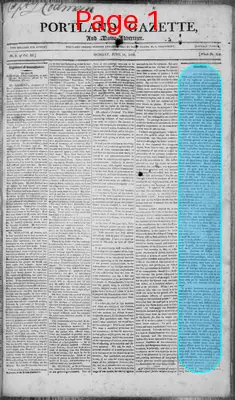
Story
June 13, 1808
Portland Gazette, And Maine Advertiser
Portland, Cumberland County, Maine
What is this article about?
Opinion piece from the North American criticizing the U.S. policy of easy naturalization for foreigners, arguing it allows undue political influence, inflames divisions, and displaces native citizens, while acknowledging honest immigrants.
Clipping

OCR Quality
96%
Excellent
Full Text
Miscellany.
From the North American,
THE easy admission of FOREIGNERS to all the rights of citizenship has long been a theme of animadversion. History shews the civil consequences of such a principle, wherever it has prevailed, and the wisest men of all ages and countries have pointed out its impolicy. The framers of our constitution, however, thought proper to leave the regulation of this important subject entirely to Congress. They no doubt thought a wide extent of country, thinly populated, required some encouragement to emigration, and that they might safely rely on the wisdom of future legislatures, to correct the evils, which thereby might be introduced. Venerating, as I do, the authors of our excellent constitution, I cannot but consider the subject in this light with regard to them, however different my humble opinion of the policy they adopted, might otherwise have been. But the time has long since arrived, when legislative interference became necessary, and its expediency could be justified on the strongest grounds. The evils, foretold in the impressive voice of experience, have assumed a form and substance. Native citizens have been made, without regard to merit, to give way to foreigners, whose certificates of naturalization were scarcely dry from the impression of the ink. Not content with that protection in their liberty, their persons and their property, which is guaranteed to them by the laws of the land, they thirst after influence and authority as well in military as in civil matters--in city and state. They would conduct our press, and preside in our courts of justice--they undertake to correct our politics, and to give us lessons on the art of government, without any knowledge of the one, or experience in the other. At the same time, their arts are industriously, and too successfully employed to inflame party zeal into animosity, and to keep alive the fire of discord among brethren. This, it will not be denied, is no exaggerated description; every candid observer must allow it to be true: while it must be confessed, and I acknowledge it with pleasure, that many citizens of foreign birth rank among the most honest, the most industrious, and most respectable people in the nation. Content to follow their peaceful vocations, and in the enjoyment of those privileges, which their turbulent brethren would not be satisfied with alone, they have nothing further to desire. The better objects of foreign nations are not induced to emigrate by the hope of office and authority, or the wish to intermeddle in politics, and those persons who are so induced, it is not likely, will ever become useful citizens. It is not, however to portray the restlessness, the turbulence, and the ambition of a great portion of our naturalized citizens, that I address myself to the press; their conduct, one would think, was sufficiently notorious to render that task unnecessary. They are not the object of my reprehension or hope--they act the part which the observer of human life would naturally expect. Impelled by discontent or want, they embark for our shores, through love of change, or for subsistence. Warmed by the sunshine of greater liberty; encouraged by that equality of condition which exists to so great a degree in no other country, and by political contention among ourselves--they no sooner land, than they take a violent part in the contest of party. To be noisy and persevering, they find, is to be successful; and as they left their own country in disgust and hatred, they profess a proportionately vehement regard for the land of their adoption; but as they never could have felt any for their own, I hold it impossible they can truly feel any for this.
From the North American,
THE easy admission of FOREIGNERS to all the rights of citizenship has long been a theme of animadversion. History shews the civil consequences of such a principle, wherever it has prevailed, and the wisest men of all ages and countries have pointed out its impolicy. The framers of our constitution, however, thought proper to leave the regulation of this important subject entirely to Congress. They no doubt thought a wide extent of country, thinly populated, required some encouragement to emigration, and that they might safely rely on the wisdom of future legislatures, to correct the evils, which thereby might be introduced. Venerating, as I do, the authors of our excellent constitution, I cannot but consider the subject in this light with regard to them, however different my humble opinion of the policy they adopted, might otherwise have been. But the time has long since arrived, when legislative interference became necessary, and its expediency could be justified on the strongest grounds. The evils, foretold in the impressive voice of experience, have assumed a form and substance. Native citizens have been made, without regard to merit, to give way to foreigners, whose certificates of naturalization were scarcely dry from the impression of the ink. Not content with that protection in their liberty, their persons and their property, which is guaranteed to them by the laws of the land, they thirst after influence and authority as well in military as in civil matters--in city and state. They would conduct our press, and preside in our courts of justice--they undertake to correct our politics, and to give us lessons on the art of government, without any knowledge of the one, or experience in the other. At the same time, their arts are industriously, and too successfully employed to inflame party zeal into animosity, and to keep alive the fire of discord among brethren. This, it will not be denied, is no exaggerated description; every candid observer must allow it to be true: while it must be confessed, and I acknowledge it with pleasure, that many citizens of foreign birth rank among the most honest, the most industrious, and most respectable people in the nation. Content to follow their peaceful vocations, and in the enjoyment of those privileges, which their turbulent brethren would not be satisfied with alone, they have nothing further to desire. The better objects of foreign nations are not induced to emigrate by the hope of office and authority, or the wish to intermeddle in politics, and those persons who are so induced, it is not likely, will ever become useful citizens. It is not, however to portray the restlessness, the turbulence, and the ambition of a great portion of our naturalized citizens, that I address myself to the press; their conduct, one would think, was sufficiently notorious to render that task unnecessary. They are not the object of my reprehension or hope--they act the part which the observer of human life would naturally expect. Impelled by discontent or want, they embark for our shores, through love of change, or for subsistence. Warmed by the sunshine of greater liberty; encouraged by that equality of condition which exists to so great a degree in no other country, and by political contention among ourselves--they no sooner land, than they take a violent part in the contest of party. To be noisy and persevering, they find, is to be successful; and as they left their own country in disgust and hatred, they profess a proportionately vehement regard for the land of their adoption; but as they never could have felt any for their own, I hold it impossible they can truly feel any for this.
What sub-type of article is it?
Political Commentary
Editorial Opinion
What themes does it cover?
Social Manners
Justice
What keywords are associated?
Immigration Policy
Naturalization
Foreigners
Citizenship Rights
Political Influence
Party Zeal
Story Details
Story Details
Critique of U.S. naturalization policy allowing foreigners quick access to citizenship rights, leading to their undue influence in politics, military, and society, displacing natives and inflaming divisions, while praising peaceful immigrants.