Thank you for visiting SNEWPapers!
Sign up free
Literary
February 1, 1787
The New York Journal, And Weekly Register
New York, New York County, New York
What is this article about?
An essay critiquing excessive romantic love driven by physical beauty, advocating instead for valuing women's inner qualities like disposition, mind, and heart, which endure beyond fleeting appearances.
Clipping
OCR Quality
98%
Excellent
Full Text
ROMANCE.
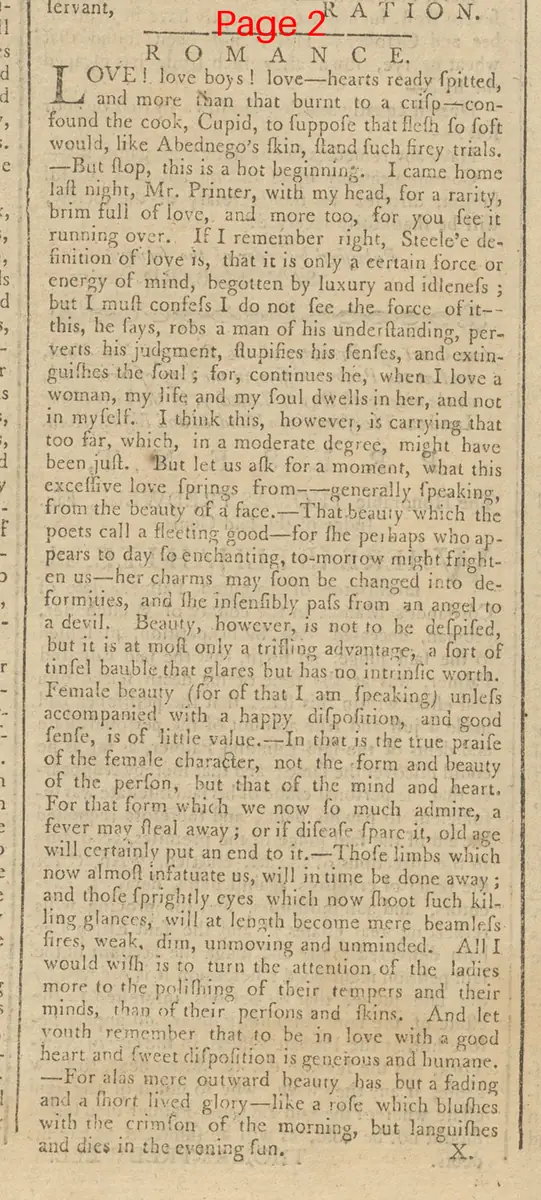
LOVE! love boys! love—hearts ready pitted and more than that burnt to a crisp—confound the cook, Cupid, to suppose that flesh so oft would, like Abednego's skin, stand such fiery trials.—But stop, this is a hot beginning. I came home last night, Mr. Printer, with my head, for a rarity, brim full of love, and more too, for you see it running over. If I remember right, Steele's definition of love is, that it is only a certain force or energy of mind, begotten by luxury and idleness; but I must confess I do not see the force of it—this, he says, robs a man of his understanding, perverts his judgment, stupifies his senses, and extinguishes the soul; for, continues he, when I love a woman, my life and my soul dwells in her, and not in myself. I think this, however, is carrying that too far, which, in a moderate degree, might have been just. But let us ask for a moment, what this excessive love springs from—generally speaking, from the beauty of a face.—That beauty which the poets call a fleeting good—for she perhaps who appears to day so enchanting, to-morrow might frighten us—her charms may soon be changed into deformities, and she insensibly pass from an angel to a devil. Beauty, however, is not to be despised, but it is at most only a trifling advantage, a sort of tinsel bauble that glares but has no intrinsic worth. Female beauty (or of that I am speaking) unless accompanied with a happy disposition, and good sense, is of little value.—In that is the true praise of the female character, not the form and beauty of the person, but that of the mind and heart.
For that form which we now so much admire, a fever may steal away; or if disease spare it, old age will certainly put an end to it.—Those limbs which now almost infatuate us, will in time be done away; and those sprightly eyes which now shoot such killing glances, will at length become mere beamless fires, weak, dim, unmoving and unminded. All I would wish is to turn the attention of the ladies more to the polishing of their tempers and their minds, than of their persons and skins. And let youth remember that to be in love with a good heart and sweet disposition is generous and humane.
—For alas mere outward beauty has but a fading and a short lived glory—like a rose which blushes with the crimson of the morning, but languishes and dies in the evening sun.
X.
LOVE! love boys! love—hearts ready pitted and more than that burnt to a crisp—confound the cook, Cupid, to suppose that flesh so oft would, like Abednego's skin, stand such fiery trials.—But stop, this is a hot beginning. I came home last night, Mr. Printer, with my head, for a rarity, brim full of love, and more too, for you see it running over. If I remember right, Steele's definition of love is, that it is only a certain force or energy of mind, begotten by luxury and idleness; but I must confess I do not see the force of it—this, he says, robs a man of his understanding, perverts his judgment, stupifies his senses, and extinguishes the soul; for, continues he, when I love a woman, my life and my soul dwells in her, and not in myself. I think this, however, is carrying that too far, which, in a moderate degree, might have been just. But let us ask for a moment, what this excessive love springs from—generally speaking, from the beauty of a face.—That beauty which the poets call a fleeting good—for she perhaps who appears to day so enchanting, to-morrow might frighten us—her charms may soon be changed into deformities, and she insensibly pass from an angel to a devil. Beauty, however, is not to be despised, but it is at most only a trifling advantage, a sort of tinsel bauble that glares but has no intrinsic worth. Female beauty (or of that I am speaking) unless accompanied with a happy disposition, and good sense, is of little value.—In that is the true praise of the female character, not the form and beauty of the person, but that of the mind and heart.
For that form which we now so much admire, a fever may steal away; or if disease spare it, old age will certainly put an end to it.—Those limbs which now almost infatuate us, will in time be done away; and those sprightly eyes which now shoot such killing glances, will at length become mere beamless fires, weak, dim, unmoving and unminded. All I would wish is to turn the attention of the ladies more to the polishing of their tempers and their minds, than of their persons and skins. And let youth remember that to be in love with a good heart and sweet disposition is generous and humane.
—For alas mere outward beauty has but a fading and a short lived glory—like a rose which blushes with the crimson of the morning, but languishes and dies in the evening sun.
X.
What sub-type of article is it?
Essay
What themes does it cover?
Love Romance
Moral Virtue
What keywords are associated?
Love
Beauty
Disposition
Female Character
Moral Reflection
Fleeting Charm
Inner Virtue
What entities or persons were involved?
X.
Literary Details
Title
Romance.
Author
X.
Subject
Reflections On Love, Beauty, And Female Character
Key Lines
Love! Love Boys! Love—Hearts Ready Pitted And More Than That Burnt To A Crisp—Confound The Cook, Cupid, To Suppose That Flesh So Oft Would, Like Abednego's Skin, Stand Such Fiery Trials.
Female Beauty (Or Of That I Am Speaking) Unless Accompanied With A Happy Disposition, And Good Sense, Is Of Little Value.—In That Is The True Praise Of The Female Character, Not The Form And Beauty Of The Person, But That Of The Mind And Heart.
—For Alas Mere Outward Beauty Has But A Fading And A Short Lived Glory—Like A Rose Which Blushes With The Crimson Of The Morning, But Languishes And Dies In The Evening Sun.