Thank you for visiting SNEWPapers!
Sign up free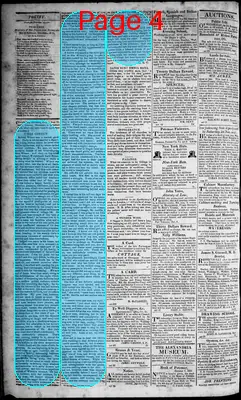
Literary
October 26, 1822
Alexandria Gazette & Advertiser
Alexandria, Virginia
What is this article about?
Robert Wilson, a devoted market gardener, faces poverty due to taxes and declining business, leading him to rob. Convicted and sentenced to death, he dies of grief in prison after his young daughter sings to him, evoking lost happiness. His wife dies shortly after his arrest.
Clipping
OCR Quality
95%
Excellent
Full Text
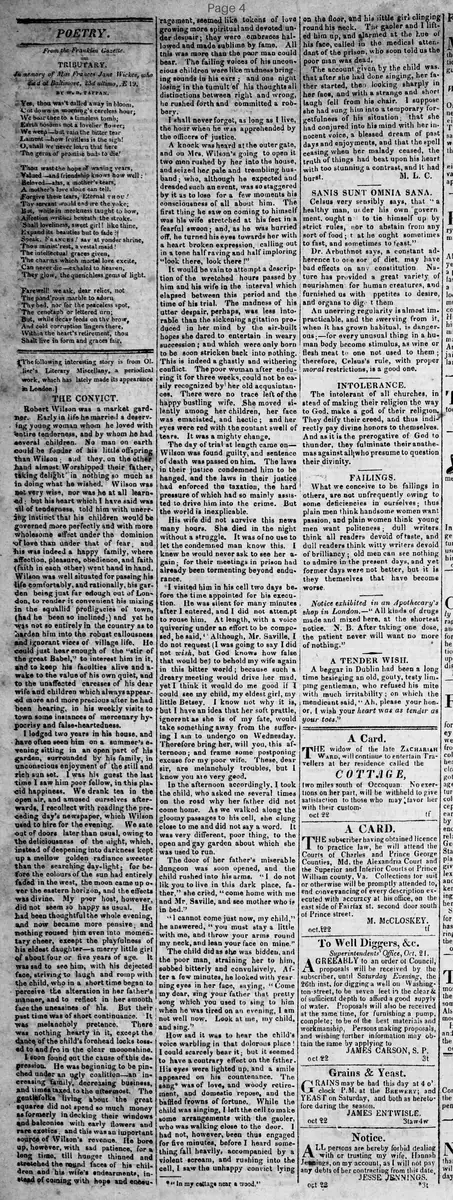
The following interesting story is from Ol. Jier's Literary Miscellany, a periodical work, which has lately made its appearance in London.
THE CONVICT.
Robert Wilson was a market gardener. Early in life he married a deserving young woman whom he loved with entire tenderness, and by whom he had several children. No man on earth could be fonder of his little offspring than Wilson: and they, on the other hand almost worshipped their father, taking delight in nothing so much as in doing what he wished. Wilson was not very wise, nor was he at all learned: but his heart which I have said was all of tenderness, told him with unerring instinct that his children would be governed more perfectly and with more wholesome effect under the dominion of love than under that of fear: and his was indeed a happy family, where affection, pleasure, obedience, and faith (faith in each other) went hand in hand.
Wilson was well situated for passing his life comfortably, and rationally, his garden being just far enough out of London, to render it convenient his mixing in the squalid profligacies of town, (had he been so inclined;) and yet he was not so entirely in the country as to harden him into the robust callousness and ignorant vices of village life. He could just hear enough of the "stir of the great Babel," to interest him in it, and to keep his faculties alive and awake to the value of his own quiet, and to the unaffected caresses of his dear wife and children which always appeared more and more precious after he had been hearing, in his weekly visits to town some instances of mercenary hypocrisy and false-heartedness.
I lodged two years in his house, and have often seen him on a summer's evening sitting in an open part of his garden, surrounded by his family, in unconscious enjoyment of the still and rich sun set. I was his guest the last time I saw him poor fellow, in this placid happiness. We drank tea in the open air, and amused ourselves afterwards, I recollect with reading the preceding day's newspaper, which Wilson used to hire for the evening. We sate out of doors later than usual, owing to the deliciousness of the night, which, instead of deepening into darkness kept up a mellow golden radiance sweeter than the searching day-light; for before the colours of the sun had entirely faded in the west, the moon came up over the eastern horizon, and the effect was divine. My poor host, however, did not seem so happy as usual. He had been thoughtful the whole evening, and now became more pensive: and nothing roused him even into momentary cheer, except the playfulness of his eldest daughter--a merry little girl of about four or five years of age. It was sad to see him, with his dejected face, striving to laugh and romp with the child, who in a short time began to perceive the alteration in her father's manner, and to reflect in her smooth face the uneasiness of his. But their past time was of short continuance. It was melancholy pretence. There was nothing hearty in it, except the dance of the child's forehead locks tossed to and fro in the clear moonlight.
I soon found out the cause of this depression. He was beginning to be pinched under an ugly coalition-an increasing family, decreasing business, and times taxed to the utmost. The gentlefolks living about the great squares did not spend so much money as formerly in decking their windows and balconies with early flowers and rare exotics: and this was an important source of Wilson's revenue. He bore up, however, with sad patience, for a long time, till hunger thinned and stretched the round faces of his children and his wife's endearments, instead of coming with hope and encouragement, seemed like tokens of love growing more spiritual and devoted under despair; they were embraces hallowed and made sublime by famine. All this was more than the poor man could bear. The failing voices of his unconscious children were like madness bringing sounds in his ears ; and one night losing in the tumult of his thoughts all distinctions between right and wrong, he rushed forth and committed a robbery.
I shall never forget, as long as I live, the hour when he was apprehended by the officers of justice.
A knock was heard at the outer gate, and on Mrs. Wilson's going to open it two men rushed by her into the house, and seized her pale and trembling husband; who, although he expected and dreaded such an event, was so staggered by it as to lose for a few moments his consciousness of all about him. The first thing he saw on coming to himself was his wife stretched at his feet in a fearful swoon: and, as he was hurried off, he turned his eyes towards her with a heart broken expression. calling out in a tone half raving and half imploring "look there, look there!"
It would be vain to attempt a description of the wretched hours passed by him and his wife in the interval which elapsed between this period and the time of his trial. The madness of his utter despair, perhaps, was less intolerable than the sickening agitation produced in her mind by the air-built hopes she dared to entertain in weary succession; and which were only born to be soon stricken back into nothing. This is indeed a ghastly and withering conflict. The poor woman after enduring it for three weeks, could not be easily recognized by her old acquaintances. There were no trace left of the happy bustling wife. She moved silently among her children, her face was emaciated, and hectic; and her eyes were red with the constant swell of tears. It was a mighty change.
The day of trial at length came on Wilson was found guilty, and sentence of death was passed on him. The laws in their justice condemned him to be hanged, and the laws in their justice had enforced the taxation, the hard pressure of which had so mainly assisted to drive him into the crime. But the world is inexplicable.
His wife did not survive this news many hours. She died in the night without a struggle. It was of no use to let the condemned man know this. I knew he would never ask to see her again: for their meetings in prison had already been tormenting beyond endurance.
I visited him in his cell two days before the time appointed for his execution. He was silent for many minutes after I entered, and I did not attempt to rouse him. At length, with a voice quivering under an effort to be composed. he said," Although, Mr. Saville, I do not request (I was going to say I did not wish, but God knows how false that would be) to behold my wife again in this bitter world; because such a dreary meeting would drive her mad, yet I think it would do me good if I could see my child, my eldest girl, my little Betsey. I know not why it is, but I have an idea that her soft prattle, ignorant as she is of my fate, would take something away from the suffering I am to undergo on Wednesday. Therefore bring her, will you, this afternoon; and frame some postponing excuse for my poor wife. These, dear sir, are melancholy troubles, but I know you are very good."
In the afternoon accordingly, I took the child, who asked me several times on the road why her father did not come home. As we walked along the gloomy passages to his cell, she clung close to me and did not say a word. It was very different, poor thing, to the open and gay garden about which she was used to run.
The door of her father's miserable dungeon was soon opened, and the child rushed into his arms. "I do not like you to live in this dark place, father." she cried, "come home with me and Mr. Saville, and see mother who is in bed."
"I cannot come just now, my child," he answered, " you must stay a little with me, and throw your arms round my neck, and lean your face on mine."
The child did as she was bidden, and the poor man, straining her to him, sobbed bitterly and convulsively. After a few minutes, he looked with yearning eyes in her face, saying, "Come my dear, sing your father that pretty song which you used to sing to him when he was tired on an evening, I am not well now. Look at me, my child, and sing."
How sad it was to hear the child's voice warbling in that dolorous place! I could scarcely bear it: but it seemed to have a contrary effect on the father. His eyes were lighted up, and a smile appeared on his countenance. The song was of love, and woody retirement, and domestic repose, and the baffled frowns of fortune. While the child was singing, I left the cell to make some arrangements with the gaoler, who was walking close to the door. I had not, however, been thus engaged for five minutes, before I heard something fall heavily, accompanied by a violent scream, and rushing into the cell, I saw the unhappy convict lying on the floor. and his little girl clinging round his neck. The gaoler and I lifted him up, and alarmed at the hue of his face called in the medical attendant of the prison, who soon told us the poor man was dead,
The account given by the child was. that after she had done singing, her father started, then looking sharply in her face, and with a strange and short laugh fell from his chair. I suppose she had sung him into a temporary forgetfulness of his situation; that she had conjured into his mind with her innocent voice, a blessed dream of past days and enjoyments, and that the spell ceasing when her melody ceased, the truth of things had beat upon his heart with too stunning a contrast, and it had burst.
M. L. C.
THE CONVICT.
Robert Wilson was a market gardener. Early in life he married a deserving young woman whom he loved with entire tenderness, and by whom he had several children. No man on earth could be fonder of his little offspring than Wilson: and they, on the other hand almost worshipped their father, taking delight in nothing so much as in doing what he wished. Wilson was not very wise, nor was he at all learned: but his heart which I have said was all of tenderness, told him with unerring instinct that his children would be governed more perfectly and with more wholesome effect under the dominion of love than under that of fear: and his was indeed a happy family, where affection, pleasure, obedience, and faith (faith in each other) went hand in hand.
Wilson was well situated for passing his life comfortably, and rationally, his garden being just far enough out of London, to render it convenient his mixing in the squalid profligacies of town, (had he been so inclined;) and yet he was not so entirely in the country as to harden him into the robust callousness and ignorant vices of village life. He could just hear enough of the "stir of the great Babel," to interest him in it, and to keep his faculties alive and awake to the value of his own quiet, and to the unaffected caresses of his dear wife and children which always appeared more and more precious after he had been hearing, in his weekly visits to town some instances of mercenary hypocrisy and false-heartedness.
I lodged two years in his house, and have often seen him on a summer's evening sitting in an open part of his garden, surrounded by his family, in unconscious enjoyment of the still and rich sun set. I was his guest the last time I saw him poor fellow, in this placid happiness. We drank tea in the open air, and amused ourselves afterwards, I recollect with reading the preceding day's newspaper, which Wilson used to hire for the evening. We sate out of doors later than usual, owing to the deliciousness of the night, which, instead of deepening into darkness kept up a mellow golden radiance sweeter than the searching day-light; for before the colours of the sun had entirely faded in the west, the moon came up over the eastern horizon, and the effect was divine. My poor host, however, did not seem so happy as usual. He had been thoughtful the whole evening, and now became more pensive: and nothing roused him even into momentary cheer, except the playfulness of his eldest daughter--a merry little girl of about four or five years of age. It was sad to see him, with his dejected face, striving to laugh and romp with the child, who in a short time began to perceive the alteration in her father's manner, and to reflect in her smooth face the uneasiness of his. But their past time was of short continuance. It was melancholy pretence. There was nothing hearty in it, except the dance of the child's forehead locks tossed to and fro in the clear moonlight.
I soon found out the cause of this depression. He was beginning to be pinched under an ugly coalition-an increasing family, decreasing business, and times taxed to the utmost. The gentlefolks living about the great squares did not spend so much money as formerly in decking their windows and balconies with early flowers and rare exotics: and this was an important source of Wilson's revenue. He bore up, however, with sad patience, for a long time, till hunger thinned and stretched the round faces of his children and his wife's endearments, instead of coming with hope and encouragement, seemed like tokens of love growing more spiritual and devoted under despair; they were embraces hallowed and made sublime by famine. All this was more than the poor man could bear. The failing voices of his unconscious children were like madness bringing sounds in his ears ; and one night losing in the tumult of his thoughts all distinctions between right and wrong, he rushed forth and committed a robbery.
I shall never forget, as long as I live, the hour when he was apprehended by the officers of justice.
A knock was heard at the outer gate, and on Mrs. Wilson's going to open it two men rushed by her into the house, and seized her pale and trembling husband; who, although he expected and dreaded such an event, was so staggered by it as to lose for a few moments his consciousness of all about him. The first thing he saw on coming to himself was his wife stretched at his feet in a fearful swoon: and, as he was hurried off, he turned his eyes towards her with a heart broken expression. calling out in a tone half raving and half imploring "look there, look there!"
It would be vain to attempt a description of the wretched hours passed by him and his wife in the interval which elapsed between this period and the time of his trial. The madness of his utter despair, perhaps, was less intolerable than the sickening agitation produced in her mind by the air-built hopes she dared to entertain in weary succession; and which were only born to be soon stricken back into nothing. This is indeed a ghastly and withering conflict. The poor woman after enduring it for three weeks, could not be easily recognized by her old acquaintances. There were no trace left of the happy bustling wife. She moved silently among her children, her face was emaciated, and hectic; and her eyes were red with the constant swell of tears. It was a mighty change.
The day of trial at length came on Wilson was found guilty, and sentence of death was passed on him. The laws in their justice condemned him to be hanged, and the laws in their justice had enforced the taxation, the hard pressure of which had so mainly assisted to drive him into the crime. But the world is inexplicable.
His wife did not survive this news many hours. She died in the night without a struggle. It was of no use to let the condemned man know this. I knew he would never ask to see her again: for their meetings in prison had already been tormenting beyond endurance.
I visited him in his cell two days before the time appointed for his execution. He was silent for many minutes after I entered, and I did not attempt to rouse him. At length, with a voice quivering under an effort to be composed. he said," Although, Mr. Saville, I do not request (I was going to say I did not wish, but God knows how false that would be) to behold my wife again in this bitter world; because such a dreary meeting would drive her mad, yet I think it would do me good if I could see my child, my eldest girl, my little Betsey. I know not why it is, but I have an idea that her soft prattle, ignorant as she is of my fate, would take something away from the suffering I am to undergo on Wednesday. Therefore bring her, will you, this afternoon; and frame some postponing excuse for my poor wife. These, dear sir, are melancholy troubles, but I know you are very good."
In the afternoon accordingly, I took the child, who asked me several times on the road why her father did not come home. As we walked along the gloomy passages to his cell, she clung close to me and did not say a word. It was very different, poor thing, to the open and gay garden about which she was used to run.
The door of her father's miserable dungeon was soon opened, and the child rushed into his arms. "I do not like you to live in this dark place, father." she cried, "come home with me and Mr. Saville, and see mother who is in bed."
"I cannot come just now, my child," he answered, " you must stay a little with me, and throw your arms round my neck, and lean your face on mine."
The child did as she was bidden, and the poor man, straining her to him, sobbed bitterly and convulsively. After a few minutes, he looked with yearning eyes in her face, saying, "Come my dear, sing your father that pretty song which you used to sing to him when he was tired on an evening, I am not well now. Look at me, my child, and sing."
How sad it was to hear the child's voice warbling in that dolorous place! I could scarcely bear it: but it seemed to have a contrary effect on the father. His eyes were lighted up, and a smile appeared on his countenance. The song was of love, and woody retirement, and domestic repose, and the baffled frowns of fortune. While the child was singing, I left the cell to make some arrangements with the gaoler, who was walking close to the door. I had not, however, been thus engaged for five minutes, before I heard something fall heavily, accompanied by a violent scream, and rushing into the cell, I saw the unhappy convict lying on the floor. and his little girl clinging round his neck. The gaoler and I lifted him up, and alarmed at the hue of his face called in the medical attendant of the prison, who soon told us the poor man was dead,
The account given by the child was. that after she had done singing, her father started, then looking sharply in her face, and with a strange and short laugh fell from his chair. I suppose she had sung him into a temporary forgetfulness of his situation; that she had conjured into his mind with her innocent voice, a blessed dream of past days and enjoyments, and that the spell ceasing when her melody ceased, the truth of things had beat upon his heart with too stunning a contrast, and it had burst.
M. L. C.
What sub-type of article is it?
Prose Fiction
What themes does it cover?
Moral Virtue
Taxation Oppression
Death Mortality
What keywords are associated?
Convict
Market Gardener
Family Love
Poverty
Robbery
Taxation
Execution
Broken Heart
Childs Song
What entities or persons were involved?
M. L. C.
Literary Details
Title
The Convict.
Author
M. L. C.
Key Lines
His Heart Which I Have Said Was All Of Tenderness, Told Him With Unerring Instinct That His Children Would Be Governed More Perfectly And With More Wholesome Effect Under The Dominion Of Love Than Under That Of Fear: And His Was Indeed A Happy Family, Where Affection, Pleasure, Obedience, And Faith (Faith In Each Other) Went Hand In Hand.
The Laws In Their Justice Condemned Him To Be Hanged, And The Laws In Their Justice Had Enforced The Taxation, The Hard Pressure Of Which Had So Mainly Assisted To Drive Him Into The Crime. But The World Is Inexplicable.
Come My Dear, Sing Your Father That Pretty Song Which You Used To Sing To Him When He Was Tired On An Evening, I Am Not Well Now. Look At Me, My Child, And Sing.
How Sad It Was To Hear The Child's Voice Warbling In That Dolorous Place!
I Suppose She Had Sung Him Into A Temporary Forgetfulness Of His Situation; That She Had Conjured Into His Mind With Her Innocent Voice, A Blessed Dream Of Past Days And Enjoyments, And That The Spell Ceasing When Her Melody Ceased, The Truth Of Things Had Beat Upon His Heart With Too Stunning A Contrast, And It Had Burst.