Thank you for visiting SNEWPapers!
Sign up free
Literary
May 23, 1934
Mcallen Daily Monitor
Mcallen, Brownsville, Harlingen, Hidalgo County, Cameron County, Texas
What is this article about?
Biographical profile of Dr. William E. Dodd, U.S. Ambassador to Germany, highlighting his scholarly background, modest travel habits, defense of American citizens' rights against Nazi flag salutes, and personal traits. Originally a University of Chicago history professor from North Carolina.
Clipping
OCR Quality
100%
Excellent
Full Text
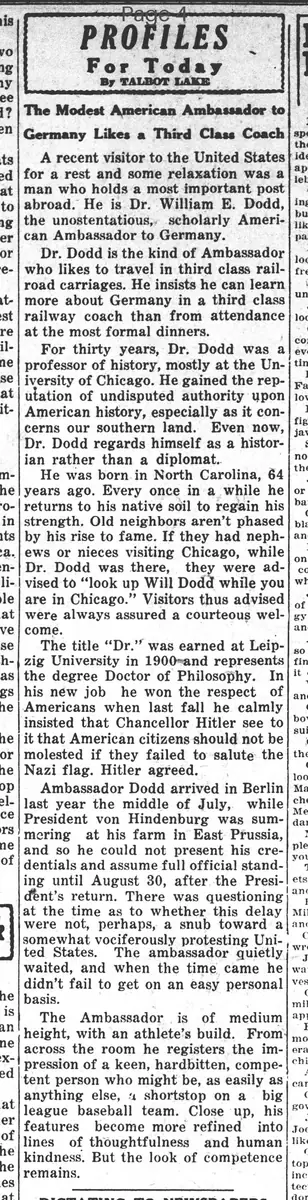
PROFILES For Today, By Talbot Lake
A recent visitor to the United States for a rest and some relaxation was a man who holds a most important post abroad. He is Dr. William E. Dodd, the unostentatious, scholarly American Ambassador to Germany.
Dr. Dodd is the kind of Ambassador who likes to travel in third class railroad carriages. He insists he can learn more about Germany in a third class railway coach than from attendance at the most formal dinners.
For thirty years, Dr. Dodd was a professor of history, mostly at the University of Chicago. He gained the reputation of undisputed authority upon American history, especially as it concerns our southern land. Even now, Dr. Dodd regards himself as a historian rather than a diplomat.
He was born in North Carolina, 64 years ago. Every once in a while he returns to his native soil to regain his strength. Old neighbors aren't phased by his rise to fame. If they had nephews or nieces visiting Chicago, while Dr. Dodd was there, they were advised to "look up Will Dodd while you are in Chicago." Visitors thus advised were always assured a courteous welcome.
The title "Dr." was earned at Leipzig University in 1900 and represents the degree Doctor of Philosophy. In his new job he won the respect of Americans when last fall he calmly insisted that Chancellor Hitler see to it that American citizens should not be molested if they failed to salute the Nazi flag. Hitler agreed.
Ambassador Dodd arrived in Berlin last year the middle of July, while President von Hindenburg was summering at his farm in East Prussia, and so he could not present his credentials and assume full official standing until August 30, after the President's return. There was questioning at the time as to whether this delay were not, perhaps, a snub towards somewhat vociferously protesting United States. The ambassador quietly waited, and when the time came he didn't fail to get on an easy personal basis.
The Ambassador is of medium height, with an athlete's build. From across the room he registers the impression of a keen, hardbitten, competent person who might be, as easily as anything else, a shortstop on a big league baseball team. Close up, his features become more refined into lines of thoughtfulness and human kindness. But the look of competence remains.
A recent visitor to the United States for a rest and some relaxation was a man who holds a most important post abroad. He is Dr. William E. Dodd, the unostentatious, scholarly American Ambassador to Germany.
Dr. Dodd is the kind of Ambassador who likes to travel in third class railroad carriages. He insists he can learn more about Germany in a third class railway coach than from attendance at the most formal dinners.
For thirty years, Dr. Dodd was a professor of history, mostly at the University of Chicago. He gained the reputation of undisputed authority upon American history, especially as it concerns our southern land. Even now, Dr. Dodd regards himself as a historian rather than a diplomat.
He was born in North Carolina, 64 years ago. Every once in a while he returns to his native soil to regain his strength. Old neighbors aren't phased by his rise to fame. If they had nephews or nieces visiting Chicago, while Dr. Dodd was there, they were advised to "look up Will Dodd while you are in Chicago." Visitors thus advised were always assured a courteous welcome.
The title "Dr." was earned at Leipzig University in 1900 and represents the degree Doctor of Philosophy. In his new job he won the respect of Americans when last fall he calmly insisted that Chancellor Hitler see to it that American citizens should not be molested if they failed to salute the Nazi flag. Hitler agreed.
Ambassador Dodd arrived in Berlin last year the middle of July, while President von Hindenburg was summering at his farm in East Prussia, and so he could not present his credentials and assume full official standing until August 30, after the President's return. There was questioning at the time as to whether this delay were not, perhaps, a snub towards somewhat vociferously protesting United States. The ambassador quietly waited, and when the time came he didn't fail to get on an easy personal basis.
The Ambassador is of medium height, with an athlete's build. From across the room he registers the impression of a keen, hardbitten, competent person who might be, as easily as anything else, a shortstop on a big league baseball team. Close up, his features become more refined into lines of thoughtfulness and human kindness. But the look of competence remains.
What sub-type of article is it?
Essay
What themes does it cover?
Political
Liberty Freedom
Patriotism
What keywords are associated?
Ambassador Dodd
Germany Diplomacy
American History
Nazi Flag
Berlin Ambassador
What entities or persons were involved?
By Talbot Lake
Literary Details
Title
Profiles For Today, By Talbot Lake
Author
By Talbot Lake
Subject
Profile Of American Ambassador To Germany William E. Dodd
Form / Style
Biographical Sketch In Prose
Key Lines
He Insists He Can Learn More About Germany In A Third Class Railway Coach Than From Attendance At The Most Formal Dinners.
Even Now, Dr. Dodd Regards Himself As A Historian Rather Than A Diplomat.
In His New Job He Won The Respect Of Americans When Last Fall He Calmly Insisted That Chancellor Hitler See To It That American Citizens Should Not Be Molested If They Failed To Salute The Nazi Flag. Hitler Agreed.