Thank you for visiting SNEWPapers!
Sign up free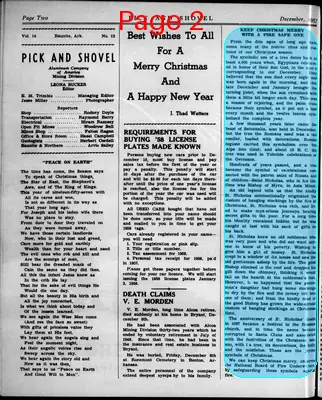
Literary
December 1, 1957
Pick And Shovel
Bauxite, Saline County, Arkansas
What is this article about?
This essay explores the ancient origins of Christmas customs, including the symbolic tree from Egyptian and Roman traditions, and the legend of St. Nicholas inspiring stocking-hanging. It concludes with a reminder from the National Board of Fire Underwriters to safeguard Christmas symbols against fire for a merry holiday.
Clipping
OCR Quality
98%
Excellent
Full Text
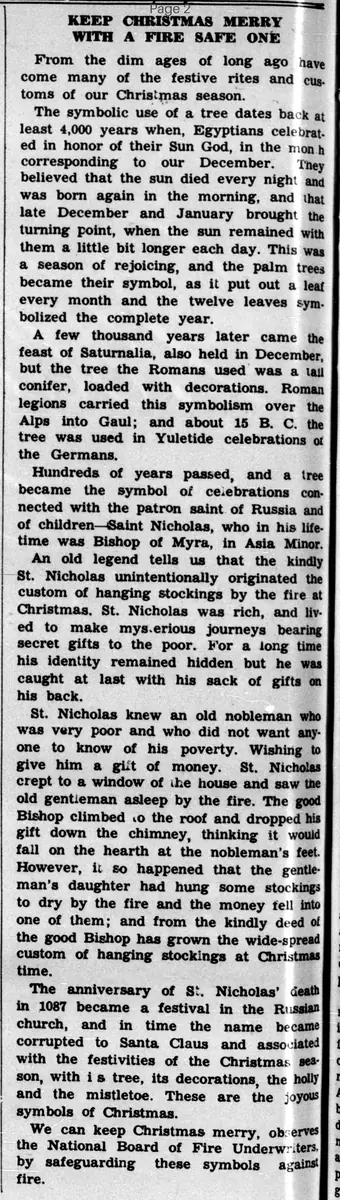
KEEP CHRISTMAS MERRY WITH A FIRE SAFE ONE
From the dim ages of long ago have come many of the festive rites and customs of our Christmas season.
The symbolic use of a tree dates back at least 4,000 years when, Egyptians celebrated in honor of their Sun God, in the month corresponding to our December.
They believed that the sun died every night and was born again in the morning, and that late December and January brought the turning point, when the sun remained with them a little bit longer each day. This was a season of rejoicing, and the palm trees became their symbol, as it put out a leaf every month and the twelve leaves symbolized the complete year.
A few thousand years later came the feast of Saturnalia, also held in December, but the tree the Romans used was a tall conifer, loaded with decorations. Roman legions carried this symbolism over the Alps into Gaul; and about 15 B. C. the tree was used in Yuletide celebrations by the Germans.
Hundreds of years passed, and a tree became the symbol of celebrations connected with the patron saint of Russia and of children—Saint Nicholas, who in his lifetime was Bishop of Myra, in Asia Minor.
An old legend tells us that the kindly St. Nicholas unintentionally originated the custom of hanging stockings by the fire at Christmas. St. Nicholas was rich, and lived to make mysterious journeys bearing secret gifts to the poor. For a long time his identity remained hidden but he was caught at last with his sack of gifts on his back.
St. Nicholas knew an old nobleman who was very poor and who did not want anyone to know of his poverty. Wishing to give him a gift of money, St. Nicholas crept to a window of the house and saw the old gentleman asleep by the fire. The good Bishop climbed to the roof and dropped his gift down the chimney, thinking it would fall on the hearth at the nobleman's feet.
However, it so happened that the gentleman's daughter had hung some stockings to dry by the fire and the money fell into one of them; and from the kindly deed of the good Bishop has grown the wide-spread custom of hanging stockings at Christmas time.
The anniversary of St. Nicholas' death in 1087 became a festival in the Russian church, and in time the name became corrupted to Santa Claus and associated with the festivities of the Christmas season, with its tree, its decorations, the holly and the mistletoe. These are the joyous symbols of Christmas.
We can keep Christmas merry, observes the National Board of Fire Underwriters, by safeguarding these symbols against fire.
From the dim ages of long ago have come many of the festive rites and customs of our Christmas season.
The symbolic use of a tree dates back at least 4,000 years when, Egyptians celebrated in honor of their Sun God, in the month corresponding to our December.
They believed that the sun died every night and was born again in the morning, and that late December and January brought the turning point, when the sun remained with them a little bit longer each day. This was a season of rejoicing, and the palm trees became their symbol, as it put out a leaf every month and the twelve leaves symbolized the complete year.
A few thousand years later came the feast of Saturnalia, also held in December, but the tree the Romans used was a tall conifer, loaded with decorations. Roman legions carried this symbolism over the Alps into Gaul; and about 15 B. C. the tree was used in Yuletide celebrations by the Germans.
Hundreds of years passed, and a tree became the symbol of celebrations connected with the patron saint of Russia and of children—Saint Nicholas, who in his lifetime was Bishop of Myra, in Asia Minor.
An old legend tells us that the kindly St. Nicholas unintentionally originated the custom of hanging stockings by the fire at Christmas. St. Nicholas was rich, and lived to make mysterious journeys bearing secret gifts to the poor. For a long time his identity remained hidden but he was caught at last with his sack of gifts on his back.
St. Nicholas knew an old nobleman who was very poor and who did not want anyone to know of his poverty. Wishing to give him a gift of money, St. Nicholas crept to a window of the house and saw the old gentleman asleep by the fire. The good Bishop climbed to the roof and dropped his gift down the chimney, thinking it would fall on the hearth at the nobleman's feet.
However, it so happened that the gentleman's daughter had hung some stockings to dry by the fire and the money fell into one of them; and from the kindly deed of the good Bishop has grown the wide-spread custom of hanging stockings at Christmas time.
The anniversary of St. Nicholas' death in 1087 became a festival in the Russian church, and in time the name became corrupted to Santa Claus and associated with the festivities of the Christmas season, with its tree, its decorations, the holly and the mistletoe. These are the joyous symbols of Christmas.
We can keep Christmas merry, observes the National Board of Fire Underwriters, by safeguarding these symbols against fire.
What sub-type of article is it?
Essay
What themes does it cover?
Religious
Seasonal Cycle
Moral Virtue
What keywords are associated?
Christmas Customs
St Nicholas
Santa Claus
Yuletide Tree
Fire Safety
Literary Details
Title
Keep Christmas Merry With A Fire Safe One
Subject
History Of Christmas Customs And Fire Safety
Form / Style
Prose Essay On Holiday Traditions
Key Lines
An Old Legend Tells Us That The Kindly St. Nicholas Unintentionally Originated The Custom Of Hanging Stockings By The Fire At Christmas.
However, It So Happened That The Gentleman's Daughter Had Hung Some Stockings To Dry By The Fire And The Money Fell Into One Of Them; And From The Kindly Deed Of The Good Bishop Has Grown The Wide Spread Custom Of Hanging Stockings At Christmas Time.
We Can Keep Christmas Merry, Observes The National Board Of Fire Underwriters, By Safeguarding These Symbols Against Fire.