Thank you for visiting SNEWPapers!
Sign up free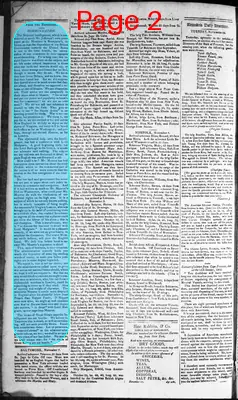
Editorial
November 12, 1805
Alexandria Daily Advertiser
Alexandria, Virginia
What is this article about?
Editorial from the Repertory criticizes the Jefferson administration and National Intelligencer for downplaying British seizures of U.S. commerce, mocks diplomat Monroe's incompetence in negotiations with Lord Mulgrave, and calls for better protection of commercial interests without war.
Clipping

OCR Quality
98%
Excellent
Full Text
FROM THE REPERTORY.
COMMUNICATION.
The National Intelligencer, which is considered as much Mr. Jefferson's own newspaper as the Moniteur is Bonaparte's, informs us that the disposition of the British Government towards the United States is not in the least hostile, the sweeps takes of our commerce by their captures notwithstanding. For a long time this insipid Gazette was silent on the subject, and we felt some natural impatience to know what our lords and masters would say, at least, about wrongs and losses that we feel, though it seems they do not. We know they hate Great Britain, and we know, too, that they feared her. But we did suppose they feared almost as much to own that they are afraid, and therefore we expected a column or two of bluster. We are disappointed. Their spirits are too completely in their shoes even to bluster. "Go to war and put our power and popularity in harm's way for commerce!! we are not so near mad." We do not ask our Solomons in council to take the field. They give us leave to say "the bloody arena" is no sporting ground for them. War is not our desire, but protection is. We claim it, we pay for it, we are entitled to it; and unless New England be already as abject as the slaves of Virginia, our voice will be heard with effect as far as Washington; and perhaps, through our shrewd Monroe, as far as London.
This diplomatic body, says the Intelligencer, has had a conference with Lord Mulgrave. A good beginning truly, but like Lord Burleigh in the Critic, it seems our advocate said nothing. The subject we are told was not discussed in detail, in plain English was not discussed at all. How could it be? Mr. Monroe has had instruction upon instruction about the river Perdido, which to the commercial part of the nation is of no more concern than the cession or the free navigation of the river Styx. But our land mad government has never yet set pen to paper about such paltry interests as commerce and navigation. And if it had written as much as Mr. Monroe's libel on Washington, what could poor Mr. Monroe do with the vindication of our national rights on the high seas. It is a subject of which he not only knows nothing, but is utterly incapable of being taught. An unsuccessful Virginia Lawyer, who was brought up in the habit of considering trade as a trickish affair, that enabled Scotchmen to engross all the money that a planter could get from the labour of his slaves; this is our champion. This is our advocate, who is "to discuss the business in detail with Lord Mulgrave." It would be a pleasant comedy, if we were not so great losers, to overhear the discussion. Our orator Mum, we verily believe, will pose the English Lord. We defy him before hand to answer Mr. Monroe's argument in detail.
This, men of business, is your situation. The administration scarcely holds you worth the hypocrisy of some big swelling words of vanity, to make you believe your rights are in some degree regarded. We repeat it, war is not our desire; nor is the administration called upon to go to war unless our national honor should, which we hope it will not require it. But that we may avoid this dire extreme, we ought to employ men as ministers, who, like our former diplomatic worthies in London, could do something to serve us if they tried. Men of capacity and weight of character. The miserable Monroe is surely more despised in England since his shameful letter from France than Napper Tandy. If Napper were now alive, we might as well commission him to discuss those nice and important matters, "in detail" with Lord Mulgrave, as our sagacious Monroe.
The views of Great Britain says the Intelligencer are not hostile. We believe it. Tameness that is dumb, as well as unresisting, will not soon provoke blows. Excellent consolations these. Let us persevere, "respected abroad" as the administration gazette tells us, we are; we shall be stripped in two years of our last dollar. No matter, we shall escape war: for "the views of Great Britain are not hostile."
COMMUNICATION.
The National Intelligencer, which is considered as much Mr. Jefferson's own newspaper as the Moniteur is Bonaparte's, informs us that the disposition of the British Government towards the United States is not in the least hostile, the sweeps takes of our commerce by their captures notwithstanding. For a long time this insipid Gazette was silent on the subject, and we felt some natural impatience to know what our lords and masters would say, at least, about wrongs and losses that we feel, though it seems they do not. We know they hate Great Britain, and we know, too, that they feared her. But we did suppose they feared almost as much to own that they are afraid, and therefore we expected a column or two of bluster. We are disappointed. Their spirits are too completely in their shoes even to bluster. "Go to war and put our power and popularity in harm's way for commerce!! we are not so near mad." We do not ask our Solomons in council to take the field. They give us leave to say "the bloody arena" is no sporting ground for them. War is not our desire, but protection is. We claim it, we pay for it, we are entitled to it; and unless New England be already as abject as the slaves of Virginia, our voice will be heard with effect as far as Washington; and perhaps, through our shrewd Monroe, as far as London.
This diplomatic body, says the Intelligencer, has had a conference with Lord Mulgrave. A good beginning truly, but like Lord Burleigh in the Critic, it seems our advocate said nothing. The subject we are told was not discussed in detail, in plain English was not discussed at all. How could it be? Mr. Monroe has had instruction upon instruction about the river Perdido, which to the commercial part of the nation is of no more concern than the cession or the free navigation of the river Styx. But our land mad government has never yet set pen to paper about such paltry interests as commerce and navigation. And if it had written as much as Mr. Monroe's libel on Washington, what could poor Mr. Monroe do with the vindication of our national rights on the high seas. It is a subject of which he not only knows nothing, but is utterly incapable of being taught. An unsuccessful Virginia Lawyer, who was brought up in the habit of considering trade as a trickish affair, that enabled Scotchmen to engross all the money that a planter could get from the labour of his slaves; this is our champion. This is our advocate, who is "to discuss the business in detail with Lord Mulgrave." It would be a pleasant comedy, if we were not so great losers, to overhear the discussion. Our orator Mum, we verily believe, will pose the English Lord. We defy him before hand to answer Mr. Monroe's argument in detail.
This, men of business, is your situation. The administration scarcely holds you worth the hypocrisy of some big swelling words of vanity, to make you believe your rights are in some degree regarded. We repeat it, war is not our desire; nor is the administration called upon to go to war unless our national honor should, which we hope it will not require it. But that we may avoid this dire extreme, we ought to employ men as ministers, who, like our former diplomatic worthies in London, could do something to serve us if they tried. Men of capacity and weight of character. The miserable Monroe is surely more despised in England since his shameful letter from France than Napper Tandy. If Napper were now alive, we might as well commission him to discuss those nice and important matters, "in detail" with Lord Mulgrave, as our sagacious Monroe.
The views of Great Britain says the Intelligencer are not hostile. We believe it. Tameness that is dumb, as well as unresisting, will not soon provoke blows. Excellent consolations these. Let us persevere, "respected abroad" as the administration gazette tells us, we are; we shall be stripped in two years of our last dollar. No matter, we shall escape war: for "the views of Great Britain are not hostile."
What sub-type of article is it?
Foreign Affairs
Economic Policy
Partisan Politics
What keywords are associated?
British Captures
American Commerce
Monroe Diplomacy
Jefferson Administration
Foreign Negotiations
National Intelligencer
What entities or persons were involved?
National Intelligencer
Jefferson
Monroe
Lord Mulgrave
Great Britain
Administration
Editorial Details
Primary Topic
Criticism Of Administration's Response To British Commerce Captures
Stance / Tone
Strongly Critical And Mocking
Key Figures
National Intelligencer
Jefferson
Monroe
Lord Mulgrave
Great Britain
Administration
Key Arguments
British Government Not Hostile Despite Commerce Captures
Administration Silent Or Blustering Weakly On Commerce Losses
Monroe Unqualified And Incapable For Diplomatic Discussions On Commerce
Focus On Land Issues Like Perdido River Over Commercial Interests
Need Capable Ministers To Protect Commerce Without War
Tameness Avoids Provocation But Leads To Economic Ruin