Thank you for visiting SNEWPapers!
Sign up free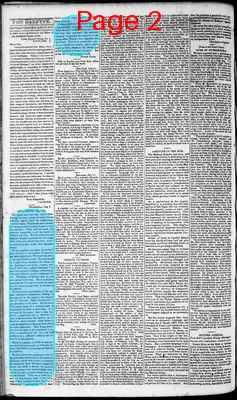
Alexandria Gazette & Advertiser
Alexandria, Virginia
What is this article about?
Philadelphia editorial laments the city as a refuge for runaway slaves from southern states, blaming the Abolition Society for societal ills caused by idle fugitives. It outlines the 1793 Fugitive Slave Act provisions for owners to arrest and remove them, imposes a $500 penalty for obstruction, and urges compliance with law despite moral qualms about slavery.
Clipping
OCR Quality
Full Text
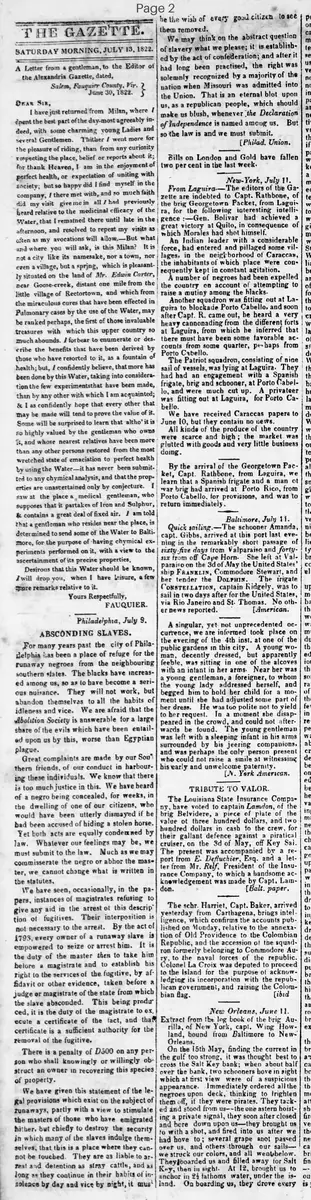
ABSCONDING SLAVES.
For many years past the city of Philadelphia has been a place of refuge for the runaway negroes from the neighbouring southern states. The blacks have increased among us, so as to have become a serious nuisance. They will not work, but abandon themselves to all the habits of idleness and vice. We are afraid that the Abolition Society is answerable for a large share of the evils which have been entailed upon us by this, worse than Egyptian plague.
Great complaints are made by our Southern friends, of our conduct in harbouring these individuals. We know that there is too much justice in this. We have heard of a negro being concealed, for weeks, in the dwelling of one of our citizens, who would have been utterly dismayed if he had been accused of hiding a stolen horse. Yet both acts are equally condemned by law. Whatever our feelings may be, we must submit to the law. Much as we may commiserate the negro or abhor the master, we cannot change what is written in the statutes.
We have seen, occasionally, in the papers, instances of magistrates refusing to give any aid in the arrest of this description of fugitives. Their interposition is not necessary to the arrest. By the act of 1793, every owner of a runaway slave is empowered to seize or arrest him. It is the duty of the master then to take him before a magistrate and to establish his right to the services of the fugitive, by affidavit or other evidence, taken before a judge or magistrate of the state from which the slave absconded. This being produced, it is the duty of the magistrate to execute a certificate of the fact, and that certificate is a sufficient authority for the removal of the fugitive.
There is a penalty of $500 on any person who shall knowingly or willingly obstruct an owner in recovering this species of property.
We have given this statement of the legal provisions which exist on the subject of runaways, partly with a view to stimulate the masters of those who have emigrated hither, but chiefly to destroy the security in which many of the slaves indulge themselves, that this is a place where they cannot be touched. They are as liable to arrest and detention as stray cattle, and as long as they continue in their habits of insolence by day and vice by night, it must he the wish of every good citizen to see them removed.
We may think on the abstract question of slavery what we please; it is established by the act of confederation; and after it had long been practised, the right was solemnly recognized by a majority of the nation when Missouri was admitted into the Union. That is an eternal blot upon us, as a republican people, which should make us blush, whenever the Declaration of Independence is named among us. But so the law is and we must submit.
Philad. Union.
What sub-type of article is it?
What keywords are associated?
Where did it happen?
Domestic News Details
Primary Location
Philadelphia
Event Date
July 9
Outcome
owners empowered to arrest fugitives under 1793 act; magistrates issue certificates for removal; $500 penalty for obstruction; no specific casualties reported.
Event Details
Philadelphia serves as refuge for runaway slaves from southern states, leading to increased idleness and vice; blamed on Abolition Society; southern complaints of harboring; legal process for recapture detailed, emphasizing duty to submit to law despite anti-slavery sentiments; commentary on slavery's establishment in Union.