Thank you for visiting SNEWPapers!
Sign up free
Literary
November 2, 1836
Vermont Telegraph
Brandon, Rutland County, Vermont
What is this article about?
An anonymous essay critiques the custom of wearing mourning apparel after a death, arguing it stems from prejudice and superstition rather than reason or sentiment. The author shares personal grief experiences, highlighting how such preparations outrage natural sorrow.
Clipping
OCR Quality
95%
Excellent
Full Text
RELIGIOUS MISCELLANY.
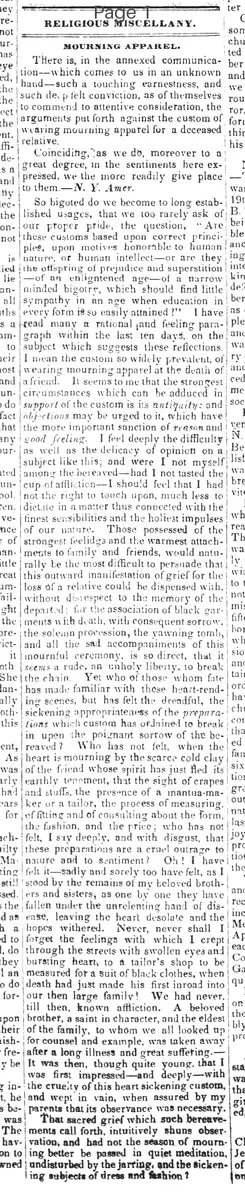
MOURNING APPAREL
There is, in the annexed communication—which comes to us in an unknown hand—such a touching earnestness, and such deep felt conviction, as of themselves to commend to attentive consideration, the arguments put forth against the custom of wearing mourning apparel for a deceased relative.
Coinciding, as we do, moreover to a great degree, in the sentiments here expressed, we the more readily give place to them.—N. Y. Amer.
So bigoted do we become to long established usages, that we too rarely ask of our proper pride, the question, "Are these customs based upon correct principles, upon motives honorable to human nature, or human intellect—or are they the offspring of prejudice and superstition—of an enlightened age—of a narrow minded bigotry, which should find little sympathy in an age when education in every form is so easily attained?" I have read many a rational and feeling paragraph within the last ten days, on the subject which suggests these reflections. I mean the custom so widely prevalent, of wearing mourning apparel at the death of a friend. It seems to me that the strongest circumstances which can be adduced in support of the custom is its antiquity: and objections may be urged to it, which have the more important sanction of reason and good feeling. I feel deeply the difficulty as well as the delicacy of opinion on a subject like this; and were I not myself among the bereaved—had I not tasted the cup of affliction—I should feel that I had not the right to touch upon, much less to dictate in a matter thus connected with the finest sensibilities and the holiest impulses of our nature. Those possessed of the strongest feelings and the warmest attachments to family and friends, would naturally be the most difficult to persuade that this outward manifestation of grief for the loss of a relative could be dispensed with, without disrespect to the memory of the departed: for the association of black garments with death, with consequent sorrow, the solemn procession, the yawning tomb, and all the sad accompaniments of this mournful ceremony, is so direct, that it seems a rude, an unholy liberty, to break the chain. Yet who of those whom fate has made familiar with these heart-rending scenes, but has felt the dreadful, the sickening appropriateness of the preparations which custom has ordained to break in upon the poignant sorrow of the bereaved? Who has not felt, when the heart is mourning by the scarce cold clay of the friend whose spirit has just fled its earthly tenement, that the sight of crapes and stuffs, the presence of a mantua-maker or a tailor, the process of measuring, of fitting and of consulting about the form, the fashion, and the price; who has not felt, I say deeply, and with disgust, that these preparations are a cruel outrage to nature and to sentiment? Oh! I have felt it sadly and sorely too have felt, as I stood by the remains of my beloved brothers and sisters, as one by one they have fallen under the unrelenting hand of disease, leaving the heart desolate and the hopes withered. Never, never shall I forget the feelings with which I crept through the streets with swollen eyes and bursting heart, to a tailor's shop to be measured for a suit of black clothes, when death had just made his first inroad into our then large family! We had never, till then, known affliction. A beloved brother, a saint in character, and the eldest of the family, to whom we all looked up for counsel and example, was taken away after a long illness and great suffering.—It was then, though quite young, that I was first impressed—and deeply—with the cruelty of this heart sickening custom and wept in vain, when assured by my parents that its observance was necessary. That sacred grief which such bereavements call forth, intuitively shuns observation, and had not the season of mourning better be passed in quiet meditation.
MOURNING APPAREL
There is, in the annexed communication—which comes to us in an unknown hand—such a touching earnestness, and such deep felt conviction, as of themselves to commend to attentive consideration, the arguments put forth against the custom of wearing mourning apparel for a deceased relative.
Coinciding, as we do, moreover to a great degree, in the sentiments here expressed, we the more readily give place to them.—N. Y. Amer.
So bigoted do we become to long established usages, that we too rarely ask of our proper pride, the question, "Are these customs based upon correct principles, upon motives honorable to human nature, or human intellect—or are they the offspring of prejudice and superstition—of an enlightened age—of a narrow minded bigotry, which should find little sympathy in an age when education in every form is so easily attained?" I have read many a rational and feeling paragraph within the last ten days, on the subject which suggests these reflections. I mean the custom so widely prevalent, of wearing mourning apparel at the death of a friend. It seems to me that the strongest circumstances which can be adduced in support of the custom is its antiquity: and objections may be urged to it, which have the more important sanction of reason and good feeling. I feel deeply the difficulty as well as the delicacy of opinion on a subject like this; and were I not myself among the bereaved—had I not tasted the cup of affliction—I should feel that I had not the right to touch upon, much less to dictate in a matter thus connected with the finest sensibilities and the holiest impulses of our nature. Those possessed of the strongest feelings and the warmest attachments to family and friends, would naturally be the most difficult to persuade that this outward manifestation of grief for the loss of a relative could be dispensed with, without disrespect to the memory of the departed: for the association of black garments with death, with consequent sorrow, the solemn procession, the yawning tomb, and all the sad accompaniments of this mournful ceremony, is so direct, that it seems a rude, an unholy liberty, to break the chain. Yet who of those whom fate has made familiar with these heart-rending scenes, but has felt the dreadful, the sickening appropriateness of the preparations which custom has ordained to break in upon the poignant sorrow of the bereaved? Who has not felt, when the heart is mourning by the scarce cold clay of the friend whose spirit has just fled its earthly tenement, that the sight of crapes and stuffs, the presence of a mantua-maker or a tailor, the process of measuring, of fitting and of consulting about the form, the fashion, and the price; who has not felt, I say deeply, and with disgust, that these preparations are a cruel outrage to nature and to sentiment? Oh! I have felt it sadly and sorely too have felt, as I stood by the remains of my beloved brothers and sisters, as one by one they have fallen under the unrelenting hand of disease, leaving the heart desolate and the hopes withered. Never, never shall I forget the feelings with which I crept through the streets with swollen eyes and bursting heart, to a tailor's shop to be measured for a suit of black clothes, when death had just made his first inroad into our then large family! We had never, till then, known affliction. A beloved brother, a saint in character, and the eldest of the family, to whom we all looked up for counsel and example, was taken away after a long illness and great suffering.—It was then, though quite young, that I was first impressed—and deeply—with the cruelty of this heart sickening custom and wept in vain, when assured by my parents that its observance was necessary. That sacred grief which such bereavements call forth, intuitively shuns observation, and had not the season of mourning better be passed in quiet meditation.
What sub-type of article is it?
Essay
What themes does it cover?
Death Mortality
Moral Virtue
Religious
What keywords are associated?
Mourning Apparel
Customs
Grief
Superstition
Death
Bereavement
Sentiment
Prejudice
What entities or persons were involved?
Anonymous
Literary Details
Title
Mourning Apparel
Author
Anonymous
Subject
Against The Custom Of Wearing Mourning Apparel
Form / Style
Prose Reflection And Personal Narrative
Key Lines
So Bigoted Do We Become To Long Established Usages, That We Too Rarely Ask Of Our Proper Pride, The Question, "Are These Customs Based Upon Correct Principles, Upon Motives Honorable To Human Nature, Or Human Intellect—Or Are They The Offspring Of Prejudice And Superstition
It Seems To Me That The Strongest Circumstances Which Can Be Adduced In Support Of The Custom Is Its Antiquity: And Objections May Be Urged To It, Which Have The More Important Sanction Of Reason And Good Feeling.
Who Has Not Felt, I Say Deeply, And With Disgust, That These Preparations Are A Cruel Outrage To Nature And To Sentiment?
Never, Never Shall I Forget The Feelings With Which I Crept Through The Streets With Swollen Eyes And Bursting Heart, To A Tailor's Shop To Be Measured For A Suit Of Black Clothes
That Sacred Grief Which Such Bereavements Call Forth, Intuitively Shuns Observation, And Had Not The Season Of Mourning Better Be Passed In Quiet Meditation.