Thank you for visiting SNEWPapers!
Sign up free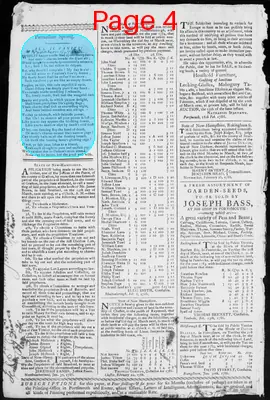
Poem
March 4, 1786
Fowle's New Hampshire Gazette And General Advertiser
Portsmouth, Rockingham County, New Hampshire
What is this article about?
A moral poem reflecting on the vanity of youth, beauty, and pleasure, warning young women that these transient joys lead to despair and death, urging them to seek eternal joys through goodness and wisdom.
Clipping
OCR Quality
95%
Excellent
Full Text
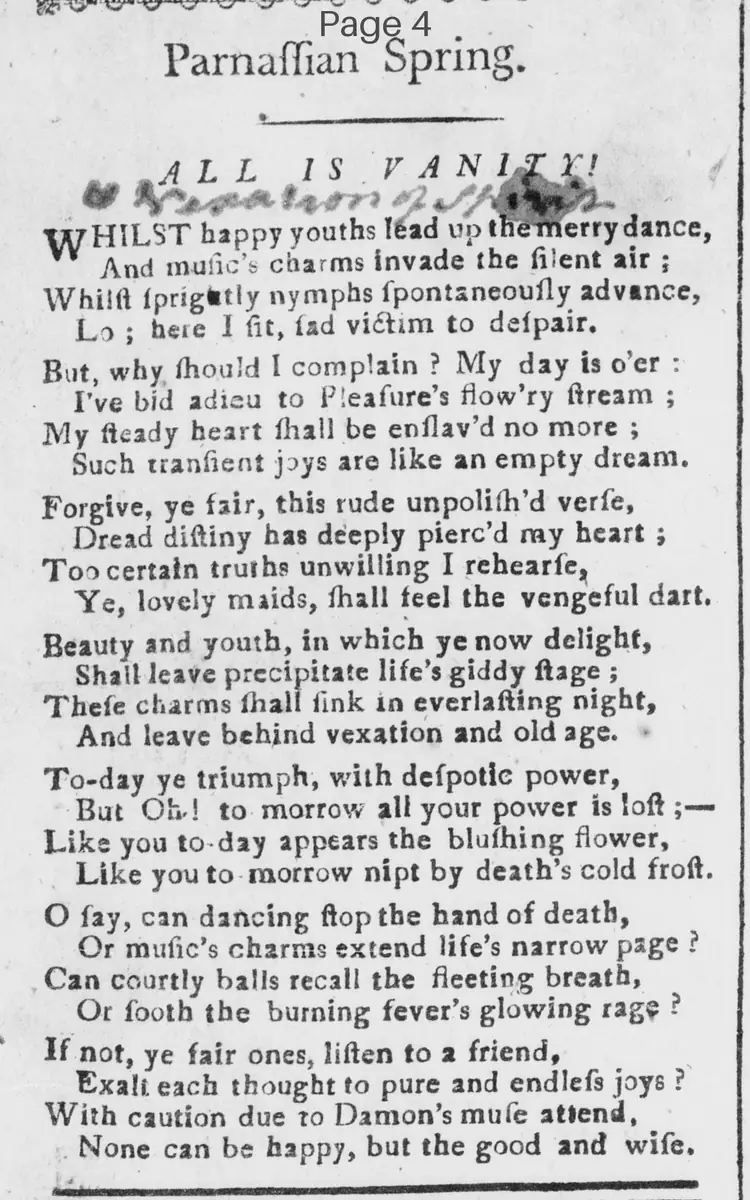
Parnassian Spring.
ALL IS VANITY!
WHILST happy youths lead up the merry dance,
And music's charms invade the silent air:
Whilst sprightly nymphs spontaneously advance,
Lo; here I sit, sad victim to despair.
But, why should I complain? My day is o'er:
I've bid adieu to Pleasure's flow'ry stream;
My steady heart shall be enslav'd no more;
Such transient joys are like an empty dream.
Forgive, ye fair, this rude unpolish'd verse,
Dread destiny has deeply pierc'd my heart;
Too certain truths unwilling I rehearse,
Ye, lovely maids, shall feel the vengeful dart.
Beauty and youth, in which ye now delight,
Shall leave precipitate life's giddy stage;
These charms shall sink in everlasting night,
And leave behind vexation and old age.
To-day ye triumph, with despotic power,
But Oh! to morrow all your power is lost;
Like you to-day appears the blushing flower,
Like you to-morrow nipt by death's cold frost.
O say, can dancing stop the hand of death,
Or music's charms extend life's narrow page?
Can courtly balls recall the fleeting breath,
Or soothe the burning fever's glowing rage?
If not, ye fair ones, listen to a friend,
Exalt each thought to pure and endless joys?
With caution due to Damon's muse attend,
None can be happy, but the good and wise.
ALL IS VANITY!
WHILST happy youths lead up the merry dance,
And music's charms invade the silent air:
Whilst sprightly nymphs spontaneously advance,
Lo; here I sit, sad victim to despair.
But, why should I complain? My day is o'er:
I've bid adieu to Pleasure's flow'ry stream;
My steady heart shall be enslav'd no more;
Such transient joys are like an empty dream.
Forgive, ye fair, this rude unpolish'd verse,
Dread destiny has deeply pierc'd my heart;
Too certain truths unwilling I rehearse,
Ye, lovely maids, shall feel the vengeful dart.
Beauty and youth, in which ye now delight,
Shall leave precipitate life's giddy stage;
These charms shall sink in everlasting night,
And leave behind vexation and old age.
To-day ye triumph, with despotic power,
But Oh! to morrow all your power is lost;
Like you to-day appears the blushing flower,
Like you to-morrow nipt by death's cold frost.
O say, can dancing stop the hand of death,
Or music's charms extend life's narrow page?
Can courtly balls recall the fleeting breath,
Or soothe the burning fever's glowing rage?
If not, ye fair ones, listen to a friend,
Exalt each thought to pure and endless joys?
With caution due to Damon's muse attend,
None can be happy, but the good and wise.
What sub-type of article is it?
Ode
Epigram
What themes does it cover?
Moral Virtue
Death Mourning
What keywords are associated?
Vanity
Beauty
Youth
Death
Moral Instruction
Transient Joys
Eternal Happiness
Poem Details
Title
Parnassian Spring. All Is Vanity!
Subject
Vanity Of Beauty And Youth
Form / Style
Rhymed Quatrains
Key Lines
All Is Vanity!
Beauty And Youth, In Which Ye Now Delight,
Shall Leave Precipitate Life's Giddy Stage;
These Charms Shall Sink In Everlasting Night,
And Leave Behind Vexation And Old Age.
None Can Be Happy, But The Good And Wise.