Thank you for visiting SNEWPapers!
Sign up free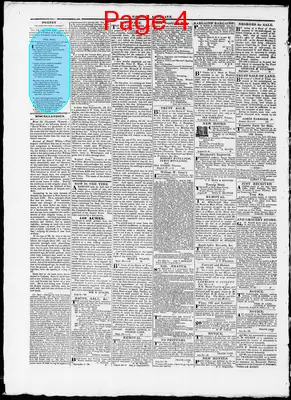
Poem
September 24, 1830
Virginia Advocate
Charlottesville, Virginia
What is this article about?
A poem titled 'THE WIFE' by a young lady from Hudson, N.Y., depicts a wife's profound love and anguish as she watches her husband fade away, fearing the loneliness of life without him.
Clipping
OCR Quality
98%
Excellent
Full Text
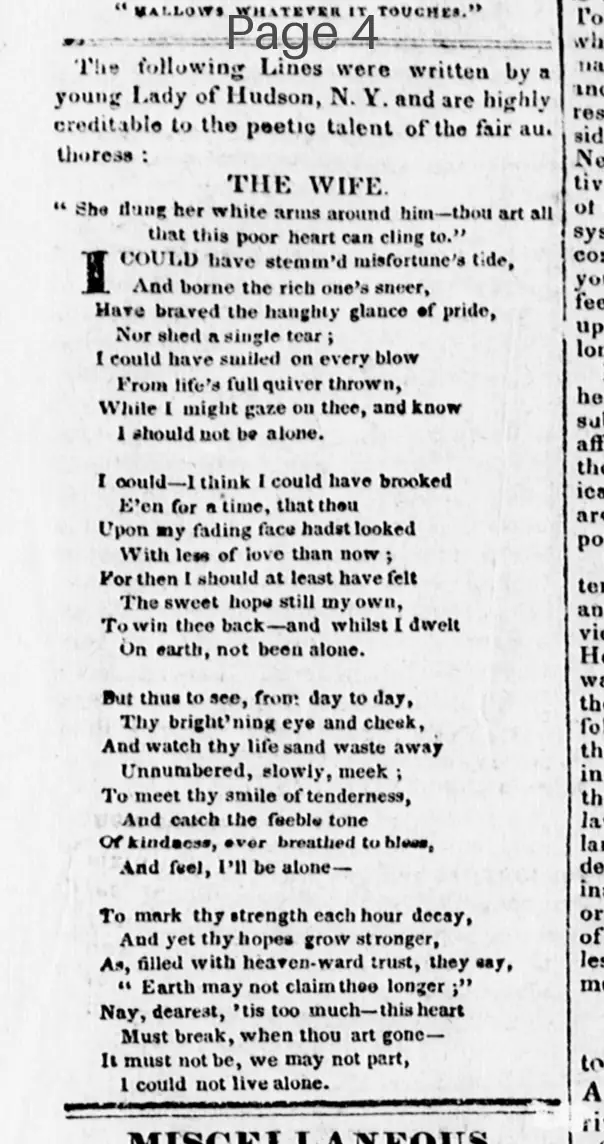
The following Lines were written by a young Lady of Hudson, N. Y. and are highly creditable to the poetic talent of the fair authoress:
THE WIFE.
"She flung her white arms around him—thou art all that this poor heart can cling to."
COULD I have stemm'd misfortune's tide,
And borne the rich one's sneer,
Have braved the haughty glance of pride,
Nor shed a single tear;
I could have smiled on every blow
From life's full quiver thrown,
While I might gaze on thee, and know
I could not be alone.
I could—I think I could have brook'd
E'en for a time, that thou
Upon my fading face hadst look'd
With less of love than now;
For then I should at least have felt
The sweet hope still my own,
To win thee back—and whilst I dwelt
On earth, not been alone.
But thus to see, from day to day,
Thy brightening eye and cheek,
And watch thy life sands waste away
Unnumbered, slowly, meek;
To meet thy smile of tenderness,
And catch the feeble tone
Of kindness, e'er breathed to bless,
And feel—I'll be alone—
To mark thy strength each hour decay,
And yet thy hopes grow stronger,
As, filled with heavenward trust, they say,
"Earth may not claim thee longer;"
Nay, dearest, 'tis too much—this heart
Must break, when thou art gone—
It must not be, we may not part,
I could not live alone.
THE WIFE.
"She flung her white arms around him—thou art all that this poor heart can cling to."
COULD I have stemm'd misfortune's tide,
And borne the rich one's sneer,
Have braved the haughty glance of pride,
Nor shed a single tear;
I could have smiled on every blow
From life's full quiver thrown,
While I might gaze on thee, and know
I could not be alone.
I could—I think I could have brook'd
E'en for a time, that thou
Upon my fading face hadst look'd
With less of love than now;
For then I should at least have felt
The sweet hope still my own,
To win thee back—and whilst I dwelt
On earth, not been alone.
But thus to see, from day to day,
Thy brightening eye and cheek,
And watch thy life sands waste away
Unnumbered, slowly, meek;
To meet thy smile of tenderness,
And catch the feeble tone
Of kindness, e'er breathed to bless,
And feel—I'll be alone—
To mark thy strength each hour decay,
And yet thy hopes grow stronger,
As, filled with heavenward trust, they say,
"Earth may not claim thee longer;"
Nay, dearest, 'tis too much—this heart
Must break, when thou art gone—
It must not be, we may not part,
I could not live alone.
What sub-type of article is it?
Elegy
Ode
What themes does it cover?
Death Mourning
Love Courtship
What keywords are associated?
Wife Lament
Dying Husband
Love Devotion
Fear Alone
Misfortune Tide
What entities or persons were involved?
A Young Lady Of Hudson, N. Y.
Poem Details
Title
The Wife.
Author
A Young Lady Of Hudson, N. Y.
Subject
A Wife's Lament For Her Dying Husband
Form / Style
Rhymed Stanzas In Iambic Meter
Key Lines
"She Flung Her White Arms Around Him—Thou Art All That This Poor Heart Can Cling To."
I Could Have Smiled On Every Blow
From Life's Full Quiver Thrown,
While I Might Gaze On Thee, And Know
I Could Not Be Alone.
Nay, Dearest, 'Tis Too Much—This Heart
Must Break, When Thou Art Gone—
It Must Not Be, We May Not Part,
I Could Not Live Alone.