Thank you for visiting SNEWPapers!
Sign up free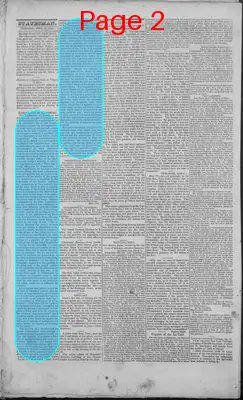
Editorial
April 21, 1823
New Hampshire Statesman
Concord, Merrimack County, New Hampshire
What is this article about?
The editorial praises Louisiana's legislature for nominating a presidential candidate, arguing state nominations reduce corruption compared to congressional caucuses and better reflect public will. It warns against varied elector selection methods, advocating uniform rules to prevent intrigue and ensure national election integrity.
Clipping
OCR Quality
98%
Excellent
Full Text
NOMINATION OF PRESIDENT.
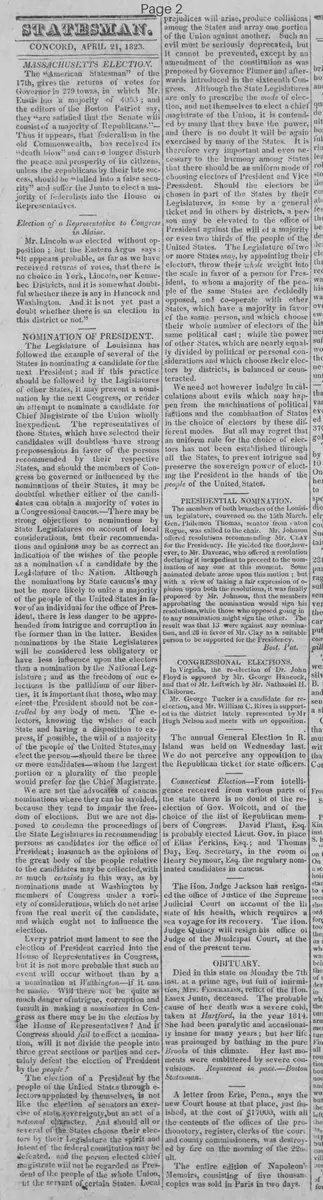
The Legislature of Louisiana has followed the example of several of the States in nominating a candidate for the next President; and if this practice should be followed by the Legislatures of other States, it may prevent a nomination by the next Congress, or render an attempt to nominate a candidate for Chief Magistrate of the Union wholly inexpedient. The representatives of those States, which have selected their candidates will doubtless have strong prepossessions in favor of the persons recommended by their respective States, and should the members of Congress be governed or influenced by the nominations of their States, it may be doubtful whether either of the candidates can obtain a majority of votes in a Congressional caucus.--There may be strong objections to nominations by State Legislatures on account of local considerations, but their recommendations and opinions may be as correct an indication of the wishes of the people as a nomination of a candidate by the Legislature of the Nation. Although the nominations by State caucuses may not be more likely to unite a majority of the people of the United States in favor of an individual for the office of President, there is less danger to be apprehended from intrigue and corruption in the former than in the latter. Besides nominations by the State Legislatures will be considered less obligatory or have less influence upon the electors than a nomination by the National Legislature; and as the freedom of our elections is the palladium of our liberties, it is important that those, who may elect the President should not be controlled by any body of men. The Electors, knowing the wishes of each State and having a disposition to express, if possible, the will of a majority of the people of the United States, may elect the person--should there be three or more candidates--whom the largest portion or a plurality of the people would prefer for the Chief Magistrate.
We are not the advocates of caucus nominations where they can be avoided, because they tend to impair the freedom of elections. But we are not disposed to condemn the proceedings of the State Legislatures in recommending persons as candidates for the office of President; inasmuch as the opinions of the great body of the people relative to the candidates may be collected, with as much certainty in this way, as by nominations made at Washington by members of Congress under a variety of considerations, which do not arise from the real merit of the candidate, and which ought not to influence the election.
Every patriot must lament to see the election of President carried into the House of Representatives in Congress, but it is not more probable that such an event will occur without than by a nomination at Washington--if it can be made. Will there not be quite as much danger of intrigue, corruption and tumult in making a nomination in Congress as there may be in the election by the House of Representatives? And if Congress should fail to effect a nomination, will it not divide the people into three great sections or parties and certainly defeat the election of President by the people?
The election of a President by the people of the United States through electors appointed by themselves, is not like the election of senators an exercise of state sovereignty, but an act of a national character. And should all or several of the States choose their electors by their Legislature the spirit and intent of the federal constitution may be defeated, and the person elected chief magistrate will not be regarded as President of the people of the whole Union, but the servant of certain States. Local prejudices will arise, produce collisions among the States and array one portion of the Union against another. Such an evil must be seriously deprecated, but it cannot be prevented, except by an amendment of the constitution as was proposed by Governor Plumer and afterwards introduced in the sixteenth Congress. Although the State Legislatures are only to prescribe the mode of election, and not themselves to elect a chief magistrate of the Union, it is contended by many that they have the power, and there is no doubt it will be again exercised by many of the States. It is therefore very important and even necessary to the harmony among States that there should be an uniform mode of choosing electors of President and Vice President. Should the electors be chosen in part of the States by their Legislatures, in some by a general ticket and in others by districts, a person may be elevated to the office of President against the will of a majority or even two thirds of the people of the United States. The Legislature of two or more States may, by appointing their electors, throw their whole weight into the scale in favor of a person for President, to whom a majority of the people of the same States are decidedly opposed, and co-operate with other States, which have a majority in favor of the same person, and which choose their whole number of electors of the same political cast; while the power of other States, which are nearly equally divided by political or personal considerations and which choose their electors by districts, is balanced or counteracted.
We need not however indulge in calculations about evils which may happen from the machinations of political factions and the combination of States in the choice of electors by these different modes. But all may regret that an uniform rule for the choice of electors has not been established through all the States, to prevent intrigue and preserve the sovereign power of electing the President in the hands of the people of the United States.
The Legislature of Louisiana has followed the example of several of the States in nominating a candidate for the next President; and if this practice should be followed by the Legislatures of other States, it may prevent a nomination by the next Congress, or render an attempt to nominate a candidate for Chief Magistrate of the Union wholly inexpedient. The representatives of those States, which have selected their candidates will doubtless have strong prepossessions in favor of the persons recommended by their respective States, and should the members of Congress be governed or influenced by the nominations of their States, it may be doubtful whether either of the candidates can obtain a majority of votes in a Congressional caucus.--There may be strong objections to nominations by State Legislatures on account of local considerations, but their recommendations and opinions may be as correct an indication of the wishes of the people as a nomination of a candidate by the Legislature of the Nation. Although the nominations by State caucuses may not be more likely to unite a majority of the people of the United States in favor of an individual for the office of President, there is less danger to be apprehended from intrigue and corruption in the former than in the latter. Besides nominations by the State Legislatures will be considered less obligatory or have less influence upon the electors than a nomination by the National Legislature; and as the freedom of our elections is the palladium of our liberties, it is important that those, who may elect the President should not be controlled by any body of men. The Electors, knowing the wishes of each State and having a disposition to express, if possible, the will of a majority of the people of the United States, may elect the person--should there be three or more candidates--whom the largest portion or a plurality of the people would prefer for the Chief Magistrate.
We are not the advocates of caucus nominations where they can be avoided, because they tend to impair the freedom of elections. But we are not disposed to condemn the proceedings of the State Legislatures in recommending persons as candidates for the office of President; inasmuch as the opinions of the great body of the people relative to the candidates may be collected, with as much certainty in this way, as by nominations made at Washington by members of Congress under a variety of considerations, which do not arise from the real merit of the candidate, and which ought not to influence the election.
Every patriot must lament to see the election of President carried into the House of Representatives in Congress, but it is not more probable that such an event will occur without than by a nomination at Washington--if it can be made. Will there not be quite as much danger of intrigue, corruption and tumult in making a nomination in Congress as there may be in the election by the House of Representatives? And if Congress should fail to effect a nomination, will it not divide the people into three great sections or parties and certainly defeat the election of President by the people?
The election of a President by the people of the United States through electors appointed by themselves, is not like the election of senators an exercise of state sovereignty, but an act of a national character. And should all or several of the States choose their electors by their Legislature the spirit and intent of the federal constitution may be defeated, and the person elected chief magistrate will not be regarded as President of the people of the whole Union, but the servant of certain States. Local prejudices will arise, produce collisions among the States and array one portion of the Union against another. Such an evil must be seriously deprecated, but it cannot be prevented, except by an amendment of the constitution as was proposed by Governor Plumer and afterwards introduced in the sixteenth Congress. Although the State Legislatures are only to prescribe the mode of election, and not themselves to elect a chief magistrate of the Union, it is contended by many that they have the power, and there is no doubt it will be again exercised by many of the States. It is therefore very important and even necessary to the harmony among States that there should be an uniform mode of choosing electors of President and Vice President. Should the electors be chosen in part of the States by their Legislatures, in some by a general ticket and in others by districts, a person may be elevated to the office of President against the will of a majority or even two thirds of the people of the United States. The Legislature of two or more States may, by appointing their electors, throw their whole weight into the scale in favor of a person for President, to whom a majority of the people of the same States are decidedly opposed, and co-operate with other States, which have a majority in favor of the same person, and which choose their whole number of electors of the same political cast; while the power of other States, which are nearly equally divided by political or personal considerations and which choose their electors by districts, is balanced or counteracted.
We need not however indulge in calculations about evils which may happen from the machinations of political factions and the combination of States in the choice of electors by these different modes. But all may regret that an uniform rule for the choice of electors has not been established through all the States, to prevent intrigue and preserve the sovereign power of electing the President in the hands of the people of the United States.
What sub-type of article is it?
Constitutional
Partisan Politics
Suffrage
What keywords are associated?
Presidential Nominations
State Legislatures
Congressional Caucuses
Elector Selection
Electoral Reform
Constitutional Amendment
Political Intrigue
Election Freedom
What entities or persons were involved?
Legislature Of Louisiana
State Legislatures
Congress
Governor Plumer
Editorial Details
Primary Topic
State Legislative Nominations For President And Uniform Elector Selection
Stance / Tone
Supportive Of State Nominations Over Caucuses, Advocating Uniform Elector Methods To Prevent Corruption And Division
Key Figures
Legislature Of Louisiana
State Legislatures
Congress
Governor Plumer
Key Arguments
State Nominations Reduce Intrigue And Corruption Compared To Congressional Caucuses
State Recommendations Better Reflect Public Will Without Obligatory Influence On Electors
Varied Elector Selection Methods Can Defeat Constitutional Intent And Majority Will
Uniform Mode Of Choosing Electors Necessary For National Harmony And People's Sovereignty
Election By House Of Representatives Risks Division Similar To Failed Congressional Nominations