Thank you for visiting SNEWPapers!
Sign up free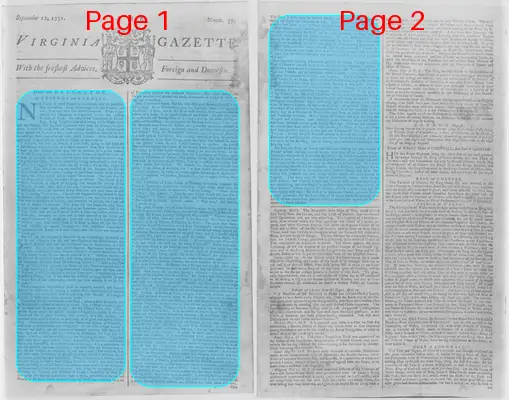
Literary
September 12, 1751
The Virginia Gazette
Richmond, Williamsburg, Richmond County, Virginia
What is this article about?
An essay from the Reflector on friendship and enemies, critiquing superficial bonds through Aesop's fable of the lark, examples from Timon of Athens, Chilon, Cicero, and others. It warns against mistaking vice for loyalty, advocates moral limits in friendships, and urges reconciliation with foes over blind trust.
Merged-components note: This is a continuation of the literary essay 'Of FRIENDS & ENEMIES' across pages 1 and 2, with sequential reading order and matching content flow.
Clippings
1 of 2
OCR Quality
98%
Excellent
Full Text
From the REFLECTOR.
Of FRIENDS & ENEMIES.
O Virtue is more frequently mentioned, and less practised,
than Friendship. Every Man imagines he has Friends; yet
every Man may here find himself deceived. What we generally
call Friendship is a spurious Virtue, that vanishes
in Time of Trial. Adversity is the Touchstone of Friendship.
King Tarquin declared it owing to his Misfortunes,
and Banishment, that he ever discovered who were his Friends, or Enemies;
because he could then no longer oblige them. Such Observations
have opened the Eyes of others, upon finding themselves deserted in Misfortunes
by those they esteemed their safest Friends. Aulus Gellius has
preserved to us an elegant Fable of Aesop, to this Purpose.
"A Lark, who had her Nest in a Corn-Field, going to seek Food for
her Young, charged them to observe carefully what they should see or
hear in her Absence; and give her an Account of it at her Return.
Whilst she was gone, they over-heard the Owner of the Field order his
Son, as the Corn was now ripe, to desire their Friends to assist in reaping
the next Day. This the trembling Young-ones related to their Mother;
and begged her to look out for a Place, where they might be
secure. The old Lark was not terrified at the Account, but bid her
little Brood have Patience; saying, if the Owner trusted to his Friends
only, the Field would not be reaped To-morrow. The next Day she
left them again; with the same Charge as before. The Owner of the
Field returned, in Hopes of Reaping, but waited the Arrival of his
Friends, in vain; then said to his Son, I perceive our Friends are unwilling
to come; go therefore to our Relations, and pray them to assist
us in reaping To-morrow. This also the frighted Young related to their
Mother, who again bid them be comforted; for, says she, it is as silly
to trust to Relations as Friends; and therefore be assured, the Corn will
not be reaped To-morrow. The Lark left her Brood the third Time.
The Owner came again, and finding no Relations appear, said to his
Son, Thou seest that in Time of Need, a Man has neither Friends nor
Relations; therefore, let thee and I take each of us our Sickle, and
reap To-morrow by ourselves. This the young Larks related to their
Mother: who then cried, Now it is Time to move off, for the Corn
will infallibly be reaped To-morrow. She, therefore, immediately
transferred her Brood to a safer Place; and the Corn was reaped accordingly.
But tho' we are frequently deceived in our Friendships, we should not
stretch our suspicion too far, and turn Prudence into Misanthropy, like
Timon of Athens; who had no Confidence but in Apemantus, and that
not entire. For as they once dined together, Apemantus happening to
say it was a satisfactory Meal; Timon replied, "It would have been more
satisfactory to me, if you had not partook of it." Another Instance of
his Hatred to Mankind was this, that having given a general Invitation to
the Athenians, he made them the following Speech: "I have a Fig-Tree
in my Court-Yard, whereon the People of this Place are accustomed to
hang themselves; but being determined to build upon the Spot where
it grows, I shall be obliged to cut the Tree down: I therefore give this
publick Notice, that, if any Man has a Mind to hang himself, he may
make Use of the Opportunity, whilst the Tree remains fit for his Purpose."
Such outrageous Malevolence must be carefully avoided, and Seneca's
Advice be followed, in chusing a middle Way, betwixt that of making
Friendship with all we meet, and of suspecting every Mortal. It is as great
a Folly to believe no Body, as every Body.
Friendship is often confounded with Party; whence Men frequently join
in Wickedness, instead of uniting in Virtue. Let a Thing be ever so good,
it becomes bad, if carried too far. All the Virtues have their Limits,
which should never be passed. Genuine Friendship consists in the close
Union of two or more Persons, who inwardly love one another; and
promote each other's Welfare as their own, in all good and lawful Designs
only: Otherwise the Junction loses the Name and Nature of Friendship;
and turns to Combination and Conspiracy. If one Man obliges himself to
defend and justify all the Actions of another, whether they be good or
bad, right or wrong; this is not Virtue or Friendship, but Vice and Villainy.
For there can be no Friendship but betwixt good Men. When bad
Men unite in the same Desires, Fears, Animosities, Endeavours, and Ends;
this is not Friendship, but Combination or Faction. It is a gross Error, to
call this Kind of Junction, Friendship: and arises from the strange Propensity
of the Vulgar, to confound Virtues and Vices. The common People
look upon Friendship as an offensive and defensive Alliance, on all
Occasions, good, bad and indifferent. When a Drunkard, a Robber, an Adulterer,
&c. is accused; these Vulgar Wretches think it their Duty to defend,
or bring off their Friends; and censure those who will not endeavour
to blanch and conceal such Enormities. But, if this be Friendship, the patronizing
of Thieves and Robbers is Virtue. According to these bad
Principles, the famous Cartouche was a Hero, who suffered the severest
Penalties, or undergone Years, without betraying his Gang; thinking the Law
of Friendship required this obstinate Behaviour. Yet many among the
Vulgar admired and praised this sturdy Resolution, as a Sign of true Courage
and Friendship.
Daily Experience shews, that few Men distinguish betwixt Friendship and
Conspiracy.
Even Philosophers, and the Learned, have been guilty of
this Error.
Chilon, one of the seven wise Greeks, once doubted how to
behave as a Judge, in an unjust Cause of his Friend. On the one Side,
he considered the Transgression of the Law; and on the other the Transgression
of Friendship; so that he took the Medium betwixt the Two; passed
Sentence upon his guilty Friend, but prevailed upon the Aeors to
acquit him; and fancied he thereby fulfilled the Duty both of a Judge
and Friend. Thus the Philosopher sacrificed his Character of Honesty,
to a false Idea of Friendship: For, to judge contrary to Law, or persuade
others to do so, is the same Thing, as to the Fault; tho' indeed the latter
is the greater Crime, because it adds Cunning to Injustice. An honest
Man will not regard the Person of his Friend, when appointed his Judge.
Yet many great Men besides Chilon, have given into this Error; as appears
among numerous Instances, from the Explanation of Gellius, upon
this very Procedure of Chilon: For Gellius thinks, that the Philosopher
here took an excellent middle Way; "so as to restrain two violent Passions
within due Bounds." We likewise see, that Cicero himself was
guilty of an Error, in declaring that a Man should not refuse to suffer
"a small Disgrace, in Order to procure a great Advantage to his Friend."
Tenuis vel turpitudo, vel infamia, subienda est; si eá re magna Utilitas Amico
quari potest.
The Friendship of Caius Blossius to Tiberius Gracchus, deserves the
Name of Treachery, rather than Friendship: Upon being asked what he
would do for his Friend, he answered, "Every Thing." "How, every
Thing?" says Laelius? "Suppose your Friend should bid you fire a
Temple?" "That," replied Blossius, "my Friend would never desire." "But suppose he should," rejoined Laelius. "Why then," said Blossius,
"I would do it."
The great Pericles judged more sensibly; when being desired by his
Friend to give a false Testimony in his Favour, answered, "A Man should
oblige his Friend in every Thing but Wickedness." Whence appears
the Folly of those who are ready to sacrifice even their Souls to their
Friends; as in the Fashion of Duelling by Proxy. The great Poet Simonides
once requested something unjust from Themistocles, whose Friendship
he relied on; but Themistocles replied, "if you should offend against the
Rules of Poetry, you would be no good Poet; and if I should offend
against the Laws, I can be no good Governor." Rutilius Rufus was
upbraided by his Friend in these Words, "What signifies your Friendship
to me, when you will not do what I request?" Rufus answered;
"And pray where is the Good of your Friendship to me, when you ask
a Thing which I dare not do?" Cicero's Rule of Friendship is right-
"Not to ask any Thing unjust; nor to do it if asked." Haec prima Lex in
Amicitiâ sancitur, ut neque rogemus res turpes, nec faciamus rogati.
It is necessary to procure Friends; but more necessary to reconcile ourselves
with Enemies. As Hatred has a stronger and quicker Effect than
Friendship; one Enemy may cost us more Hurt, than ten Friends can do us
Good. And hence the common Saying is justified; "One Enemy is too
much; and an hundred Friends too little." My Enemy may burn my House
in an Hour; and my Friends not build it up in a Year. A Character is
easily lost, but not easily recovered. Besides, true Friendship is rarer than
perfect Hatred. A Damon and Pythias, a Scipio and Laelius, are hard to
be met with: The World affords but few Examples of such perfect Friendship.
Friends, in Times of Trial, wriggle, draw back, hesitate, and fall
off; and we have Proverbs enow to that Purpose But not to mention
naked Friendships, of which History, and daily Experience, supply innumerable
Instances; we may observe that Hatred and Enmity are serious,
earnest, and constant Things; which never fail in the Will, when our
Enemy has Power to hurt. It is miserable to live without Friends; but
unsafe and dangerous to live among Enemies. If my Friend dies, I am
grieved: If my Enemy dies, I am freed from a threatened Danger. Most
of my Friends do me neither Good nor Harm; but he least of my Enemies
may hurt me. All Men are able to do Mischief. It is therefore
wrong to trust entirely to Friends; and say, "tho' we have some Enemies,
yet we have good Friends." It might be much safer to have neither
Friends nor Enemies. It is more prudent to be reconciled with a little
Enemy, than to procure a mighty Friend. Let an Enemy be ever so puny,
he has a Sting. Besides, we are not so much to regard what a Man is, as
what he may be. Experience shews, that many, whose Malice was despised,
have made themselves felt, when Opportunity offered. A despised
Enemy is not conquer'd. And as we see in Romances, that a Cat is sometimes
changed into a furious Knight; and a Foundling into a Prince's Son;
so we daily find, in Reality, great and unexpected Transformations of Men:
Whence it is advisable, to look even upon the meanest Person, as one whose
Help we may want some time or other. I have formerly despised an Enemy;
thinking it out of his power to hurt me; but have found him grow
over my Head, and render my Life uneasy. I now run into the other Extreme;
my Precaution being so great, that I am ready to make every Horse
a Bow; because History informs me, a Horse was once made a Consul.
This Fear, I own, may be carried too far: but when a Man has been burnt, he dreads
the Suspicion of Fire. He who has broke his Head against a low Door, is apt to stoop,
when he enters a high one.
If an Enemy cannot be brought to Terms; we should, at least, give him no fresh Provocation;
for thus, tho' he is not disarmed, his Rage may be lessened, if we should fall under his Lash.
But, we must not carry the Matter so far as the Nobleman mentioned by Selden. This Nobleman being once instructed by his Tutor, how to procure good Treatment, in Case of falling into his Enemy's Hands: The Pupil answered, "I have constantly followed your Rule, even as to the Devil himself; and therefore hope that his infernal Majesty will treat me with Civility, if I go to his Court."
Socrates once hearing Cleomenes praised for saying, "it was the Duty of a Prince to reward his Friends, and distress his Enemies;" replied, it might have been better if Cleomenes had taught, that "we should do good to our Friends, and be reconciled to our Enemies." The bitterest Enemy may be disarmed by Civility, and Patience. The great Pericles being once reviled by a Citizen, who continued his foul Language till Evening; Pericles ordered him to be lighted Home, because it was dark. Chrysippus, when reproached by a noted Reviler, said, "Friend, I praise thy Resolution, in thus continuing to support thy Character." "Do good to thy Friend," says the wise Cleobulus, "for that will increase his Friendship; and do good to thy Enemy for that will lessen his Hatred." An intelligent Commander fights resolutely against the Enemy; but takes Care to have it known, he fights out of Duty, not personal Enmity; and therefore, if he falls into the Enemy's Hands, he is not treated as a Murderer, but as a Prisoner of War; who hath done no more than his Post and Profession required. In the taking of Towns, not only Soldiers, but Women and Children, have been put to the Sword; when the Enemy had been insulted and enraged, during the Siege: Whereas the Conquerors would have been contented with subduing the Place, if the Conquered had been prudent enough to use only the Weapons of War, and not the Tongue. To this Purpose Plutarch makes a prudent Reflection, in the Example of one Euthymus, whom the Enemy would have spared, if it had not been for his Reviling; but his calling the Corinthians effeminate, cost him his Life.
We find this Rule no where less observed than at the Bar; where a Pleader seldom confines himself to the supporting of his Cause, without launching into personal Reflection and Insult: By which Procedure a good Cause is often made bad; and the insulted Lawyer, who before was only an Enemy to the Cause, becomes an Enemy to its Defender. If Cicero, in defending himself and the Republic, against Anthony, had dropt Invective; or not swelled his Harangues with personal Abuse, and bitter Sarcasm; it is probable the End of the Orator would not have proved so tragical. The same may be said of numerous others, who enrage their Enemy, and treat his Foibles and Failings with extreme Contempt; not considering that one single Circumstance may deliver them a Prey to their Enemy. Cicero slighted his Enemy, who in a short Time got the Ascendency over him. He trusted to numerous Friends, wherein he was greatly deceived; for the Friendship of so many noble Personages, with which he was intrenched, proved unable to defend him against the Resentment of a single Enemy.
Of FRIENDS & ENEMIES.
O Virtue is more frequently mentioned, and less practised,
than Friendship. Every Man imagines he has Friends; yet
every Man may here find himself deceived. What we generally
call Friendship is a spurious Virtue, that vanishes
in Time of Trial. Adversity is the Touchstone of Friendship.
King Tarquin declared it owing to his Misfortunes,
and Banishment, that he ever discovered who were his Friends, or Enemies;
because he could then no longer oblige them. Such Observations
have opened the Eyes of others, upon finding themselves deserted in Misfortunes
by those they esteemed their safest Friends. Aulus Gellius has
preserved to us an elegant Fable of Aesop, to this Purpose.
"A Lark, who had her Nest in a Corn-Field, going to seek Food for
her Young, charged them to observe carefully what they should see or
hear in her Absence; and give her an Account of it at her Return.
Whilst she was gone, they over-heard the Owner of the Field order his
Son, as the Corn was now ripe, to desire their Friends to assist in reaping
the next Day. This the trembling Young-ones related to their Mother;
and begged her to look out for a Place, where they might be
secure. The old Lark was not terrified at the Account, but bid her
little Brood have Patience; saying, if the Owner trusted to his Friends
only, the Field would not be reaped To-morrow. The next Day she
left them again; with the same Charge as before. The Owner of the
Field returned, in Hopes of Reaping, but waited the Arrival of his
Friends, in vain; then said to his Son, I perceive our Friends are unwilling
to come; go therefore to our Relations, and pray them to assist
us in reaping To-morrow. This also the frighted Young related to their
Mother, who again bid them be comforted; for, says she, it is as silly
to trust to Relations as Friends; and therefore be assured, the Corn will
not be reaped To-morrow. The Lark left her Brood the third Time.
The Owner came again, and finding no Relations appear, said to his
Son, Thou seest that in Time of Need, a Man has neither Friends nor
Relations; therefore, let thee and I take each of us our Sickle, and
reap To-morrow by ourselves. This the young Larks related to their
Mother: who then cried, Now it is Time to move off, for the Corn
will infallibly be reaped To-morrow. She, therefore, immediately
transferred her Brood to a safer Place; and the Corn was reaped accordingly.
But tho' we are frequently deceived in our Friendships, we should not
stretch our suspicion too far, and turn Prudence into Misanthropy, like
Timon of Athens; who had no Confidence but in Apemantus, and that
not entire. For as they once dined together, Apemantus happening to
say it was a satisfactory Meal; Timon replied, "It would have been more
satisfactory to me, if you had not partook of it." Another Instance of
his Hatred to Mankind was this, that having given a general Invitation to
the Athenians, he made them the following Speech: "I have a Fig-Tree
in my Court-Yard, whereon the People of this Place are accustomed to
hang themselves; but being determined to build upon the Spot where
it grows, I shall be obliged to cut the Tree down: I therefore give this
publick Notice, that, if any Man has a Mind to hang himself, he may
make Use of the Opportunity, whilst the Tree remains fit for his Purpose."
Such outrageous Malevolence must be carefully avoided, and Seneca's
Advice be followed, in chusing a middle Way, betwixt that of making
Friendship with all we meet, and of suspecting every Mortal. It is as great
a Folly to believe no Body, as every Body.
Friendship is often confounded with Party; whence Men frequently join
in Wickedness, instead of uniting in Virtue. Let a Thing be ever so good,
it becomes bad, if carried too far. All the Virtues have their Limits,
which should never be passed. Genuine Friendship consists in the close
Union of two or more Persons, who inwardly love one another; and
promote each other's Welfare as their own, in all good and lawful Designs
only: Otherwise the Junction loses the Name and Nature of Friendship;
and turns to Combination and Conspiracy. If one Man obliges himself to
defend and justify all the Actions of another, whether they be good or
bad, right or wrong; this is not Virtue or Friendship, but Vice and Villainy.
For there can be no Friendship but betwixt good Men. When bad
Men unite in the same Desires, Fears, Animosities, Endeavours, and Ends;
this is not Friendship, but Combination or Faction. It is a gross Error, to
call this Kind of Junction, Friendship: and arises from the strange Propensity
of the Vulgar, to confound Virtues and Vices. The common People
look upon Friendship as an offensive and defensive Alliance, on all
Occasions, good, bad and indifferent. When a Drunkard, a Robber, an Adulterer,
&c. is accused; these Vulgar Wretches think it their Duty to defend,
or bring off their Friends; and censure those who will not endeavour
to blanch and conceal such Enormities. But, if this be Friendship, the patronizing
of Thieves and Robbers is Virtue. According to these bad
Principles, the famous Cartouche was a Hero, who suffered the severest
Penalties, or undergone Years, without betraying his Gang; thinking the Law
of Friendship required this obstinate Behaviour. Yet many among the
Vulgar admired and praised this sturdy Resolution, as a Sign of true Courage
and Friendship.
Daily Experience shews, that few Men distinguish betwixt Friendship and
Conspiracy.
Even Philosophers, and the Learned, have been guilty of
this Error.
Chilon, one of the seven wise Greeks, once doubted how to
behave as a Judge, in an unjust Cause of his Friend. On the one Side,
he considered the Transgression of the Law; and on the other the Transgression
of Friendship; so that he took the Medium betwixt the Two; passed
Sentence upon his guilty Friend, but prevailed upon the Aeors to
acquit him; and fancied he thereby fulfilled the Duty both of a Judge
and Friend. Thus the Philosopher sacrificed his Character of Honesty,
to a false Idea of Friendship: For, to judge contrary to Law, or persuade
others to do so, is the same Thing, as to the Fault; tho' indeed the latter
is the greater Crime, because it adds Cunning to Injustice. An honest
Man will not regard the Person of his Friend, when appointed his Judge.
Yet many great Men besides Chilon, have given into this Error; as appears
among numerous Instances, from the Explanation of Gellius, upon
this very Procedure of Chilon: For Gellius thinks, that the Philosopher
here took an excellent middle Way; "so as to restrain two violent Passions
within due Bounds." We likewise see, that Cicero himself was
guilty of an Error, in declaring that a Man should not refuse to suffer
"a small Disgrace, in Order to procure a great Advantage to his Friend."
Tenuis vel turpitudo, vel infamia, subienda est; si eá re magna Utilitas Amico
quari potest.
The Friendship of Caius Blossius to Tiberius Gracchus, deserves the
Name of Treachery, rather than Friendship: Upon being asked what he
would do for his Friend, he answered, "Every Thing." "How, every
Thing?" says Laelius? "Suppose your Friend should bid you fire a
Temple?" "That," replied Blossius, "my Friend would never desire." "But suppose he should," rejoined Laelius. "Why then," said Blossius,
"I would do it."
The great Pericles judged more sensibly; when being desired by his
Friend to give a false Testimony in his Favour, answered, "A Man should
oblige his Friend in every Thing but Wickedness." Whence appears
the Folly of those who are ready to sacrifice even their Souls to their
Friends; as in the Fashion of Duelling by Proxy. The great Poet Simonides
once requested something unjust from Themistocles, whose Friendship
he relied on; but Themistocles replied, "if you should offend against the
Rules of Poetry, you would be no good Poet; and if I should offend
against the Laws, I can be no good Governor." Rutilius Rufus was
upbraided by his Friend in these Words, "What signifies your Friendship
to me, when you will not do what I request?" Rufus answered;
"And pray where is the Good of your Friendship to me, when you ask
a Thing which I dare not do?" Cicero's Rule of Friendship is right-
"Not to ask any Thing unjust; nor to do it if asked." Haec prima Lex in
Amicitiâ sancitur, ut neque rogemus res turpes, nec faciamus rogati.
It is necessary to procure Friends; but more necessary to reconcile ourselves
with Enemies. As Hatred has a stronger and quicker Effect than
Friendship; one Enemy may cost us more Hurt, than ten Friends can do us
Good. And hence the common Saying is justified; "One Enemy is too
much; and an hundred Friends too little." My Enemy may burn my House
in an Hour; and my Friends not build it up in a Year. A Character is
easily lost, but not easily recovered. Besides, true Friendship is rarer than
perfect Hatred. A Damon and Pythias, a Scipio and Laelius, are hard to
be met with: The World affords but few Examples of such perfect Friendship.
Friends, in Times of Trial, wriggle, draw back, hesitate, and fall
off; and we have Proverbs enow to that Purpose But not to mention
naked Friendships, of which History, and daily Experience, supply innumerable
Instances; we may observe that Hatred and Enmity are serious,
earnest, and constant Things; which never fail in the Will, when our
Enemy has Power to hurt. It is miserable to live without Friends; but
unsafe and dangerous to live among Enemies. If my Friend dies, I am
grieved: If my Enemy dies, I am freed from a threatened Danger. Most
of my Friends do me neither Good nor Harm; but he least of my Enemies
may hurt me. All Men are able to do Mischief. It is therefore
wrong to trust entirely to Friends; and say, "tho' we have some Enemies,
yet we have good Friends." It might be much safer to have neither
Friends nor Enemies. It is more prudent to be reconciled with a little
Enemy, than to procure a mighty Friend. Let an Enemy be ever so puny,
he has a Sting. Besides, we are not so much to regard what a Man is, as
what he may be. Experience shews, that many, whose Malice was despised,
have made themselves felt, when Opportunity offered. A despised
Enemy is not conquer'd. And as we see in Romances, that a Cat is sometimes
changed into a furious Knight; and a Foundling into a Prince's Son;
so we daily find, in Reality, great and unexpected Transformations of Men:
Whence it is advisable, to look even upon the meanest Person, as one whose
Help we may want some time or other. I have formerly despised an Enemy;
thinking it out of his power to hurt me; but have found him grow
over my Head, and render my Life uneasy. I now run into the other Extreme;
my Precaution being so great, that I am ready to make every Horse
a Bow; because History informs me, a Horse was once made a Consul.
This Fear, I own, may be carried too far: but when a Man has been burnt, he dreads
the Suspicion of Fire. He who has broke his Head against a low Door, is apt to stoop,
when he enters a high one.
If an Enemy cannot be brought to Terms; we should, at least, give him no fresh Provocation;
for thus, tho' he is not disarmed, his Rage may be lessened, if we should fall under his Lash.
But, we must not carry the Matter so far as the Nobleman mentioned by Selden. This Nobleman being once instructed by his Tutor, how to procure good Treatment, in Case of falling into his Enemy's Hands: The Pupil answered, "I have constantly followed your Rule, even as to the Devil himself; and therefore hope that his infernal Majesty will treat me with Civility, if I go to his Court."
Socrates once hearing Cleomenes praised for saying, "it was the Duty of a Prince to reward his Friends, and distress his Enemies;" replied, it might have been better if Cleomenes had taught, that "we should do good to our Friends, and be reconciled to our Enemies." The bitterest Enemy may be disarmed by Civility, and Patience. The great Pericles being once reviled by a Citizen, who continued his foul Language till Evening; Pericles ordered him to be lighted Home, because it was dark. Chrysippus, when reproached by a noted Reviler, said, "Friend, I praise thy Resolution, in thus continuing to support thy Character." "Do good to thy Friend," says the wise Cleobulus, "for that will increase his Friendship; and do good to thy Enemy for that will lessen his Hatred." An intelligent Commander fights resolutely against the Enemy; but takes Care to have it known, he fights out of Duty, not personal Enmity; and therefore, if he falls into the Enemy's Hands, he is not treated as a Murderer, but as a Prisoner of War; who hath done no more than his Post and Profession required. In the taking of Towns, not only Soldiers, but Women and Children, have been put to the Sword; when the Enemy had been insulted and enraged, during the Siege: Whereas the Conquerors would have been contented with subduing the Place, if the Conquered had been prudent enough to use only the Weapons of War, and not the Tongue. To this Purpose Plutarch makes a prudent Reflection, in the Example of one Euthymus, whom the Enemy would have spared, if it had not been for his Reviling; but his calling the Corinthians effeminate, cost him his Life.
We find this Rule no where less observed than at the Bar; where a Pleader seldom confines himself to the supporting of his Cause, without launching into personal Reflection and Insult: By which Procedure a good Cause is often made bad; and the insulted Lawyer, who before was only an Enemy to the Cause, becomes an Enemy to its Defender. If Cicero, in defending himself and the Republic, against Anthony, had dropt Invective; or not swelled his Harangues with personal Abuse, and bitter Sarcasm; it is probable the End of the Orator would not have proved so tragical. The same may be said of numerous others, who enrage their Enemy, and treat his Foibles and Failings with extreme Contempt; not considering that one single Circumstance may deliver them a Prey to their Enemy. Cicero slighted his Enemy, who in a short Time got the Ascendency over him. He trusted to numerous Friends, wherein he was greatly deceived; for the Friendship of so many noble Personages, with which he was intrenched, proved unable to defend him against the Resentment of a single Enemy.
What sub-type of article is it?
Essay
Fable
What themes does it cover?
Friendship
Moral Virtue
What keywords are associated?
Friendship
Enemies
Virtue
Aesop Fable
Timon Athens
Cicero
Pericles
Moral Limits
What entities or persons were involved?
From The Reflector
Literary Details
Title
Of Friends & Enemies.
Author
From The Reflector
Key Lines
Adversity Is The Touchstone Of Friendship.
Genuine Friendship Consists In The Close Union Of Two Or More Persons, Who Inwardly Love One Another; And Promote Each Other's Welfare As Their Own, In All Good And Lawful Designs Only.
It Is As Great A Folly To Believe No Body, As Every Body.
Cicero's Rule Of Friendship Is Right "Not To Ask Any Thing Unjust; Nor To Do It If Asked."
One Enemy Is Too Much; And An Hundred Friends Too Little.