Thank you for visiting SNEWPapers!
Sign up free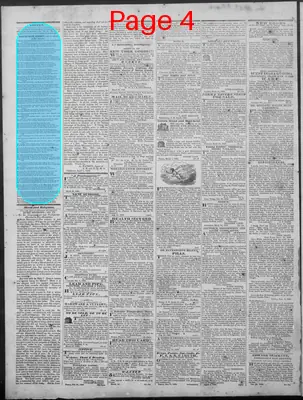
Literary
April 6, 1833
New Hampshire Statesman And State Journal
Concord, Merrimack County, New Hampshire
What is this article about?
Part Second of 'Dryburgh Abbey' by C. Swain is an elegiac poem mourning the death of Sir Walter Scott. In a visionary dream at Dryburgh Abbey, a procession of characters from Scott's novels and histories marches in tribute, blending romance, history, and sorrow for the 'Ariosto of the North.'
Clipping
OCR Quality
95%
Excellent
Full Text
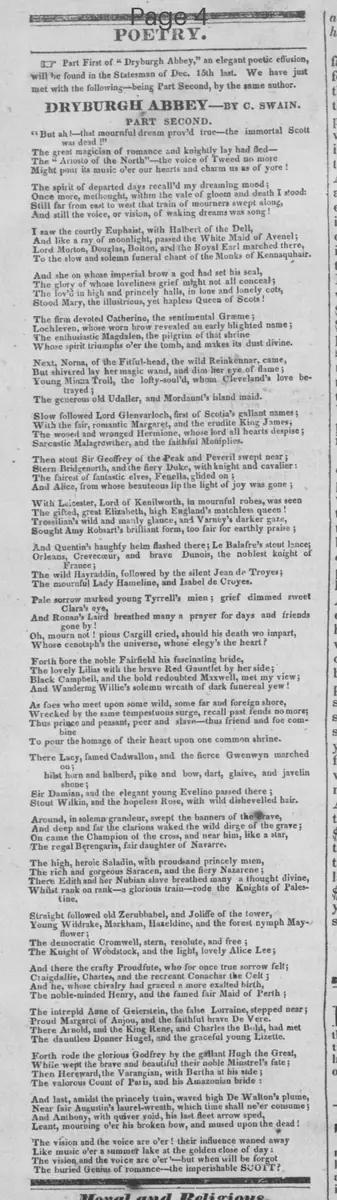
POETRY.
Part First of "Dryburgh Abbey," an elegant poetic effusion, will be found in the Statesman of Dec. 15th last. We have just met with the following—being Part Second, by the same author.
DRYBURGH ABBEY—BY C. SWAIN.
PART SECOND.
But ah!—that mournful dream prov'd true—the immortal Scott
The great magician of romance and knightly lay had fled—was dead!
The "Ariosto of the North"—the voice of Tweed no more
Might pour its music o'er our hearts and charm us as of yore!
The spirit of departed days recall'd my dreaming mood;
Once more, methought, within the vale of gloom and death I stood:
Still far from east to west that train of mourners swept along,
And still the voice, or vision, of waking dreams was song!
I saw the courtly Euphaist, with Halbert of the Dell,
And like a ray of moonlight, passed the White Maid of Avenel;
Lord Morton, Douglas, Bolton, and the Royal Earl marched there,
To the slow and solemn funeral chant of the Monks of Kennaquhair.
And she on whose imperial brow a god had set his seal,
The glory of whose loveliness grief might not all conceal;
The lov'd in high and princely halls, in lone and lonely cots,
Stood Mary, the illustrious, yet hapless Queen of Scots!
The firm devoted Catherine, the sentimental Graeme;
Lochleven, whose worn brow revealed an early blighted name;
The enthusiastic Magdalen, the pilgrim of that shrine
Whose spirit triumphs o'er the tomb, and makes its dust divine.
Next, Norna, of the Fitful-head, the wild Reimkennar, came,
But shivered lay her magic wand, and dim her eye of flame;
Young Minna Troil, the lofty-soul'd, whom Cleveland's love betray'd;
The generous old Udaller, and Mordaunt's island maid.
Slow followed Lord Glenvarloch, first of Scotia's gallant names;
With the fair, romantic Margaret, and the erudite King James,
The wooed and wronged Hermione, whose lord all hearts despise;
Sarcastic Malagrowther, and the faithful Moniplies.
Then stout Sir Geoffrey of the Peak and Peveril swept near;
Stern Bridgenorth, and the fiery Duke, with knight and cavalier:
The fairest of fantastic elves, Fenella, glided on;
And Alice, from whose beauteous lip the light of joy was gone;
With Leicester, Lord of Kenilworth, in mournful robes, was seen
The gifted, great Elizabeth, high England's matchless queen!
Tressilian's wild and manly glance, and Varney's darker gaze,
Sought Amy Robsart's brilliant form, too fair for earthly praise;
And Quentin's haughty helm flashed there; Le Balafre's stout lance;
Orleans, Crevecoeur, and brave Dunois, the noblest knight of France;
The wild Hayraddin, followed by the silent Jean de Troyes;
The mournful Lady Hameline, and Isabel de Croye.
Pale sorrow marked young Tyrrel's mien; grief dimmed sweet Clara's eye.
And Ronan's Laird
breathed many a prayer for days and friends
gone by!
Oh, mourn not! pious Cargill cried, should his death woe impart,
Whose cenotaph's the universe, whose elegy's the heart?
Forth bore the noble Fairford his fascinating bride,
The lovely Lilias with the brave Red Gauntlet by her side;
Black Campbell, and the bold redoubted Maxwell, met my view;
And Wandering Willie's solemn wreath of dark funereal yew!
As foes who meet upon some wild, some far and foreign shore,
Wreck'd by the same tempestuous surge, recall past feuds no more;
Thus prince and peasant, peer and slave—thus friend and foe combine
To pour the homage of their heart upon one common shrine.
There Lacy, fam'd Cadwallon, and the fierce Gwenwyn march'd
whilst horn and halberd, pike and bow, dart, glaive, and javelin
on;
shone;
Sir Damian, and the elegant young Evelina pass'd there;
Stout Wilkin, and the hopeless Rose, with wild dishevelled hair.
Around, in solemn grandeur, swept the banners of the Brave,
And deep and far the clarions wak'd the wild dirge of the grave;
On came the Champion of the cross, and near him, like a star,
The regal Berengaria, fair daughter of Navarre.
The high, heroic Saladin, with proud and princely mien,
The rich and gorgeous Saracen, and the fiery Nazarene;
There Edith and her Nubian slave breathed many a thought divine,
Whilst rank on rank—a glorious train—rode the Knights of Palestine.
Straight follow'd old Zerubbabel, and Joliffe of the tower,
Young Wildrake, Markham, Hazeldine, and the forest nymph Mayflower;
The democratic Cromwell, stern, resolute, and free;
The Knight of Woodstock, and the light, lovely Alice Lee;
And there the crafty Proudfute, who for once true sorrow felt;
Craigdarrie, Charles, and the recreant Conachar the Celt;
And he, whose chivalry had grac'd a more exalted birth,
The noble-minded Henry, and the fam'd fair Maid of Perth;
The intrepid Anne of Geierstein, the false Lorraine, stepp'd near;
Proud Margaret of Anjou, and the faithful brave De Vere.
There Arnold, and the King Rene, and Charles the Bold, had met
The dauntless Donnerhugel, and the graceful young Lizette.
Forth rode the glorious Godfrey by the gallant Hugh the Great,
While wept the brave and beautiful their noble Minstrel's fate;
Then Hereward, the Varangian, with Bertha at his side;
The valorous Count of Paris, and his Amazonian bride:
And last, amidst the princely train, wav'd high De Walton's plume,
Near fair Augustine's laurel-wreath, which time shall ne'er consume
And Anthony, with quiver void, his last fleet arrow sped,
Leant, mourning o'er his broken bow, and mus'd upon the dead!
The vision and the voice are o'er! their influence wan'd away
Like music o'er a summer lake at the golden close of day:
The vision and the voice are o'er—but when will be forgot
The buried Genius of romance—the imperishable Scott?
Part First of "Dryburgh Abbey," an elegant poetic effusion, will be found in the Statesman of Dec. 15th last. We have just met with the following—being Part Second, by the same author.
DRYBURGH ABBEY—BY C. SWAIN.
PART SECOND.
But ah!—that mournful dream prov'd true—the immortal Scott
The great magician of romance and knightly lay had fled—was dead!
The "Ariosto of the North"—the voice of Tweed no more
Might pour its music o'er our hearts and charm us as of yore!
The spirit of departed days recall'd my dreaming mood;
Once more, methought, within the vale of gloom and death I stood:
Still far from east to west that train of mourners swept along,
And still the voice, or vision, of waking dreams was song!
I saw the courtly Euphaist, with Halbert of the Dell,
And like a ray of moonlight, passed the White Maid of Avenel;
Lord Morton, Douglas, Bolton, and the Royal Earl marched there,
To the slow and solemn funeral chant of the Monks of Kennaquhair.
And she on whose imperial brow a god had set his seal,
The glory of whose loveliness grief might not all conceal;
The lov'd in high and princely halls, in lone and lonely cots,
Stood Mary, the illustrious, yet hapless Queen of Scots!
The firm devoted Catherine, the sentimental Graeme;
Lochleven, whose worn brow revealed an early blighted name;
The enthusiastic Magdalen, the pilgrim of that shrine
Whose spirit triumphs o'er the tomb, and makes its dust divine.
Next, Norna, of the Fitful-head, the wild Reimkennar, came,
But shivered lay her magic wand, and dim her eye of flame;
Young Minna Troil, the lofty-soul'd, whom Cleveland's love betray'd;
The generous old Udaller, and Mordaunt's island maid.
Slow followed Lord Glenvarloch, first of Scotia's gallant names;
With the fair, romantic Margaret, and the erudite King James,
The wooed and wronged Hermione, whose lord all hearts despise;
Sarcastic Malagrowther, and the faithful Moniplies.
Then stout Sir Geoffrey of the Peak and Peveril swept near;
Stern Bridgenorth, and the fiery Duke, with knight and cavalier:
The fairest of fantastic elves, Fenella, glided on;
And Alice, from whose beauteous lip the light of joy was gone;
With Leicester, Lord of Kenilworth, in mournful robes, was seen
The gifted, great Elizabeth, high England's matchless queen!
Tressilian's wild and manly glance, and Varney's darker gaze,
Sought Amy Robsart's brilliant form, too fair for earthly praise;
And Quentin's haughty helm flashed there; Le Balafre's stout lance;
Orleans, Crevecoeur, and brave Dunois, the noblest knight of France;
The wild Hayraddin, followed by the silent Jean de Troyes;
The mournful Lady Hameline, and Isabel de Croye.
Pale sorrow marked young Tyrrel's mien; grief dimmed sweet Clara's eye.
And Ronan's Laird
breathed many a prayer for days and friends
gone by!
Oh, mourn not! pious Cargill cried, should his death woe impart,
Whose cenotaph's the universe, whose elegy's the heart?
Forth bore the noble Fairford his fascinating bride,
The lovely Lilias with the brave Red Gauntlet by her side;
Black Campbell, and the bold redoubted Maxwell, met my view;
And Wandering Willie's solemn wreath of dark funereal yew!
As foes who meet upon some wild, some far and foreign shore,
Wreck'd by the same tempestuous surge, recall past feuds no more;
Thus prince and peasant, peer and slave—thus friend and foe combine
To pour the homage of their heart upon one common shrine.
There Lacy, fam'd Cadwallon, and the fierce Gwenwyn march'd
whilst horn and halberd, pike and bow, dart, glaive, and javelin
on;
shone;
Sir Damian, and the elegant young Evelina pass'd there;
Stout Wilkin, and the hopeless Rose, with wild dishevelled hair.
Around, in solemn grandeur, swept the banners of the Brave,
And deep and far the clarions wak'd the wild dirge of the grave;
On came the Champion of the cross, and near him, like a star,
The regal Berengaria, fair daughter of Navarre.
The high, heroic Saladin, with proud and princely mien,
The rich and gorgeous Saracen, and the fiery Nazarene;
There Edith and her Nubian slave breathed many a thought divine,
Whilst rank on rank—a glorious train—rode the Knights of Palestine.
Straight follow'd old Zerubbabel, and Joliffe of the tower,
Young Wildrake, Markham, Hazeldine, and the forest nymph Mayflower;
The democratic Cromwell, stern, resolute, and free;
The Knight of Woodstock, and the light, lovely Alice Lee;
And there the crafty Proudfute, who for once true sorrow felt;
Craigdarrie, Charles, and the recreant Conachar the Celt;
And he, whose chivalry had grac'd a more exalted birth,
The noble-minded Henry, and the fam'd fair Maid of Perth;
The intrepid Anne of Geierstein, the false Lorraine, stepp'd near;
Proud Margaret of Anjou, and the faithful brave De Vere.
There Arnold, and the King Rene, and Charles the Bold, had met
The dauntless Donnerhugel, and the graceful young Lizette.
Forth rode the glorious Godfrey by the gallant Hugh the Great,
While wept the brave and beautiful their noble Minstrel's fate;
Then Hereward, the Varangian, with Bertha at his side;
The valorous Count of Paris, and his Amazonian bride:
And last, amidst the princely train, wav'd high De Walton's plume,
Near fair Augustine's laurel-wreath, which time shall ne'er consume
And Anthony, with quiver void, his last fleet arrow sped,
Leant, mourning o'er his broken bow, and mus'd upon the dead!
The vision and the voice are o'er! their influence wan'd away
Like music o'er a summer lake at the golden close of day:
The vision and the voice are o'er—but when will be forgot
The buried Genius of romance—the imperishable Scott?
What sub-type of article is it?
Poem
Elegy
Vision Or Dream
What themes does it cover?
Death Mortality
Patriotism
What keywords are associated?
Elegy
Scott
Dryburgh Abbey
Vision
Mourners
Scottish History
Romance
Funeral Procession
What entities or persons were involved?
C. Swain
Literary Details
Title
Dryburgh Abbey—By C. Swain. Part Second.
Author
C. Swain
Subject
Mourning The Death Of Sir Walter Scott
Form / Style
Visionary Elegy In Verse Featuring Characters From Scott's Works
Key Lines
But Ah!—That Mournful Dream Prov'd True—The Immortal Scott
The Great Magician Of Romance And Knightly Lay Had Fled—Was Dead!
The "Ariosto Of The North"—The Voice Of Tweed No More
Might Pour Its Music O'er Our Hearts And Charm Us As Of Yore!
Oh, Mourn Not! Pious Cargill Cried, Should His Death Woe Impart,
Whose Cenotaph's The Universe, Whose Elegy's The Heart?
Thus Prince And Peasant, Peer And Slave—Thus Friend And Foe Combine
To Pour The Homage Of Their Heart Upon One Common Shrine.
The Vision And The Voice Are O'er—But When Will Be Forgot
The Buried Genius Of Romance—The Imperishable Scott?