Thank you for visiting SNEWPapers!
Sign up free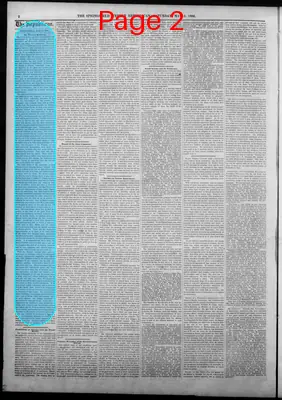
Editorial
May 5, 1866
Springfield Weekly Republican
Springfield, Hampden County, Massachusetts
What is this article about?
Editorial from The Republican critiques the Western Railroad's management for lacking innovation and adapting poorly to post-war economic growth, urging a new board of directors. It also dismisses Boston's ambitions to rival New York commercially, suggesting focus on local opportunities.
Clipping

OCR Quality
98%
Excellent
Full Text
The Republican.
SPRINGFIELD, MAY 5, 1866.
The Western Railroad.
The report of the legislative committee on the management of the Western railroad (Boston, Springfield and Worcester) will find general response and carry wide conviction. Its revelations and its suggestions are in accordance with popular opinion; and their official development will gain public attention and discussion, and thus go far to work the needed reform. It can hardly have escaped the attention of any intelligent observer that the managing policy of this road, though singularly careful and discreet in many respects, has long lacked in breadth of idea and liberality of application. It has looked too closely to present, immediate profit, and too narrowly at the great and growing public demands, and the ways and means of developing new business. It has followed rather than led business; the study seeming more to be how much money it could make out of a little business, than how to accommodate and stimulate and broaden the wants of the public. Its model has been the Hartford and New Haven railroad,— the very essence and embodiment of Connecticut wooden-nutmegism; and it has come nigh to being equally abused by a fretted and bullied constituency.
The committee's report is not altogether candid and impartial in two respects. It does not, in the first place, sufficiently recognize the fact that the business of the country has developed and changed since 1860 in greater degree than the instrumentalities for performing it could possibly do, or than even the most sanguine persons had foreseen or imagined. The closing of the Mississippi river by the war threw upon the railroads the entire business of the West; new roads could not well be built— both capital and labor being lacking—in time to receive it: and for this and other causes associated with the war, even the most enterprising and best prepared roads were poorly fitted for the great demands upon them. Enlargements were expensive, and difficult, and sometimes impossible, to be obtained at any price. Few of us at first fully realized that the country was taking a new and gigantic stride forward in business and wealth, not to be retraced, and that the demands of the war period for increased means of transportation were to be fully maintained after it was over. The managers of the Western railroad were most of all incompetent, from nature and association, to realize this, and so the slowest to act under the pressure. They have only failed more signally than the others. Their faith was less, their instincts duller—they have waited and waited, and are still waiting, for business to go down, instead of perceiving that the tide was only to rise higher and higher.
The other defect of the committee is their adoption of that amusing Boston "notion" that there is nothing in the way of that city growing equally fast with New York, save better communications with the West. We do not suppose the idea can ever be wrung out of a good many Boston heads that, if Chester W. Chapin had been Ginery Twitchell and Henry Gray been E.S. Tobey for the last ten years, their city would be hundreds of millions richer and have a hundred thousand more inhabitants; and that Wall street would rack with jealousy of State street. Boston never can understand why New York should be the great commercial emporium and not herself; she is always searching for every reason but the right one; and she tries as far as possible to question the fact even. But let Boston multiply indefinitely her avenues to the West, and cheapen her freights so much as she will, the fact will continue as fixed and as overpowering as it is now. She must always share but in small proportion in the trade of the great West; New York is the legitimate, inevitable outlet for that; and no double tracks, no multiple of cars, no Hoosac tunnel, can change the fact, or abate its degree. Boston has a local field, which it only half cultivates now, and to which it may more wisely turn its eyes. Maine and the eastern British provinces hold now the largest elements for Boston growth. These and the multiplication of avenues to all parts of its own section of the other New England states, stimulating and diversifying their manufacturing industries, are the chief sources for its future prosperity and wealth. It is comparatively but a small field that is Boston's, but it is a rich and a sure one. Let it narrow the circle of its fretting ambitions and its vain conquests, and cultivate more assiduously what it already has and is sure of.
What the Western railroad needs most is a fresh board of directors; men of live and practical ideas; original and suggestive and influential. The president is one of the ablest railroad managers in the country; but he lacks very essential qualities, which such a board of directors would give him. His present associates simply sustain and confirm his policy: old "Bourbons," who have been out of business and life for a generation, and have not learned a new thing or forgotten an old one for twenty years; or petty ward and village politicians, who say yea, yea, and nay, nay, when Mr Chapin tells them to, and confine their original duties to giving free passes to their families and friends. If the state would choose competent men to represent it in the board, there would be no occasion for such reports as this one just made, nor to legislate in definition of their duties. The direction lacks active, intelligent, courageous, practical business men; men of liberal ideas and generous faith; of quick instincts and certain knowledge of the courses of trade and travel. Given these, to supplement the president's own administrative ability and economic and conservative training and habits, and the Western railroad would soon fill its mission, and become more a help and less a hindrance to the courses of business and the prosperity and comfort of the people of Massachusetts. And while the directors are about it, they might safely put a little better manners into the management also. Energy is useful, but ruffianism should never be mistaken for it, and rarely produces happy results.
SPRINGFIELD, MAY 5, 1866.
The Western Railroad.
The report of the legislative committee on the management of the Western railroad (Boston, Springfield and Worcester) will find general response and carry wide conviction. Its revelations and its suggestions are in accordance with popular opinion; and their official development will gain public attention and discussion, and thus go far to work the needed reform. It can hardly have escaped the attention of any intelligent observer that the managing policy of this road, though singularly careful and discreet in many respects, has long lacked in breadth of idea and liberality of application. It has looked too closely to present, immediate profit, and too narrowly at the great and growing public demands, and the ways and means of developing new business. It has followed rather than led business; the study seeming more to be how much money it could make out of a little business, than how to accommodate and stimulate and broaden the wants of the public. Its model has been the Hartford and New Haven railroad,— the very essence and embodiment of Connecticut wooden-nutmegism; and it has come nigh to being equally abused by a fretted and bullied constituency.
The committee's report is not altogether candid and impartial in two respects. It does not, in the first place, sufficiently recognize the fact that the business of the country has developed and changed since 1860 in greater degree than the instrumentalities for performing it could possibly do, or than even the most sanguine persons had foreseen or imagined. The closing of the Mississippi river by the war threw upon the railroads the entire business of the West; new roads could not well be built— both capital and labor being lacking—in time to receive it: and for this and other causes associated with the war, even the most enterprising and best prepared roads were poorly fitted for the great demands upon them. Enlargements were expensive, and difficult, and sometimes impossible, to be obtained at any price. Few of us at first fully realized that the country was taking a new and gigantic stride forward in business and wealth, not to be retraced, and that the demands of the war period for increased means of transportation were to be fully maintained after it was over. The managers of the Western railroad were most of all incompetent, from nature and association, to realize this, and so the slowest to act under the pressure. They have only failed more signally than the others. Their faith was less, their instincts duller—they have waited and waited, and are still waiting, for business to go down, instead of perceiving that the tide was only to rise higher and higher.
The other defect of the committee is their adoption of that amusing Boston "notion" that there is nothing in the way of that city growing equally fast with New York, save better communications with the West. We do not suppose the idea can ever be wrung out of a good many Boston heads that, if Chester W. Chapin had been Ginery Twitchell and Henry Gray been E.S. Tobey for the last ten years, their city would be hundreds of millions richer and have a hundred thousand more inhabitants; and that Wall street would rack with jealousy of State street. Boston never can understand why New York should be the great commercial emporium and not herself; she is always searching for every reason but the right one; and she tries as far as possible to question the fact even. But let Boston multiply indefinitely her avenues to the West, and cheapen her freights so much as she will, the fact will continue as fixed and as overpowering as it is now. She must always share but in small proportion in the trade of the great West; New York is the legitimate, inevitable outlet for that; and no double tracks, no multiple of cars, no Hoosac tunnel, can change the fact, or abate its degree. Boston has a local field, which it only half cultivates now, and to which it may more wisely turn its eyes. Maine and the eastern British provinces hold now the largest elements for Boston growth. These and the multiplication of avenues to all parts of its own section of the other New England states, stimulating and diversifying their manufacturing industries, are the chief sources for its future prosperity and wealth. It is comparatively but a small field that is Boston's, but it is a rich and a sure one. Let it narrow the circle of its fretting ambitions and its vain conquests, and cultivate more assiduously what it already has and is sure of.
What the Western railroad needs most is a fresh board of directors; men of live and practical ideas; original and suggestive and influential. The president is one of the ablest railroad managers in the country; but he lacks very essential qualities, which such a board of directors would give him. His present associates simply sustain and confirm his policy: old "Bourbons," who have been out of business and life for a generation, and have not learned a new thing or forgotten an old one for twenty years; or petty ward and village politicians, who say yea, yea, and nay, nay, when Mr Chapin tells them to, and confine their original duties to giving free passes to their families and friends. If the state would choose competent men to represent it in the board, there would be no occasion for such reports as this one just made, nor to legislate in definition of their duties. The direction lacks active, intelligent, courageous, practical business men; men of liberal ideas and generous faith; of quick instincts and certain knowledge of the courses of trade and travel. Given these, to supplement the president's own administrative ability and economic and conservative training and habits, and the Western railroad would soon fill its mission, and become more a help and less a hindrance to the courses of business and the prosperity and comfort of the people of Massachusetts. And while the directors are about it, they might safely put a little better manners into the management also. Energy is useful, but ruffianism should never be mistaken for it, and rarely produces happy results.
What sub-type of article is it?
Infrastructure
Economic Policy
Trade Or Commerce
What keywords are associated?
Western Railroad
Railroad Management
Boston Commerce
New York Rivalry
Post War Economy
Board Of Directors
Infrastructure Reform
What entities or persons were involved?
Western Railroad
Chester W. Chapin
Boston
New York
Hartford And New Haven Railroad
Ginery Twitchell
Henry Gray
E.S. Tobey
Editorial Details
Primary Topic
Critique Of Western Railroad Management And Boston's Commercial Ambitions
Stance / Tone
Critical And Reform Oriented
Key Figures
Western Railroad
Chester W. Chapin
Boston
New York
Hartford And New Haven Railroad
Ginery Twitchell
Henry Gray
E.S. Tobey
Key Arguments
Management Policy Lacks Breadth And Focuses On Immediate Profit Over Public Needs
Failed To Adapt To Post War Business Growth And Increased Transportation Demands
Committee Report Overlooks Wartime Challenges But Highlights Managerial Incompetence
Boston's Rivalry With New York Is Misguided; Focus On Local New England Opportunities Instead
Needs New Board Of Directors With Innovative And Practical Business Leaders
Current Directors Are Outdated Or Politically Compliant
Improve Management Manners To Avoid Ruffianism