Thank you for visiting SNEWPapers!
Sign up free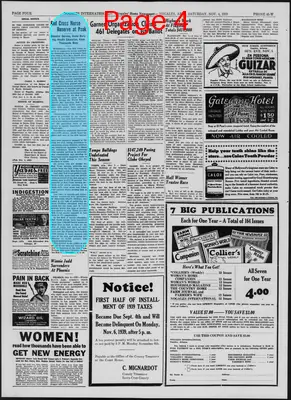
Story
November 4, 1939
Nogales International
Nogales, Santa Cruz County, Arizona
What is this article about?
The American Red Cross nursing reserve reaches a peak with 15,000 first-reserve nurses available for military and disaster duty, totaling 44,283 reservists. Nurses engage in public health education, home care instruction, school examinations, and community services, supported by chapter memberships.
Clipping

OCR Quality
98%
Excellent
Full Text
NOGALES INT'L
Red Cross Nurse Reserve at Peak
Disaster Service. Home Nursing, Health Education, Keep Thousands Busy
Washington.-The Red Cross reserve of registered nurses qualified for immediate duty is stronger than ever before, Miss Mary Beard, director of the American Red Cross nursing services, announced.
"We now have a first-reserve of 15,000 unmarried nurses under 40 years of age available for duty with the Army, Navy or government nursing services and subject to call by the Red Cross for disaster work," she said. "This is 700 more than any previous first reserve registration."
Miss Beard pointed out that the increase has been gradual and that only registered nurses meeting rigid requirements of training and physical fitness are enrolled. All classes of nurse reservists, including nurses now employed by the Red Cross, bring the reserve corps total to 44,283. During the World War of 1914-18 the American Red Cross mustered nearly 20,000 nurses for duty with Army, Navy and Red Cross hospitals, at home and overseas.
"Maintenance of the Nurses Reserve is provided by our charter and is in line with Red Cross policies of prevention and preparedness, but the peacetime work of our nurses is equally important," Miss Beard said.
The director explained that more than 2,000 nurses, chiefly home hygiene and care of the sick instructors, were regularly engaged in visiting the sick, aiding physicians in examining school children, conducting inoculation programs to stamp out contagious illness, launching trial nursing services in out-of-the-way communities, and carrying on important health education work to qualify family groups to care for sickness at home.
All nurses who are needed for Red Cross nursing activities are drawn from the Red Cross reserve of qualified nurses, Miss Beard said. Last year Red Cross public health nurses made more than one million visits on behalf of the sick and gave skilled care to 272,729 persons. The majority of Red Cross nursing services cover entire counties to include both rural areas and industrial centers where nursing help is scarce.
Last year, in schools and clinics, nurses cooperated with physicians in examining 595,575 children, and aided in the task of correcting defects. Children examined were enrolled for the most part in rural schools where this type of preventive service is rare. There are 655 Red Cross nurses engaged in this work in 477 communities.
In the field of health education, Red Cross nurses have instructed more than 1,000,000 family members since 1914 in how to care for the sick at home and have set new standards of hygiene for the family. Last year the Nursing Service held 4,505 classes in home hygiene and care of the sick and awarded certificates to 61,296 persons who passed examinations.
This service to the public is supported by the men and women who join as members of the Red Cross, through their local Chapters, during the Roll Call, November 11 to 30.
Red Cross Nurse Reserve at Peak
Disaster Service. Home Nursing, Health Education, Keep Thousands Busy
Washington.-The Red Cross reserve of registered nurses qualified for immediate duty is stronger than ever before, Miss Mary Beard, director of the American Red Cross nursing services, announced.
"We now have a first-reserve of 15,000 unmarried nurses under 40 years of age available for duty with the Army, Navy or government nursing services and subject to call by the Red Cross for disaster work," she said. "This is 700 more than any previous first reserve registration."
Miss Beard pointed out that the increase has been gradual and that only registered nurses meeting rigid requirements of training and physical fitness are enrolled. All classes of nurse reservists, including nurses now employed by the Red Cross, bring the reserve corps total to 44,283. During the World War of 1914-18 the American Red Cross mustered nearly 20,000 nurses for duty with Army, Navy and Red Cross hospitals, at home and overseas.
"Maintenance of the Nurses Reserve is provided by our charter and is in line with Red Cross policies of prevention and preparedness, but the peacetime work of our nurses is equally important," Miss Beard said.
The director explained that more than 2,000 nurses, chiefly home hygiene and care of the sick instructors, were regularly engaged in visiting the sick, aiding physicians in examining school children, conducting inoculation programs to stamp out contagious illness, launching trial nursing services in out-of-the-way communities, and carrying on important health education work to qualify family groups to care for sickness at home.
All nurses who are needed for Red Cross nursing activities are drawn from the Red Cross reserve of qualified nurses, Miss Beard said. Last year Red Cross public health nurses made more than one million visits on behalf of the sick and gave skilled care to 272,729 persons. The majority of Red Cross nursing services cover entire counties to include both rural areas and industrial centers where nursing help is scarce.
Last year, in schools and clinics, nurses cooperated with physicians in examining 595,575 children, and aided in the task of correcting defects. Children examined were enrolled for the most part in rural schools where this type of preventive service is rare. There are 655 Red Cross nurses engaged in this work in 477 communities.
In the field of health education, Red Cross nurses have instructed more than 1,000,000 family members since 1914 in how to care for the sick at home and have set new standards of hygiene for the family. Last year the Nursing Service held 4,505 classes in home hygiene and care of the sick and awarded certificates to 61,296 persons who passed examinations.
This service to the public is supported by the men and women who join as members of the Red Cross, through their local Chapters, during the Roll Call, November 11 to 30.
What sub-type of article is it?
News Report
Organizational Update
What keywords are associated?
Red Cross Nurses
Nurse Reserve
Public Health
Health Education
Disaster Preparedness
Home Nursing
What entities or persons were involved?
Miss Mary Beard
Where did it happen?
Washington
Story Details
Key Persons
Miss Mary Beard
Location
Washington
Event Date
Last Year
Story Details
The Red Cross nursing reserve is at its strongest with 15,000 first-reserve nurses for disaster and military duty, totaling 44,283. Nurses conduct public health visits, school examinations, inoculations, and home care education, serving over a million people annually.