Thank you for visiting SNEWPapers!
Sign up free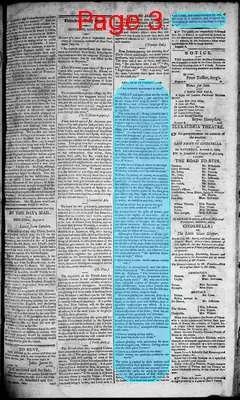
Literary
August 6, 1808
Alexandria Daily Gazette, Commercial & Political
Alexandria, Virginia
What is this article about?
A prose essay reflecting on the grandeur of nature and the cosmos as evidence of God's wisdom and power, condemning infidelity as madness and impiety, and extolling the sublime pleasure of pious contemplation under the night sky.
Clipping
OCR Quality
98%
Excellent
Full Text
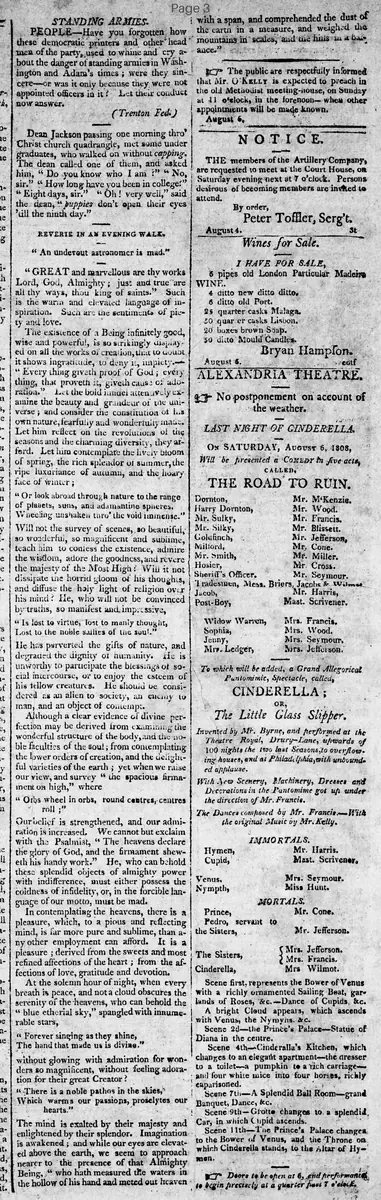
REVERIE IN AN EVENING WALK.
"An undevout astronomer is mad."
"GREAT and marvellous are thy works, Lord, God, Almighty: just and true are all thy ways, thou king of saints." Such is the warm and elevated language of inspiration. Such are the sentiments of piety and love.
The existence of a Being infinitely good, wise and powerful, is so strikingly displayed on all the works of creation, that to doubt it shows ingratitude, to deny it, impiety. "Every thing giveth proof of God; every thing, that proveth it, giveth cause of adoration." Let the bold infidel attentively examine the beauty and grandeur of the universe; and consider the constitution of his own nature, fearfully and wonderfully made. Let him reflect on the revolutions of the seasons and the charming diversity, they afford. Let him contemplate the lively bloom of spring, the rich splendor of summer, the ripe luxuriance of autumn, and the hoary face of winter;
"Or look abroad through nature to the range of planets, suns, and adamantine spheres,
Wheeling unshaken thro'the void immense."
Will not the survey of scenes, so beautiful, so wonderful, so magnificent and sublime, teach him to confess the existence, admire the wisdom, adore the goodness, and revere the majesty of the Most High? Will it not dissipate the horrid gloom of his thoughts, and diffuse the holy light of religion over his mind? He, who will not be convinced by truths, so manifest and impressive,
"Is lost to virtue, lost to manly thought,
Lost to the noble sallies of the soul."
He has perverted the gifts of nature, and degraded the dignity of humanity. He is unworthy to participate the blessings of social intercourse, or to enjoy the esteem of his fellow creatures. He should be considered as an alien to society, an enemy to man, and an object of contempt.
Although a clear evidence of divine perfection may be derived from examining the wonderful structure of the body, and the noble faculties of the soul; from contemplating the lower orders of creation, and the delightful varieties of the earth; yet when we raise our view, and survey "the spacious firmament on high," where
"Orbs wheel in orbs, round centres, centres roll;"
Our belief is strengthened, and our admiration is increased. We cannot but exclaim with the Psalmist, "The heavens declare the glory of God, and the firmament sheweth his handy work." He, who can behold these splendid objects of almighty power with indifference, must either possess the coldness of infidelity, or, in the forcible language of our motto, must be mad.
In contemplating the heavens, there is a pleasure, which, to a pious and reflecting mind, is far more pure and sublime, than any other employment can afford. It is a pleasure derived from the sweets and most refined affections of the heart; from the affections of love, gratitude and devotion.
At the solemn hour of night, when every breath is peace, and not a cloud obscures the serenity of the heavens, who can behold the "blue etherial sky," spangled with innumerable stars,
"Forever singing as they shine,
The hand that made us is divine."
without glowing with admiration for wonders so magnificent, without feeling adoration for their great Creator?
"There is a noble pathos in the skies,
Which warms our passions, proselytes our hearts."
The mind is exalted by their majesty and enlightened by their splendor. Imagination is awakened; and while our eyes are elevated above the earth, we seem to approach nearer to the presence of that Almighty Being, "who hath measured the waters in the hollow of his hand and meted out heaven with a span, and comprehended the dust of the earth in a measure, and weighed the mountains in scales, and the hills in a balance."
"An undevout astronomer is mad."
"GREAT and marvellous are thy works, Lord, God, Almighty: just and true are all thy ways, thou king of saints." Such is the warm and elevated language of inspiration. Such are the sentiments of piety and love.
The existence of a Being infinitely good, wise and powerful, is so strikingly displayed on all the works of creation, that to doubt it shows ingratitude, to deny it, impiety. "Every thing giveth proof of God; every thing, that proveth it, giveth cause of adoration." Let the bold infidel attentively examine the beauty and grandeur of the universe; and consider the constitution of his own nature, fearfully and wonderfully made. Let him reflect on the revolutions of the seasons and the charming diversity, they afford. Let him contemplate the lively bloom of spring, the rich splendor of summer, the ripe luxuriance of autumn, and the hoary face of winter;
"Or look abroad through nature to the range of planets, suns, and adamantine spheres,
Wheeling unshaken thro'the void immense."
Will not the survey of scenes, so beautiful, so wonderful, so magnificent and sublime, teach him to confess the existence, admire the wisdom, adore the goodness, and revere the majesty of the Most High? Will it not dissipate the horrid gloom of his thoughts, and diffuse the holy light of religion over his mind? He, who will not be convinced by truths, so manifest and impressive,
"Is lost to virtue, lost to manly thought,
Lost to the noble sallies of the soul."
He has perverted the gifts of nature, and degraded the dignity of humanity. He is unworthy to participate the blessings of social intercourse, or to enjoy the esteem of his fellow creatures. He should be considered as an alien to society, an enemy to man, and an object of contempt.
Although a clear evidence of divine perfection may be derived from examining the wonderful structure of the body, and the noble faculties of the soul; from contemplating the lower orders of creation, and the delightful varieties of the earth; yet when we raise our view, and survey "the spacious firmament on high," where
"Orbs wheel in orbs, round centres, centres roll;"
Our belief is strengthened, and our admiration is increased. We cannot but exclaim with the Psalmist, "The heavens declare the glory of God, and the firmament sheweth his handy work." He, who can behold these splendid objects of almighty power with indifference, must either possess the coldness of infidelity, or, in the forcible language of our motto, must be mad.
In contemplating the heavens, there is a pleasure, which, to a pious and reflecting mind, is far more pure and sublime, than any other employment can afford. It is a pleasure derived from the sweets and most refined affections of the heart; from the affections of love, gratitude and devotion.
At the solemn hour of night, when every breath is peace, and not a cloud obscures the serenity of the heavens, who can behold the "blue etherial sky," spangled with innumerable stars,
"Forever singing as they shine,
The hand that made us is divine."
without glowing with admiration for wonders so magnificent, without feeling adoration for their great Creator?
"There is a noble pathos in the skies,
Which warms our passions, proselytes our hearts."
The mind is exalted by their majesty and enlightened by their splendor. Imagination is awakened; and while our eyes are elevated above the earth, we seem to approach nearer to the presence of that Almighty Being, "who hath measured the waters in the hollow of his hand and meted out heaven with a span, and comprehended the dust of the earth in a measure, and weighed the mountains in scales, and the hills in a balance."
What sub-type of article is it?
Essay
What themes does it cover?
Religious
Nature
Moral Virtue
What keywords are associated?
Reverie
Evening Walk
Divine Creation
Piety
Infidelity
Heavens
Seasons
Astronomy
Literary Details
Title
Reverie In An Evening Walk.
Subject
On The Wonders Of Creation And Divine Providence
Key Lines
"An Undevout Astronomer Is Mad."
"Great And Marvellous Are Thy Works, Lord, God, Almighty: Just And True Are All Thy Ways, Thou King Of Saints."
The Heavens Declare The Glory Of God, And The Firmament Sheweth His Handy Work.
Forever Singing As They Shine, The Hand That Made Us Is Divine.
There Is A Noble Pathos In The Skies, Which Warms Our Passions, Proselytes Our Hearts.