Thank you for visiting SNEWPapers!
Sign up free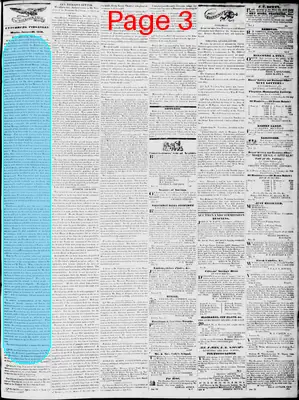
Story
January 25, 1836
Lynchburg Virginian
Lynchburg, Virginia
What is this article about?
Editorial criticizes President Jackson's Special Message recommending exclusion of French vessels and products from US ports during US-France indemnity treaty dispute, arguing it risks war unnecessarily when peaceful resolution via his Annual Message seems possible. Advocates exhausting diplomacy before conflict.
Clipping

OCR Quality
95%
Excellent
Full Text
THE SPECIAL MESSAGE.
In laying this paper, with its accompanying documents, before our readers, we must be permitted to express our regret that the President, at this stage of the controversy between the United States and France, when the hopes of the friends of peace were checked by the complexion of the accounts from abroad, and when but a single obstacle to its final adjustment existed, which all parties seemed to concur in the belief would be removed on the reception of his Annual Message in Paris,— we say, we must express our regret, that, at this stage of the controversy, Gen. Jackson has deemed it necessary to recommend to Congress the exclusion of French vessels and products from our ports. He should, at least, in our humble opinion, have waited to see the effect produced on the French government by his last Message, before he counselled a measure, which, though it stops short of War, will inevitably, if sanctioned by Congress, lead to that fatal step—fatal, if in nothing else, to the great agricultural interests of the South.
If, indeed, Congress had been on the eve of adjournment, or were it not certain that we should learn, before its adjournment, whether the French government did or did not regard his Message as conveying a satisfactory explanation of the objectionable language in its predecessor, there might have been some apology for this precipitation. But, under the circumstances, there is none. And it does seem to us that it was intended, by the President, to counteract the pacific tendencies of his last Message, and to prevent the peaceable adjustment of this ridiculous affair, should that result have been fortunately the consequence of that Message. Can any good reason, under heaven, be assigned, why the non-intercourse law should now be recommended? or why, if that measure should be ultimately found necessary, it should not at least have been delayed until its necessity was rendered apparent and palpable? Why, when there was a reasonable probability, that, on the reception of the last Message in Paris, measures would have been taken to carry into effect the treaty of indemnity, was this act of incipient hostility recommended, if it were not to raise up new obstacles to the fulfilment of the treaty of indemnity, and to force a War, in despite of fate, and in utter disregard of all the great interests that must be involved in ruin by that suicidal measure? War is an evil of such magnitude, that, although we should not wait to be "kicked into it," we should certainly not heedlessly and unnecessarily court its merciless calamities.—Our hope is, however, that Congress will not concur in this recommendation, as, on a former occasion, it refused, under the same high counsel, to authorize reprisals upon French property—and that if Congress withhold its assent, France will take no notice of this new ebullition of Executive wrath and indiscretion.
That France ought to pay the money, which she has by treaty acknowledged to be due to us, there can be no doubt—and we have just as little that she will pay it, when the causes of irritation which have heretofore prevented the discharge of the debt shall be removed. It cannot at least do any great harm to exhaust conciliatory measures, before we resort to the last and worst argument of nations. Probably while we write these lines, she may have paid the first instalment, or declared her readiness to do so,—and yet, when such a supposition is rendered plausible by our last French advices, the President throws another menace into her teeth, calculated to prevent the consummation of the treaty—for, if France would not pay, because of a supposed threat to resort to reprisals, is it natural to suppose that she will go so under the menace of a non-intercourse?
That the President and his influential advisers are eager for war, is, we think, manifest, also, from the character of the correspondence between Mr. Forsyth and M. Pageot. Why, if this be not the fact, was not the Duke de Broglie's unofficial communication received and considered by Mr. Forsyth—not, indeed, as a direct proposition, but as the basis of future negotiation, out of which direct propositions might have grown? The only reason assigned for his refusal, is, that it would not have been according to etiquette. To etiquette! And so, two great nations, quarrelling about ideal wrongs, must settle the important feud according to approved forms, or it cannot be settled without war! A fig for statesmen, who are so much more nice than wise!
In another recommendation of the Special Message, we heartily concur—and that is, that we should augment our means both of defence and attack. It is now at least probable that we shall have War—and we are favorers of that maxim, which, while it bids us "beware of entrance into a quarrel," yet counsels us, when in, to bear ourselves with becoming valor and energy. If we must fight, let us present an undivided front to the enemy. But, so long as there is any hope of the preservation of peace, on honorable terms, let us cling to it—for War is no child's play, and should not be encountered for "light or transient causes"—certainly not to gratify the caprice of any one man, even though he be the President of the nation.
Our limits forbid further remarks this morning. We shall lay before our readers, as soon as possible, Mr. Webster's powerful speech on Benton's Resolutions. It shows the groundlessness of the rumors, which have been so current recently, of this gentleman's desertion of the Whig ranks.
In laying this paper, with its accompanying documents, before our readers, we must be permitted to express our regret that the President, at this stage of the controversy between the United States and France, when the hopes of the friends of peace were checked by the complexion of the accounts from abroad, and when but a single obstacle to its final adjustment existed, which all parties seemed to concur in the belief would be removed on the reception of his Annual Message in Paris,— we say, we must express our regret, that, at this stage of the controversy, Gen. Jackson has deemed it necessary to recommend to Congress the exclusion of French vessels and products from our ports. He should, at least, in our humble opinion, have waited to see the effect produced on the French government by his last Message, before he counselled a measure, which, though it stops short of War, will inevitably, if sanctioned by Congress, lead to that fatal step—fatal, if in nothing else, to the great agricultural interests of the South.
If, indeed, Congress had been on the eve of adjournment, or were it not certain that we should learn, before its adjournment, whether the French government did or did not regard his Message as conveying a satisfactory explanation of the objectionable language in its predecessor, there might have been some apology for this precipitation. But, under the circumstances, there is none. And it does seem to us that it was intended, by the President, to counteract the pacific tendencies of his last Message, and to prevent the peaceable adjustment of this ridiculous affair, should that result have been fortunately the consequence of that Message. Can any good reason, under heaven, be assigned, why the non-intercourse law should now be recommended? or why, if that measure should be ultimately found necessary, it should not at least have been delayed until its necessity was rendered apparent and palpable? Why, when there was a reasonable probability, that, on the reception of the last Message in Paris, measures would have been taken to carry into effect the treaty of indemnity, was this act of incipient hostility recommended, if it were not to raise up new obstacles to the fulfilment of the treaty of indemnity, and to force a War, in despite of fate, and in utter disregard of all the great interests that must be involved in ruin by that suicidal measure? War is an evil of such magnitude, that, although we should not wait to be "kicked into it," we should certainly not heedlessly and unnecessarily court its merciless calamities.—Our hope is, however, that Congress will not concur in this recommendation, as, on a former occasion, it refused, under the same high counsel, to authorize reprisals upon French property—and that if Congress withhold its assent, France will take no notice of this new ebullition of Executive wrath and indiscretion.
That France ought to pay the money, which she has by treaty acknowledged to be due to us, there can be no doubt—and we have just as little that she will pay it, when the causes of irritation which have heretofore prevented the discharge of the debt shall be removed. It cannot at least do any great harm to exhaust conciliatory measures, before we resort to the last and worst argument of nations. Probably while we write these lines, she may have paid the first instalment, or declared her readiness to do so,—and yet, when such a supposition is rendered plausible by our last French advices, the President throws another menace into her teeth, calculated to prevent the consummation of the treaty—for, if France would not pay, because of a supposed threat to resort to reprisals, is it natural to suppose that she will go so under the menace of a non-intercourse?
That the President and his influential advisers are eager for war, is, we think, manifest, also, from the character of the correspondence between Mr. Forsyth and M. Pageot. Why, if this be not the fact, was not the Duke de Broglie's unofficial communication received and considered by Mr. Forsyth—not, indeed, as a direct proposition, but as the basis of future negotiation, out of which direct propositions might have grown? The only reason assigned for his refusal, is, that it would not have been according to etiquette. To etiquette! And so, two great nations, quarrelling about ideal wrongs, must settle the important feud according to approved forms, or it cannot be settled without war! A fig for statesmen, who are so much more nice than wise!
In another recommendation of the Special Message, we heartily concur—and that is, that we should augment our means both of defence and attack. It is now at least probable that we shall have War—and we are favorers of that maxim, which, while it bids us "beware of entrance into a quarrel," yet counsels us, when in, to bear ourselves with becoming valor and energy. If we must fight, let us present an undivided front to the enemy. But, so long as there is any hope of the preservation of peace, on honorable terms, let us cling to it—for War is no child's play, and should not be encountered for "light or transient causes"—certainly not to gratify the caprice of any one man, even though he be the President of the nation.
Our limits forbid further remarks this morning. We shall lay before our readers, as soon as possible, Mr. Webster's powerful speech on Benton's Resolutions. It shows the groundlessness of the rumors, which have been so current recently, of this gentleman's desertion of the Whig ranks.
What sub-type of article is it?
Historical Event
What themes does it cover?
Justice
Catastrophe
What keywords are associated?
Us France Controversy
Jackson Message
Non Intercourse Law
Treaty Indemnity
War Avoidance
Diplomatic Etiquette
What entities or persons were involved?
Gen. Jackson
Mr. Forsyth
M. Pageot
Duke De Broglie
Mr. Webster
Benton
Where did it happen?
United States, France, Paris
Story Details
Key Persons
Gen. Jackson
Mr. Forsyth
M. Pageot
Duke De Broglie
Mr. Webster
Benton
Location
United States, France, Paris
Story Details
Opinion piece regrets President Jackson's recommendation in Special Message to exclude French vessels amid US-France treaty dispute, criticizes rush toward war, urges waiting for response to Annual Message for peaceful indemnity payment, and supports military preparedness if war inevitable.