Thank you for visiting SNEWPapers!
Sign up free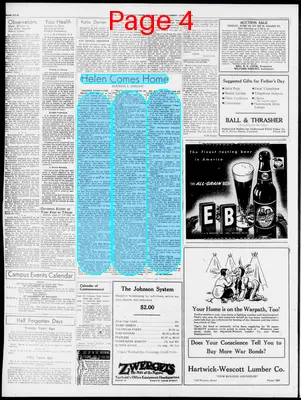
Literary
June 12, 1945
The Ypsilanti Daily Press
Ypsilanti, Washtenaw County, Michigan
What is this article about?
Helen anticipates seeing Philip but discusses with Aunt Minerva her invitation to dinner at Zoe Wentworth's, her unresolved feelings for ex-fiancé Paul, and the factory's war efforts aiming for an Army-Navy 'E' award. Later, she convinces busy Philip to join her for the social visit to normalize relations and see Paul's plane.
Clipping
OCR Quality
98%
Excellent
Full Text
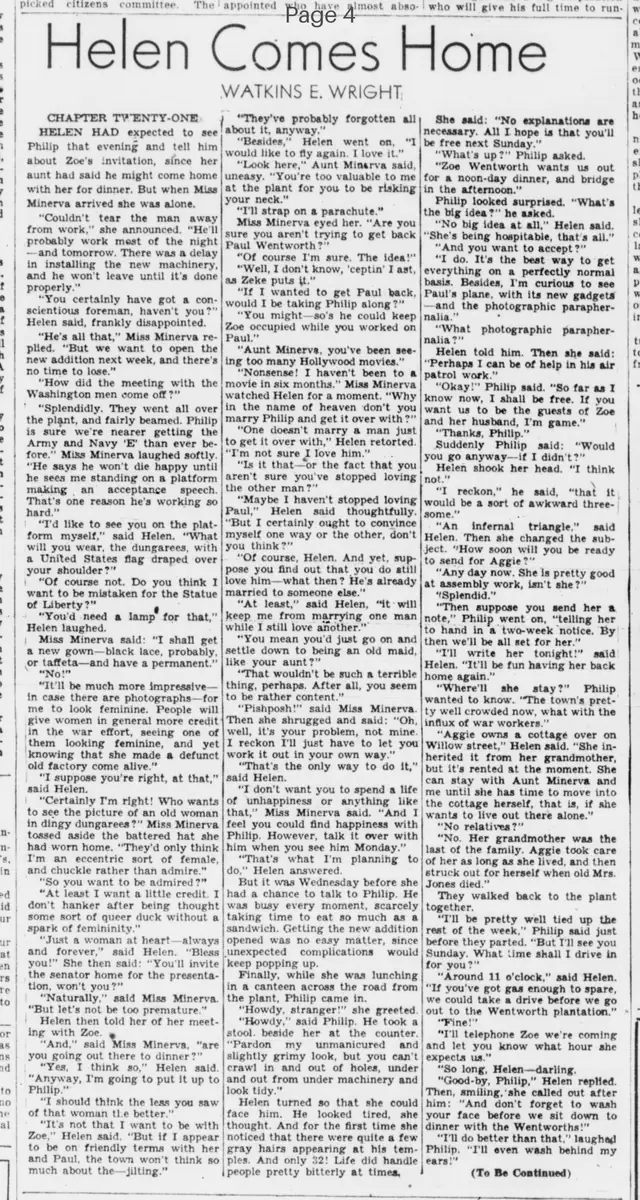
Helen
Comes Home
HELEN HAD expected to see Philip that evening and tell him about Zoe's invitation, since her aunt had said he might come home with her for dinner. But when Miss Minerva arrived she was alone.
"Couldn't tear the man away from work," she announced. "He'll probably work most of the night—and tomorrow. There was a delay in installing the new machinery, and he won't leave until it's done properly."
"You certainly have got a conscientious foreman, haven't you?" Helen said, frankly disappointed.
"He's all that." Miss Minerva replied. "But we want to open the new addition next week, and there's no time to lose."
"How did the meeting with the Washington men come off?"
"Splendidly. They went all over the plant, and fairly beamed. Philip is sure we're nearer getting the Army and Navy 'E' than ever before." Miss Minerva laughed softly. "He says he won't die happy until he sees me standing on a platform making an acceptance speech. That's one reason he's working so hard."
"I'd like to see you on the platform myself," said Helen. "What will you wear, the dungarees, with a United States flag draped over your shoulder?"
"Of course not. Do you think I want to be mistaken for the Statue of Liberty?"
"You'd need a lamp for that," Helen laughed.
Miss Minerva said: "I shall get a new gown—black lace, probably, or taffeta—and have a permanent."
"No!"
"It'll be much more impressive—in case there are photographs—for me to look feminine. People will give women in general more credit in the war effort, seeing one of them looking feminine, and yet knowing that she made a defunct old factory come alive."
"I suppose you're right, at that," said Helen.
"Certainly I'm right! Who wants to see the picture of an old woman in dingy dungarees?" Miss Minerva tossed aside the battered hat she had worn home. "They'd only think I'm an eccentric sort of female, and chuckle rather than admire."
"So you want to be admired?"
"At least I want a little credit. I don't hanker after being thought some sort of queer duck without a spark of femininity."
"Just a woman at heart—always and forever," said Helen. "Bless you!" She then said: "You'll invite the senator home for the presentation, won't you?"
"Naturally," said Miss Minerva. "But let's not be too premature."
Helen then told her of her meeting with Zoe.
"And," said Miss Minerva, "are you going out there to dinner?"
"Yes. I think so," Helen said. "Anyway, I'm going to put it up to Philip."
"I should think the less you saw of that woman the better."
"It's not that I want to be with Zoe," Helen said. "But if I appear to be on friendly terms with her and Paul, the town won't think so much about the jilting."
"They've probably forgotten all about it, anyway."
"Besides," Helen went on, "I would like to fly again. I love it."
"Look here," Aunt Minerva said, uneasy. "You're too valuable to me at the plant for you to be risking your neck."
"I'll strap on a parachute."
Miss Minerva eyed her. "Are you sure you aren't trying to get back Paul Wentworth?"
"Of course I'm sure. The idea!"
"Well, I don't know, 'ceptin' I ask, as Zeke puts it."
"If I wanted to get Paul back, would I be taking Philip along?"
"You might—so's he could keep Zoe occupied while you worked on Paul."
"Aunt Minerva, you've been seeing too many Hollywood movies."
"Nonsense! I haven't been to a movie in six months." Miss Minerva watched Helen for a moment. "Why in the name of heaven don't you marry Philip and get it over with?"
"One doesn't marry a man just to get it over with," Helen retorted. "I'm not sure I love him."
"Is it that—or the fact that you aren't sure you've stopped loving the other man?"
"Maybe I haven't stopped loving Paul," Helen said thoughtfully. "But I certainly ought to convince myself one way or the other, don't you think?"
"Of course, Helen. And yet, suppose you find out that you do still love him—what then? He's already married to someone else."
"At least," said Helen, "it will keep me from marrying one man while I still love another."
"You mean you'd just go on and settle down to being an old maid, like your aunt?"
"That wouldn't be such a terrible thing, perhaps. After all, you seem to be rather content."
"Pishposh!" said Miss Minerva. Then she shrugged and said: "Oh, well, it's your problem, not mine. I reckon I'll just have to let you work it out in your own way."
"That's the only way to do it," said Helen.
"I don't want you to spend a life of unhappiness or anything like that." Miss Minerva said. "And I feel you could find happiness with Philip. However, talk it over with him when you see him Monday."
"That's what I'm planning to do." Helen answered.
But it was Wednesday before she had a chance to talk to Philip. He was busy every moment, scarcely taking time to eat so much as a sandwich. Getting the new addition opened was no easy matter, since unexpected complications would keep popping up.
Finally, while she was lunching in a canteen across the road from the plant, Philip came in.
"Howdy, stranger!" she greeted.
"Howdy," said Philip. He took a stool beside her at the counter. "Pardon my unmanicured and slightly grimy look, but you can't crawl in and out of holes, under and out from under machinery and look tidy."
Helen turned so that she could face him. He looked tired, she thought. And for the first time she noticed that there were quite a few gray hairs appearing at his temples. And only 32! Life did handle people pretty bitterly at times.
She said: "No explanations are necessary. All I hope is that you'll be free next Sunday."
"What's up?" Philip asked.
"Zoe Wentworth wants us out for a noon-day dinner, and bridge in the afternoon."
Philip looked surprised. "What's the big idea?" he asked.
"No big idea at all." Helen said. "She's being hospitable, that's all."
"And you want to accept?"
"I do. It's the best way to get everything on a perfectly normal basis. Besides, I'm curious to see Paul's plane, with its new gadgets—and the photographic paraphernalia."
"What photographic paraphernalia?"
Helen told him. Then she said: "Perhaps I can be of help in his air patrol work."
"Okay!" Philip said. "So far as I know now, I shall be free. If you want us to be the guests of Zoe and her husband, I'm game."
"Thanks, Philip."
Suddenly Philip said: "Would you go anyway—if I didn't?"
Helen shook her head. "I think not."
"I reckon," he said, "that it would be a sort of awkward threesome."
"An infernal triangle," said Helen. Then she changed the subject. "How soon will you be ready to send for Aggie?"
"Any day now. She is pretty good at assembly work, isn't she?"
"Splendid."
"Then suppose you send her a note," Philip went on, "telling her to hand in a two-week notice. By then we'll be all set for her."
"I'll write her tonight!" said Helen. "It'll be fun having her back home again."
"Where'll she stay?" Philip wanted to know. "The town's pretty well crowded now, what with the influx of war workers."
"Aggie owns a cottage over on Willow street." Helen said. "She inherited it from her grandmother, but it's rented at the moment. She can stay with Aunt Minerva and me until she has time to move into the cottage herself, that is, if she wants to live out there alone."
"No relatives?"
"No. Her grandmother was the last of the family. Aggie took care of her as long as she lived, and then struck out for herself when old Mrs. Jones died."
They walked back to the plant together.
"I'll be pretty well tied up the rest of the week," Philip said just before they parted. "But I'll see you Sunday. What time shall I drive in for you?"
"Around 11 o'clock," said Helen. "If you've got gas enough to spare, we could take a drive before we go out to the Wentworth plantation."
"Fine!"
"I'll telephone Zoe we're coming and let you know what hour she expects us."
"So long, Helen—darling."
"Good-by, Philip." Helen replied. Then, smiling, she called out after him: "And don't forget to wash your face before we sit down to dinner with the Wentworths!"
"I'll do better than that," laughed Philip. "I'll even wash behind my ears!"
Comes Home
HELEN HAD expected to see Philip that evening and tell him about Zoe's invitation, since her aunt had said he might come home with her for dinner. But when Miss Minerva arrived she was alone.
"Couldn't tear the man away from work," she announced. "He'll probably work most of the night—and tomorrow. There was a delay in installing the new machinery, and he won't leave until it's done properly."
"You certainly have got a conscientious foreman, haven't you?" Helen said, frankly disappointed.
"He's all that." Miss Minerva replied. "But we want to open the new addition next week, and there's no time to lose."
"How did the meeting with the Washington men come off?"
"Splendidly. They went all over the plant, and fairly beamed. Philip is sure we're nearer getting the Army and Navy 'E' than ever before." Miss Minerva laughed softly. "He says he won't die happy until he sees me standing on a platform making an acceptance speech. That's one reason he's working so hard."
"I'd like to see you on the platform myself," said Helen. "What will you wear, the dungarees, with a United States flag draped over your shoulder?"
"Of course not. Do you think I want to be mistaken for the Statue of Liberty?"
"You'd need a lamp for that," Helen laughed.
Miss Minerva said: "I shall get a new gown—black lace, probably, or taffeta—and have a permanent."
"No!"
"It'll be much more impressive—in case there are photographs—for me to look feminine. People will give women in general more credit in the war effort, seeing one of them looking feminine, and yet knowing that she made a defunct old factory come alive."
"I suppose you're right, at that," said Helen.
"Certainly I'm right! Who wants to see the picture of an old woman in dingy dungarees?" Miss Minerva tossed aside the battered hat she had worn home. "They'd only think I'm an eccentric sort of female, and chuckle rather than admire."
"So you want to be admired?"
"At least I want a little credit. I don't hanker after being thought some sort of queer duck without a spark of femininity."
"Just a woman at heart—always and forever," said Helen. "Bless you!" She then said: "You'll invite the senator home for the presentation, won't you?"
"Naturally," said Miss Minerva. "But let's not be too premature."
Helen then told her of her meeting with Zoe.
"And," said Miss Minerva, "are you going out there to dinner?"
"Yes. I think so," Helen said. "Anyway, I'm going to put it up to Philip."
"I should think the less you saw of that woman the better."
"It's not that I want to be with Zoe," Helen said. "But if I appear to be on friendly terms with her and Paul, the town won't think so much about the jilting."
"They've probably forgotten all about it, anyway."
"Besides," Helen went on, "I would like to fly again. I love it."
"Look here," Aunt Minerva said, uneasy. "You're too valuable to me at the plant for you to be risking your neck."
"I'll strap on a parachute."
Miss Minerva eyed her. "Are you sure you aren't trying to get back Paul Wentworth?"
"Of course I'm sure. The idea!"
"Well, I don't know, 'ceptin' I ask, as Zeke puts it."
"If I wanted to get Paul back, would I be taking Philip along?"
"You might—so's he could keep Zoe occupied while you worked on Paul."
"Aunt Minerva, you've been seeing too many Hollywood movies."
"Nonsense! I haven't been to a movie in six months." Miss Minerva watched Helen for a moment. "Why in the name of heaven don't you marry Philip and get it over with?"
"One doesn't marry a man just to get it over with," Helen retorted. "I'm not sure I love him."
"Is it that—or the fact that you aren't sure you've stopped loving the other man?"
"Maybe I haven't stopped loving Paul," Helen said thoughtfully. "But I certainly ought to convince myself one way or the other, don't you think?"
"Of course, Helen. And yet, suppose you find out that you do still love him—what then? He's already married to someone else."
"At least," said Helen, "it will keep me from marrying one man while I still love another."
"You mean you'd just go on and settle down to being an old maid, like your aunt?"
"That wouldn't be such a terrible thing, perhaps. After all, you seem to be rather content."
"Pishposh!" said Miss Minerva. Then she shrugged and said: "Oh, well, it's your problem, not mine. I reckon I'll just have to let you work it out in your own way."
"That's the only way to do it," said Helen.
"I don't want you to spend a life of unhappiness or anything like that." Miss Minerva said. "And I feel you could find happiness with Philip. However, talk it over with him when you see him Monday."
"That's what I'm planning to do." Helen answered.
But it was Wednesday before she had a chance to talk to Philip. He was busy every moment, scarcely taking time to eat so much as a sandwich. Getting the new addition opened was no easy matter, since unexpected complications would keep popping up.
Finally, while she was lunching in a canteen across the road from the plant, Philip came in.
"Howdy, stranger!" she greeted.
"Howdy," said Philip. He took a stool beside her at the counter. "Pardon my unmanicured and slightly grimy look, but you can't crawl in and out of holes, under and out from under machinery and look tidy."
Helen turned so that she could face him. He looked tired, she thought. And for the first time she noticed that there were quite a few gray hairs appearing at his temples. And only 32! Life did handle people pretty bitterly at times.
She said: "No explanations are necessary. All I hope is that you'll be free next Sunday."
"What's up?" Philip asked.
"Zoe Wentworth wants us out for a noon-day dinner, and bridge in the afternoon."
Philip looked surprised. "What's the big idea?" he asked.
"No big idea at all." Helen said. "She's being hospitable, that's all."
"And you want to accept?"
"I do. It's the best way to get everything on a perfectly normal basis. Besides, I'm curious to see Paul's plane, with its new gadgets—and the photographic paraphernalia."
"What photographic paraphernalia?"
Helen told him. Then she said: "Perhaps I can be of help in his air patrol work."
"Okay!" Philip said. "So far as I know now, I shall be free. If you want us to be the guests of Zoe and her husband, I'm game."
"Thanks, Philip."
Suddenly Philip said: "Would you go anyway—if I didn't?"
Helen shook her head. "I think not."
"I reckon," he said, "that it would be a sort of awkward threesome."
"An infernal triangle," said Helen. Then she changed the subject. "How soon will you be ready to send for Aggie?"
"Any day now. She is pretty good at assembly work, isn't she?"
"Splendid."
"Then suppose you send her a note," Philip went on, "telling her to hand in a two-week notice. By then we'll be all set for her."
"I'll write her tonight!" said Helen. "It'll be fun having her back home again."
"Where'll she stay?" Philip wanted to know. "The town's pretty well crowded now, what with the influx of war workers."
"Aggie owns a cottage over on Willow street." Helen said. "She inherited it from her grandmother, but it's rented at the moment. She can stay with Aunt Minerva and me until she has time to move into the cottage herself, that is, if she wants to live out there alone."
"No relatives?"
"No. Her grandmother was the last of the family. Aggie took care of her as long as she lived, and then struck out for herself when old Mrs. Jones died."
They walked back to the plant together.
"I'll be pretty well tied up the rest of the week," Philip said just before they parted. "But I'll see you Sunday. What time shall I drive in for you?"
"Around 11 o'clock," said Helen. "If you've got gas enough to spare, we could take a drive before we go out to the Wentworth plantation."
"Fine!"
"I'll telephone Zoe we're coming and let you know what hour she expects us."
"So long, Helen—darling."
"Good-by, Philip." Helen replied. Then, smiling, she called out after him: "And don't forget to wash your face before we sit down to dinner with the Wentworths!"
"I'll do better than that," laughed Philip. "I'll even wash behind my ears!"
What sub-type of article is it?
Prose Fiction
Dialogue
What themes does it cover?
Love Romance
Social Manners
War Peace
What keywords are associated?
Romantic Indecision
War Factory
Social Invitation
Army Navy E Award
Ex Fiance
Airplane Pilot
Literary Details
Title
Helen Comes Home
Key Lines
"Why In The Name Of Heaven Don't You Marry Philip And Get It Over With?"
"Maybe I Haven't Stopped Loving Paul," Helen Said Thoughtfully.
"He's All That." Miss Minerva Replied. "But We Want To Open The New Addition Next Week, And There's No Time To Lose."
"I'd Like To See You On The Platform Myself," Said Helen. "What Will You Wear, The Dungarees, With A United States Flag Draped Over Your Shoulder?"
"At Least," Said Helen, "It Will Keep Me From Marrying One Man While I Still Love Another."