Thank you for visiting SNEWPapers!
Sign up free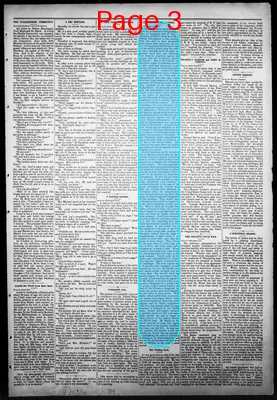
Editorial
March 6, 1879
Centre Democrat
Bellefonte, Centre County, Pennsylvania
What is this article about?
Editorial from Harrisburg Patriot argues against Chinese immigration and naturalization, citing historical denial of citizenship to Chinese in 1870, cheap labor competition degrading American workers, and support for the bill restricting Chinese influx awaiting President Hayes' signature.
Clipping

OCR Quality
98%
Excellent
Full Text
CHINESE NATURALIZATION.
From the Harrisburg Patriot.
Much fine sentiment has been wasted about the declaration of independence, rights of humanity, and all that, in discussing the bill to check the evils of Chinese immigration to this country. Some who seem to have penetrated much deeper than others into the motives for supporting this bill assert that it is an indirect attack upon the colored race, and that much the same arguments based upon race inferiority were formerly employed against the negroes that are so effective against the Chinese. But if the Chinese are entitled to rights of citizenship as well as other races that immigrate to this country why have not these rights been accorded to them? A native of China cannot be admitted to rights of American citizenship. It is true that in Massachusetts and some other states there have been instances of the naturalization of Chinese, but it has been in clear violation of the laws of the United States. In the session of 1870 when the naturalization laws were enlarged so as to admit native Africans to the rights of American citizens, Senator Trumbull of Illinois offered an amendment so as to include "persons born in the Chinese empire." On this amendment the yeas and nays were taken, and nine senators only voted in the affirmative. Thirty-one voted in the negative, among whom were Conkling, Hamlin, Howe and Morrill, all of whom bitterly opposed the bill to check Chinese immigration. So the right of naturalization was expressly denied to the Chinese. A native fresh from Congo may be admitted to the privileges of American citizenship, but not a native of the Celestial empire, no matter how learned or cultivated. If any Chinaman holds naturalization papers he holds them in violation of the law of the United States. This exclusion was made when the republicans had a two-thirds majority in both branches of congress.
If the Chinese are not fit for admission to American citizenship, the same reasons hold good against permitting them to crowd to these shores in such numbers as to degrade the civilization of this country. The same arguments that were employed successfully against the admission of the Chinese to citizenship can be used with greater force in favor of the measure to check their immigration. If they are not desirable as citizens, their presence is especially undesirable in a condition of political inferiority to the mass of the people including the colored race Had the Chinese been admitted to citizenship when the naturalization laws were amended it is not likely that many of them would avail themselves of the privilege. They would have contemned a boon which is so precious to all other immigrants to this country. Most of them are brought here under contracts to labor for a given rate of wages for a specified time, and there are ways for rigidly enforcing these contracts. Under these contracts a system of slavery exists that is scarcely a whit less degrading than that which was formerly carried on in Virginia slaves. It was in full view of this condition of the mass of the Chinese in this country that congress deliberately refused them the right of naturalization, a right which is accorded to every other race that migrates to these shores. They belong to the same class of coolies that are sent to Peru and Cuba under labor contracts at so much a head. If admitted to citizenship their votes would be sold along with their labor in the same contract. Utterly unfit for the duties and responsibilities of citizenship they are rightly excluded from its privileges. The next logical step is to prevent their migration in such numbers as to cover the Pacific coast and thence spread eastward over the whole land. But the bill which has passed congress by majorities so decisive and is now awaiting the signature of Mr. Hayes to become a law is opposed so vehemently by a certain class of people in this country because the labor of the Chinese is cheap and because the contact with them degrades the free labor of this country. With habits which enable them to accumulate money upon wages which would starve an economical American workingman and his family, competition with them has already ceased in many branches of industry in the Pacific states. Unless this Asiatic invasion is speedily checked it will soon materially modify the rate of wages in other portions of the country besides the Pacific coast. Mr. Hayes, in the sordid interests of those who regard cheap labor as the highest consideration, may veto this bill. In that case the question will become a real and earnest one for all who are interested in maintaining the cause of American workingmen, in whose prosperity and welfare the permanence and success of free institutions in this country must depend.
From the Harrisburg Patriot.
Much fine sentiment has been wasted about the declaration of independence, rights of humanity, and all that, in discussing the bill to check the evils of Chinese immigration to this country. Some who seem to have penetrated much deeper than others into the motives for supporting this bill assert that it is an indirect attack upon the colored race, and that much the same arguments based upon race inferiority were formerly employed against the negroes that are so effective against the Chinese. But if the Chinese are entitled to rights of citizenship as well as other races that immigrate to this country why have not these rights been accorded to them? A native of China cannot be admitted to rights of American citizenship. It is true that in Massachusetts and some other states there have been instances of the naturalization of Chinese, but it has been in clear violation of the laws of the United States. In the session of 1870 when the naturalization laws were enlarged so as to admit native Africans to the rights of American citizens, Senator Trumbull of Illinois offered an amendment so as to include "persons born in the Chinese empire." On this amendment the yeas and nays were taken, and nine senators only voted in the affirmative. Thirty-one voted in the negative, among whom were Conkling, Hamlin, Howe and Morrill, all of whom bitterly opposed the bill to check Chinese immigration. So the right of naturalization was expressly denied to the Chinese. A native fresh from Congo may be admitted to the privileges of American citizenship, but not a native of the Celestial empire, no matter how learned or cultivated. If any Chinaman holds naturalization papers he holds them in violation of the law of the United States. This exclusion was made when the republicans had a two-thirds majority in both branches of congress.
If the Chinese are not fit for admission to American citizenship, the same reasons hold good against permitting them to crowd to these shores in such numbers as to degrade the civilization of this country. The same arguments that were employed successfully against the admission of the Chinese to citizenship can be used with greater force in favor of the measure to check their immigration. If they are not desirable as citizens, their presence is especially undesirable in a condition of political inferiority to the mass of the people including the colored race Had the Chinese been admitted to citizenship when the naturalization laws were amended it is not likely that many of them would avail themselves of the privilege. They would have contemned a boon which is so precious to all other immigrants to this country. Most of them are brought here under contracts to labor for a given rate of wages for a specified time, and there are ways for rigidly enforcing these contracts. Under these contracts a system of slavery exists that is scarcely a whit less degrading than that which was formerly carried on in Virginia slaves. It was in full view of this condition of the mass of the Chinese in this country that congress deliberately refused them the right of naturalization, a right which is accorded to every other race that migrates to these shores. They belong to the same class of coolies that are sent to Peru and Cuba under labor contracts at so much a head. If admitted to citizenship their votes would be sold along with their labor in the same contract. Utterly unfit for the duties and responsibilities of citizenship they are rightly excluded from its privileges. The next logical step is to prevent their migration in such numbers as to cover the Pacific coast and thence spread eastward over the whole land. But the bill which has passed congress by majorities so decisive and is now awaiting the signature of Mr. Hayes to become a law is opposed so vehemently by a certain class of people in this country because the labor of the Chinese is cheap and because the contact with them degrades the free labor of this country. With habits which enable them to accumulate money upon wages which would starve an economical American workingman and his family, competition with them has already ceased in many branches of industry in the Pacific states. Unless this Asiatic invasion is speedily checked it will soon materially modify the rate of wages in other portions of the country besides the Pacific coast. Mr. Hayes, in the sordid interests of those who regard cheap labor as the highest consideration, may veto this bill. In that case the question will become a real and earnest one for all who are interested in maintaining the cause of American workingmen, in whose prosperity and welfare the permanence and success of free institutions in this country must depend.
What sub-type of article is it?
Immigration
Labor
Economic Policy
What keywords are associated?
Chinese Naturalization
Immigration Restriction
Cheap Labor
American Citizenship
Congressional Vote
President Hayes
Pacific Coast
What entities or persons were involved?
Chinese Immigrants
Senator Trumbull
Conkling
Hamlin
Howe
Morrill
Republicans In Congress
President Hayes
African Natives
Editorial Details
Primary Topic
Restriction Of Chinese Immigration And Naturalization
Stance / Tone
Strongly Supportive Of Chinese Exclusion
Key Figures
Chinese Immigrants
Senator Trumbull
Conkling
Hamlin
Howe
Morrill
Republicans In Congress
President Hayes
African Natives
Key Arguments
Chinese Denied Naturalization In 1870 Despite African Inclusion
Chinese Labor Under Degrading Contracts Akin To Slavery
Cheap Chinese Labor Degrades American Wages And Civilization
Immigration Bill Passed Congress, Awaits Hayes' Signature
Chinese Unfit For Citizenship Duties
Competition From Chinese Harms Pacific States Industries
Exclusion Necessary To Protect American Workingmen