Thank you for visiting SNEWPapers!
Sign up free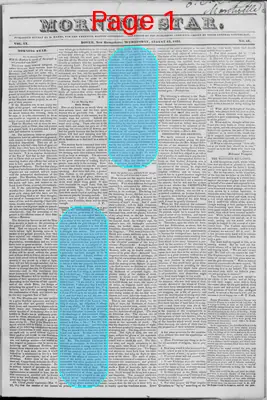
Literary
August 13, 1834
Morning Star
Limerick, York County, Maine
What is this article about?
An essay urging Christians to consecrate their property to Christ's service, emphasizing stewardship, the constraining love of Christ, and generous contributions to missionary efforts rather than self-indulgence or accumulation without divine purpose.
Clipping
OCR Quality
98%
Excellent
Full Text
Christian Obligation, particularly as it pertains to the Appropriation of Property.
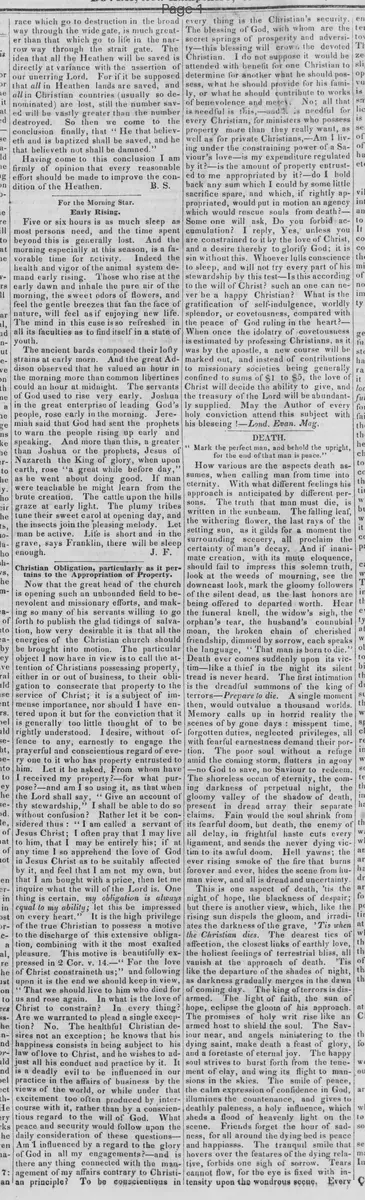
Now that the great head of the church is opening such an unbounded field to benevolent and missionary efforts, and making so many of his servants willing to go forth to publish the glad tidings of salvation, how very desirable it is that all the energies of the Christian church should be brought into motion. The particular object I now have in view is to call the attention of Christians possessing property, either in or out of business, to their obligation to consecrate that property to the service of Christ; it is a subject of immense importance, nor should I have entered upon it but for the conviction that it is generally too little thought of to be rightly understood. I desire, without offence to any, earnestly to engage the prayerful and conscientious regard of every one to it who has property entrusted to him. Let it be asked, From whom have I received my property?—for what purpose?—and am I so using it, as that when the Lord shall say, "Give an account of thy stewardship," I shall be able to do so without confusion? Rather let it be considered thus: "I am called a servant of Jesus Christ; I often pray that I may live to him, that I may be entirely his; if at any time I so apprehend the love of God in Jesus Christ as to be suitably affected by it, and feel that I am not my own, but that I am bought with a price, then let me inquire what the will of the Lord is. One thing is certain, my obligation is always equal to my ability; let this be impressed on every heart." It is the high privilege of the true Christian to possess a motive to the discharge of this extensive obligation, combining with it the most exalted pleasure. This motive is beautifully expressed in 2 Cor. v. 14.—"For the love of Christ constraineth us;" and following upon it is the end we should keep in view, "That we should live to him who died for us and rose again. In what is the love of Christ to constrain? In every thing? Are we warranted to plead a single exception? No. The healthful Christian desires not an exception; he knows that his happiness consists in being subject to his law of love to Christ, and he wishes to adjust all his conduct and practice by it. It is a deadly evil to be influenced in our practice in the affairs of business by the views of the world, or while under that excitement too often produced by intercourse with it, rather than by a conscientious regard to the will of God. What peace and security would follow upon the daily consideration of these questions— Am I influenced by a regard to the glory of God in all my engagements?—and is there any thing connected with the management of my affairs contrary to Christian principle? To be conscientious in every thing is the Christian's security.
The blessing of God, with whom are the secret springs of prosperity and adversity—this blessing will crown the devoted Christian. I do not suppose it would be attended with benefit for one Christian to determine for another what he should possess, what he should provide for his family, or what he should contribute to works of benevolence and mercy. No; all that is needful is this,—and it is needful for every Christian, for ministers who possess property more than they really want, as well as for private Christians,—Am I living under the constraining power of a Saviour's love—is my expenditure regulated by it?—is the amount of property entrusted to me appropriated by it?—do I hold back any sum which I could by some little sacrifice spare, and which, if rightly appropriated, would put in motion an agency which would rescue souls from death?— Some one will ask, Do you forbid accumulation? I reply, Yes, unless you are constrained to it by the love of Christ, and a desire thereby to glorify God; it is sin without this. Whoever lulls conscience to sleep, and will not try every part of his stewardship by this test—Is this according to the will of Christ? such an one can never be a happy Christian? What is the gratification of self-indulgence, worldly splendor, or covetousness, compared with the peace of God ruling in the heart?— When once the idolatry of covetousness is estimated by professing Christians, as it was by the apostle, a new course will be marked out, and instead of contributions to missionary societies being generally confined to sums of $1 to $5, the love of Christ will decide the ability to give, and the treasury of the Lord will be abundantly supplied. May the Author of every holy conviction attend this subject with his blessing!
Lond. Evan. Mag.
Now that the great head of the church is opening such an unbounded field to benevolent and missionary efforts, and making so many of his servants willing to go forth to publish the glad tidings of salvation, how very desirable it is that all the energies of the Christian church should be brought into motion. The particular object I now have in view is to call the attention of Christians possessing property, either in or out of business, to their obligation to consecrate that property to the service of Christ; it is a subject of immense importance, nor should I have entered upon it but for the conviction that it is generally too little thought of to be rightly understood. I desire, without offence to any, earnestly to engage the prayerful and conscientious regard of every one to it who has property entrusted to him. Let it be asked, From whom have I received my property?—for what purpose?—and am I so using it, as that when the Lord shall say, "Give an account of thy stewardship," I shall be able to do so without confusion? Rather let it be considered thus: "I am called a servant of Jesus Christ; I often pray that I may live to him, that I may be entirely his; if at any time I so apprehend the love of God in Jesus Christ as to be suitably affected by it, and feel that I am not my own, but that I am bought with a price, then let me inquire what the will of the Lord is. One thing is certain, my obligation is always equal to my ability; let this be impressed on every heart." It is the high privilege of the true Christian to possess a motive to the discharge of this extensive obligation, combining with it the most exalted pleasure. This motive is beautifully expressed in 2 Cor. v. 14.—"For the love of Christ constraineth us;" and following upon it is the end we should keep in view, "That we should live to him who died for us and rose again. In what is the love of Christ to constrain? In every thing? Are we warranted to plead a single exception? No. The healthful Christian desires not an exception; he knows that his happiness consists in being subject to his law of love to Christ, and he wishes to adjust all his conduct and practice by it. It is a deadly evil to be influenced in our practice in the affairs of business by the views of the world, or while under that excitement too often produced by intercourse with it, rather than by a conscientious regard to the will of God. What peace and security would follow upon the daily consideration of these questions— Am I influenced by a regard to the glory of God in all my engagements?—and is there any thing connected with the management of my affairs contrary to Christian principle? To be conscientious in every thing is the Christian's security.
The blessing of God, with whom are the secret springs of prosperity and adversity—this blessing will crown the devoted Christian. I do not suppose it would be attended with benefit for one Christian to determine for another what he should possess, what he should provide for his family, or what he should contribute to works of benevolence and mercy. No; all that is needful is this,—and it is needful for every Christian, for ministers who possess property more than they really want, as well as for private Christians,—Am I living under the constraining power of a Saviour's love—is my expenditure regulated by it?—is the amount of property entrusted to me appropriated by it?—do I hold back any sum which I could by some little sacrifice spare, and which, if rightly appropriated, would put in motion an agency which would rescue souls from death?— Some one will ask, Do you forbid accumulation? I reply, Yes, unless you are constrained to it by the love of Christ, and a desire thereby to glorify God; it is sin without this. Whoever lulls conscience to sleep, and will not try every part of his stewardship by this test—Is this according to the will of Christ? such an one can never be a happy Christian? What is the gratification of self-indulgence, worldly splendor, or covetousness, compared with the peace of God ruling in the heart?— When once the idolatry of covetousness is estimated by professing Christians, as it was by the apostle, a new course will be marked out, and instead of contributions to missionary societies being generally confined to sums of $1 to $5, the love of Christ will decide the ability to give, and the treasury of the Lord will be abundantly supplied. May the Author of every holy conviction attend this subject with his blessing!
Lond. Evan. Mag.
What sub-type of article is it?
Essay
What themes does it cover?
Religious
Moral Virtue
What keywords are associated?
Christian Obligation
Property Stewardship
Love Of Christ
Missionary Efforts
Benevolence
Covetousness
Literary Details
Title
Christian Obligation, Particularly As It Pertains To The Appropriation Of Property.
Key Lines
"For The Love Of Christ Constraineth Us;" And Following Upon It Is The End We Should Keep In View, "That We Should Live To Him Who Died For Us And Rose Again."
Am I Living Under The Constraining Power Of A Saviour's Love—Is My Expenditure Regulated By It?—Is The Amount Of Property Entrusted To Me Appropriated By It?