Thank you for visiting SNEWPapers!
Sign up free
Literary
November 6, 1790
Gazette Of The United States
New York, New York County, New York
What is this article about?
Continuation of historical essay on Catherine de Medici's cunning negotiations to secure regency amid French court factions: reconciling Guises and Bourbons, gaining King of Navarre's allies, proposing terms for peace and power balance to avert war and conspiracy fallout.
Merged-components note: Continuation of the same serialized narrative 'Discourses on Davila' across two components on page 1.
Clipping
OCR Quality
85%
Good
Full Text
Discourses on Davila.
NO. XXII.-CONTINUED.
Utrumque regem, ua multitudo conlalutaverat.
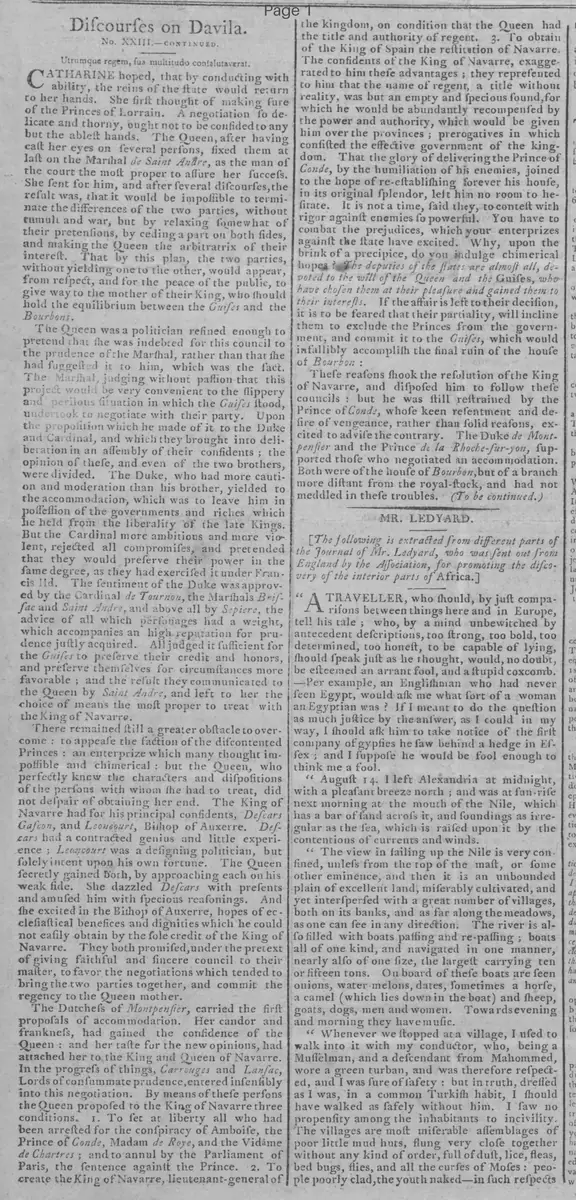
CATHARINE hoped, that by conducting with ability, the reins of the state would return to her hands. She first thought of making sure of the Princes of Lorrain. A negotiation so delicate and thorny, ought not to be confided to any but the ablest hands. The Queen, after having cast her eyes on several persons, fixed them at last on the Marshal de Saint Andre, as the man of the court the most proper to assure her success. She sent for him, and after several discourses, the result was, that it would be impossible to terminate the differences of the two parties, without tumult and war, but by relaxing somewhat of their pretensions, by ceding a part on both sides, and making the Queen the arbitratrix of their interest. That by this plan, the two parties, without yielding one to the other, would appear, from respect, and for the peace of the public, to give way to the mother of their King, who should hold the equilibrium between the Guises and the Bourbons.
The Queen was a politician refined enough to pretend that she was indebted for this counsel to the prudence of the Marshal, rather than that she had suggested it to him, which was the fact. The Marshal, judging without passion that this project would be very convenient to the slippery and perilous situation in which the Guises stood, undertook to negotiate with their party. Upon the proposition which he made of it to the Duke and Cardinal, and which they brought into deliberation in an assembly of their confidants; the opinion of these, and even of the two brothers, were divided. The Duke, who had more caution and moderation than his brother, yielded to the accommodation, which was to leave him in possession of the governments and riches which he held from the liberality of the late Kings. But the Cardinal more ambitious and more violent, rejected all compromises, and pretended that they would preserve their power in the same degree, as they had exercised it under Francis II. The sentiment of the Duke was approved by the Cardinal de Tournon, the Marshals Brissac and Saint Andre, and above all by Sperier, the advice of all which personages had a weight, which accompanies an high reputation for prudence justly acquired. All judged it sufficient for the Guises to preserve their credit and honors, and preserve themselves for circumstances more favorable; and the result they communicated to the Queen by Saint Andre, and left to her the choice of means the most proper to treat with the King of Navarre.
There remained still a greater obstacle to overcome: to appease the faction of the discontented Princes: an enterprise which many thought impossible and chimerical: but the Queen, who perfectly knew the characters and dispositions of the persons with whom she had to treat, did not despair of obtaining her end. The King of Navarre had for his principal confidants, d'Escars Gascon, and Laoncourt, Bishop of Auxerre. d'Escars had a contracted genius and little experience; Laoncourt was a designing politician, but solely intent upon his own fortune. The Queen secretly gained both, by approaching each on his weak side. She dazzled d'Escars with presents and amused him with specious reasonings. And she excited in the Bishop of Auxerre, hopes of ecclesiastical benefices and dignities which he could not easily obtain by the sole credit of the King of Navarre. They both promised, under the pretext of giving faithful and sincere counsel to their master, to favor the negotiations which tended to bring the two parties together, and commit the regency to the Queen mother.
The Duchess of Montpensier, carried the first proposals of accommodation. Her candor and frankness, had gained the confidence of the Queen: and her taste for the new opinions, had attached her to the King and Queen of Navarre. In the progress of things, Garranges and La Noue, Lords of consummate prudence, entered insensibly into this negotiation. By means of these persons the Queen proposed to the King of Navarre three conditions. I. To set at liberty all who had been arrested for the conspiracy of Amboise, the Prince of Condé, Madam de Roye, and the Vidame de Chartres; and to annul by the Parliament of Paris, the sentence against the Prince. 2. To create the King of Navarre, lieutenant-general of the kingdom, on condition that the Queen had the title and authority of regent. 3. To obtain of the King of Spain the restitution of Navarre. The confidants of the King of Navarre, exaggerated to him these advantages; they represented to him that the name of regent, a title without reality, was but an empty and specious sound, for which he would be abundantly recompensed by the power and authority, which would be given him over the provinces; prerogatives in which consisted the effective government of the kingdom. That the glory of delivering the Prince of Condé, by the humiliation of his enemies, joined to the hope of re-establishing forever his house, in its original splendor, left him no room to hesitate. It is not a time, said they, to contend with rigor against enemies so powerful. You have to combat the prejudices, which your enterprises against the state have excited. Why, upon the brink of a precipice, do you indulge chimerical hopes? The deputies of the states are almost all, devoted to the will of the Queen and the Guises, who have chosen them at their pleasure and gained them to their interest. If the affair is left to their decision, it is to be feared that their partiality, will incline them to exclude the Princes from the government, and commit it to the Guises, which would infallibly accomplish the final ruin of the house of Bourbon:
These reasons shook the resolution of the King of Navarre, and disposed him to follow these counsels: but he was still restrained by the Prince of Condé, whose keen resentment and desire of vengeance, rather than solid reasons, excited to advise the contrary. The Duke de Montpensier and the Prince de La Roche-sur-Yon, supported those who negotiated an accommodation. Both were of the house of Bourbon, but of a branch more distant from the royal stock, and had not meddled in these troubles. (To be continued.)
NO. XXII.-CONTINUED.
Utrumque regem, ua multitudo conlalutaverat.
CATHARINE hoped, that by conducting with ability, the reins of the state would return to her hands. She first thought of making sure of the Princes of Lorrain. A negotiation so delicate and thorny, ought not to be confided to any but the ablest hands. The Queen, after having cast her eyes on several persons, fixed them at last on the Marshal de Saint Andre, as the man of the court the most proper to assure her success. She sent for him, and after several discourses, the result was, that it would be impossible to terminate the differences of the two parties, without tumult and war, but by relaxing somewhat of their pretensions, by ceding a part on both sides, and making the Queen the arbitratrix of their interest. That by this plan, the two parties, without yielding one to the other, would appear, from respect, and for the peace of the public, to give way to the mother of their King, who should hold the equilibrium between the Guises and the Bourbons.
The Queen was a politician refined enough to pretend that she was indebted for this counsel to the prudence of the Marshal, rather than that she had suggested it to him, which was the fact. The Marshal, judging without passion that this project would be very convenient to the slippery and perilous situation in which the Guises stood, undertook to negotiate with their party. Upon the proposition which he made of it to the Duke and Cardinal, and which they brought into deliberation in an assembly of their confidants; the opinion of these, and even of the two brothers, were divided. The Duke, who had more caution and moderation than his brother, yielded to the accommodation, which was to leave him in possession of the governments and riches which he held from the liberality of the late Kings. But the Cardinal more ambitious and more violent, rejected all compromises, and pretended that they would preserve their power in the same degree, as they had exercised it under Francis II. The sentiment of the Duke was approved by the Cardinal de Tournon, the Marshals Brissac and Saint Andre, and above all by Sperier, the advice of all which personages had a weight, which accompanies an high reputation for prudence justly acquired. All judged it sufficient for the Guises to preserve their credit and honors, and preserve themselves for circumstances more favorable; and the result they communicated to the Queen by Saint Andre, and left to her the choice of means the most proper to treat with the King of Navarre.
There remained still a greater obstacle to overcome: to appease the faction of the discontented Princes: an enterprise which many thought impossible and chimerical: but the Queen, who perfectly knew the characters and dispositions of the persons with whom she had to treat, did not despair of obtaining her end. The King of Navarre had for his principal confidants, d'Escars Gascon, and Laoncourt, Bishop of Auxerre. d'Escars had a contracted genius and little experience; Laoncourt was a designing politician, but solely intent upon his own fortune. The Queen secretly gained both, by approaching each on his weak side. She dazzled d'Escars with presents and amused him with specious reasonings. And she excited in the Bishop of Auxerre, hopes of ecclesiastical benefices and dignities which he could not easily obtain by the sole credit of the King of Navarre. They both promised, under the pretext of giving faithful and sincere counsel to their master, to favor the negotiations which tended to bring the two parties together, and commit the regency to the Queen mother.
The Duchess of Montpensier, carried the first proposals of accommodation. Her candor and frankness, had gained the confidence of the Queen: and her taste for the new opinions, had attached her to the King and Queen of Navarre. In the progress of things, Garranges and La Noue, Lords of consummate prudence, entered insensibly into this negotiation. By means of these persons the Queen proposed to the King of Navarre three conditions. I. To set at liberty all who had been arrested for the conspiracy of Amboise, the Prince of Condé, Madam de Roye, and the Vidame de Chartres; and to annul by the Parliament of Paris, the sentence against the Prince. 2. To create the King of Navarre, lieutenant-general of the kingdom, on condition that the Queen had the title and authority of regent. 3. To obtain of the King of Spain the restitution of Navarre. The confidants of the King of Navarre, exaggerated to him these advantages; they represented to him that the name of regent, a title without reality, was but an empty and specious sound, for which he would be abundantly recompensed by the power and authority, which would be given him over the provinces; prerogatives in which consisted the effective government of the kingdom. That the glory of delivering the Prince of Condé, by the humiliation of his enemies, joined to the hope of re-establishing forever his house, in its original splendor, left him no room to hesitate. It is not a time, said they, to contend with rigor against enemies so powerful. You have to combat the prejudices, which your enterprises against the state have excited. Why, upon the brink of a precipice, do you indulge chimerical hopes? The deputies of the states are almost all, devoted to the will of the Queen and the Guises, who have chosen them at their pleasure and gained them to their interest. If the affair is left to their decision, it is to be feared that their partiality, will incline them to exclude the Princes from the government, and commit it to the Guises, which would infallibly accomplish the final ruin of the house of Bourbon:
These reasons shook the resolution of the King of Navarre, and disposed him to follow these counsels: but he was still restrained by the Prince of Condé, whose keen resentment and desire of vengeance, rather than solid reasons, excited to advise the contrary. The Duke de Montpensier and the Prince de La Roche-sur-Yon, supported those who negotiated an accommodation. Both were of the house of Bourbon, but of a branch more distant from the royal stock, and had not meddled in these troubles. (To be continued.)
What sub-type of article is it?
Essay
What themes does it cover?
Political
What keywords are associated?
Catherine De Medici
Guises
Bourbons
King Of Navarre
Regency
Political Negotiation
French Court
Ambois Conspiracy
Literary Details
Title
Discourses On Davila. No. Xxii. Continued.
Form / Style
Historical Prose Narrative
Key Lines
That By This Plan, The Two Parties, Without Yielding One To The Other, Would Appear, From Respect, And For The Peace Of The Public, To Give Way To The Mother Of Their King, Who Should Hold The Equilibrium Between The Guises And The Bourbons.
The Queen Secretly Gained Both, By Approaching Each On His Weak Side.
By Means Of These Persons The Queen Proposed To The King Of Navarre Three Conditions.