Thank you for visiting SNEWPapers!
Sign up free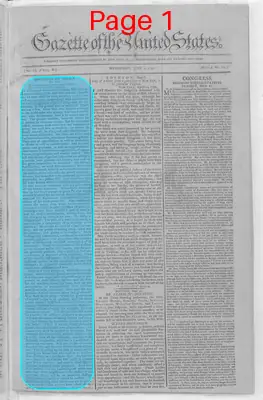
Literary
June 2, 1790
Gazette Of The United States
New York, New York County, New York
What is this article about?
This discourse explores the human passion for distinction, sought through vices, virtues, or trivial means. It argues that even heroes crave unlimited admiration, leading to jealousy and envy. It questions how merit can govern nations, critiquing universal suffrage as prone to deception and favoring hereditary or district-based selection to avoid endless dissensions.
Clipping
OCR Quality
92%
Excellent
Full Text
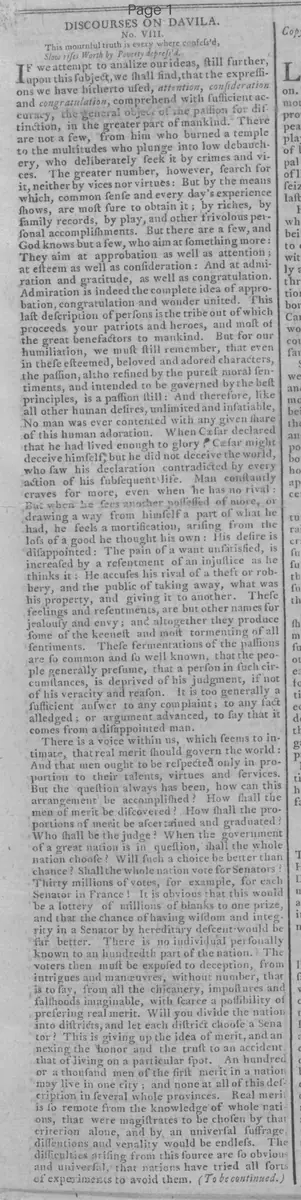
DISCOURSES ON DAVILA.
No. VIII.
This mournful truth is every where confessed,
If we attempt to analyze our ideas, till further,
Slow rises Worth by Poverty depressed.
On the ideas we have hitherto used, attention, consideration and congratulation, upon this subject, we shall find, that they comprehend with sufficient accuracy, the general object of the passion for distinction, in the greater part of mankind. There are not a few, from him who burned a temple to the multitudes who plunge into low debauchery, who deliberately seek it by crimes and vices. The greater number, however, search for it, neither by vices nor virtues: But by those means which, common sense and every day's experience shows, are most sure to obtain it; by riches, by family records, by play, and other frivolous personal accomplishments. But there are a few, and God knows but a few, who aim at something more: They aim at approbation as well as attention; at esteem as well as consideration: And at admiration and gratitude, as well as congratulation. Admiration is indeed the complete idea of approbation, congratulation and wonder united. This last description of persons is the tribe out of which proceeds your patriots and heroes, and most of the great benefactors to mankind. But for our humiliation, we must still remember, that even in these esteemed, beloved and adored characters, the passion, altho refined by the purest moral sentiments, and intended to be governed by the best principles, is a passion still: And therefore, like all other human desires, unlimited and insatiate. No man was ever contented with any given share of this human adoration. When Caesar declared that he had lived enough to glory; Caesar might deceive himself, but he did not deceive the world, who saw his declaration contradicted by every action of his subsequent life. Man constantly craves for more, even when he has no rival: But when he sees another possessed of more, or drawing away from himself a part of what he had, he feels a mortification, arising from the loss of a good he thought his own: His desire is disappointed: The pain of a want unsatisfied, is increased by a resentment of an injustice as he thinks it: He accuses his rival of a theft or robbery, and the public of taking away, what was his property, and giving it to another. These feelings and resentments, are but other names for jealousy and envy; and altogether they produce some of the keenest and most tormenting of all sentiments. These fermentations of the passions are so common and so well known, that the people generally presume, that a person in such circumstances, is deprived of his judgment, if not of his veracity and reason. It is too generally a sufficient answer to any complaint; to any fact alleged; or argument advanced, to say that it comes from a disappointed man.
There is a voice within us, which seems to intimate, that real merit should govern the world: And that men ought to be respected only in proportion to their talents, virtues and services. But the question always has been, how can this arrangement be accomplished? How shall the men of merit be discovered? How shall the proportions of merit be ascertained and graduated? Who shall be the judge? When the government of a great nation is in question, shall the whole nation choose? Will such a choice be better than chance? Shall the whole nation vote for Senators? Thirty millions of votes, for example, for each Senator in France! It is obvious that this would be a lottery of millions of blanks to one prize, and that the chance of having wisdom and integrity in a Senator by hereditary descent would be far better. There is no individual personally known to an hundredth part of the nation. The voters then must be exposed to deception, from intrigues and manœuvres, without number, that is to say, from all the chicanery, impostures and falsehoods imaginable, with scarce a possibility of preferring real merit. Will you divide the nation into districts, and let each district choose a Senator? This is giving up the idea of merit, and annexing the honor and the trust to an accident that of living on a particular spot. An hundred or a thousand men of the first merit in a nation may live in one city; and none at all of this description in several whole provinces. Real merit is so remote from the knowledge of whole nations, that were magistrates to be chosen by that criterion alone, and by an universal suffrage dissensions and venality would be endless. The difficulties arising from this source are so obvious and universal, that nations have tried all sorts of experiments to avoid them. (To be continued.)
No. VIII.
This mournful truth is every where confessed,
If we attempt to analyze our ideas, till further,
Slow rises Worth by Poverty depressed.
On the ideas we have hitherto used, attention, consideration and congratulation, upon this subject, we shall find, that they comprehend with sufficient accuracy, the general object of the passion for distinction, in the greater part of mankind. There are not a few, from him who burned a temple to the multitudes who plunge into low debauchery, who deliberately seek it by crimes and vices. The greater number, however, search for it, neither by vices nor virtues: But by those means which, common sense and every day's experience shows, are most sure to obtain it; by riches, by family records, by play, and other frivolous personal accomplishments. But there are a few, and God knows but a few, who aim at something more: They aim at approbation as well as attention; at esteem as well as consideration: And at admiration and gratitude, as well as congratulation. Admiration is indeed the complete idea of approbation, congratulation and wonder united. This last description of persons is the tribe out of which proceeds your patriots and heroes, and most of the great benefactors to mankind. But for our humiliation, we must still remember, that even in these esteemed, beloved and adored characters, the passion, altho refined by the purest moral sentiments, and intended to be governed by the best principles, is a passion still: And therefore, like all other human desires, unlimited and insatiate. No man was ever contented with any given share of this human adoration. When Caesar declared that he had lived enough to glory; Caesar might deceive himself, but he did not deceive the world, who saw his declaration contradicted by every action of his subsequent life. Man constantly craves for more, even when he has no rival: But when he sees another possessed of more, or drawing away from himself a part of what he had, he feels a mortification, arising from the loss of a good he thought his own: His desire is disappointed: The pain of a want unsatisfied, is increased by a resentment of an injustice as he thinks it: He accuses his rival of a theft or robbery, and the public of taking away, what was his property, and giving it to another. These feelings and resentments, are but other names for jealousy and envy; and altogether they produce some of the keenest and most tormenting of all sentiments. These fermentations of the passions are so common and so well known, that the people generally presume, that a person in such circumstances, is deprived of his judgment, if not of his veracity and reason. It is too generally a sufficient answer to any complaint; to any fact alleged; or argument advanced, to say that it comes from a disappointed man.
There is a voice within us, which seems to intimate, that real merit should govern the world: And that men ought to be respected only in proportion to their talents, virtues and services. But the question always has been, how can this arrangement be accomplished? How shall the men of merit be discovered? How shall the proportions of merit be ascertained and graduated? Who shall be the judge? When the government of a great nation is in question, shall the whole nation choose? Will such a choice be better than chance? Shall the whole nation vote for Senators? Thirty millions of votes, for example, for each Senator in France! It is obvious that this would be a lottery of millions of blanks to one prize, and that the chance of having wisdom and integrity in a Senator by hereditary descent would be far better. There is no individual personally known to an hundredth part of the nation. The voters then must be exposed to deception, from intrigues and manœuvres, without number, that is to say, from all the chicanery, impostures and falsehoods imaginable, with scarce a possibility of preferring real merit. Will you divide the nation into districts, and let each district choose a Senator? This is giving up the idea of merit, and annexing the honor and the trust to an accident that of living on a particular spot. An hundred or a thousand men of the first merit in a nation may live in one city; and none at all of this description in several whole provinces. Real merit is so remote from the knowledge of whole nations, that were magistrates to be chosen by that criterion alone, and by an universal suffrage dissensions and venality would be endless. The difficulties arising from this source are so obvious and universal, that nations have tried all sorts of experiments to avoid them. (To be continued.)
What sub-type of article is it?
Essay
What themes does it cover?
Political
Moral Virtue
What keywords are associated?
Passion For Distinction
Merit
Governance
Universal Suffrage
Jealousy
Envy
Admiration
Literary Details
Title
Discourses On Davila. No. Viii.
Key Lines
This Mournful Truth Is Every Where Confessed, If We Attempt To Analyze Our Ideas, Till Further, Slow Rises Worth By Poverty Depressed.
There Is A Voice Within Us, Which Seems To Intimate, That Real Merit Should Govern The World: And That Men Ought To Be Respected Only In Proportion To Their Talents, Virtues And Services.
It Is Obvious That This Would Be A Lottery Of Millions Of Blanks To One Prize, And That The Chance Of Having Wisdom And Integrity In A Senator By Hereditary Descent Would Be Far Better.