Thank you for visiting SNEWPapers!
Sign up free
Literary
October 16, 1850
Lewisburg Chronicle
Lewisburg, Union County, Pennsylvania
What is this article about?
A fictional tale blending history: Indian chief Kinaulu loses Monita to explorer Vasco de Balboa upon discovering the Pacific. In rage, Kinaulu curses white intruders, symbolizing sorrows of California's Gold Rush era, where fortune-seekers face loss and torment.
Merged-components note: Continuation of the 'Eureka' narrative story across sequential reading orders.
Clipping
OCR Quality
98%
Excellent
Full Text
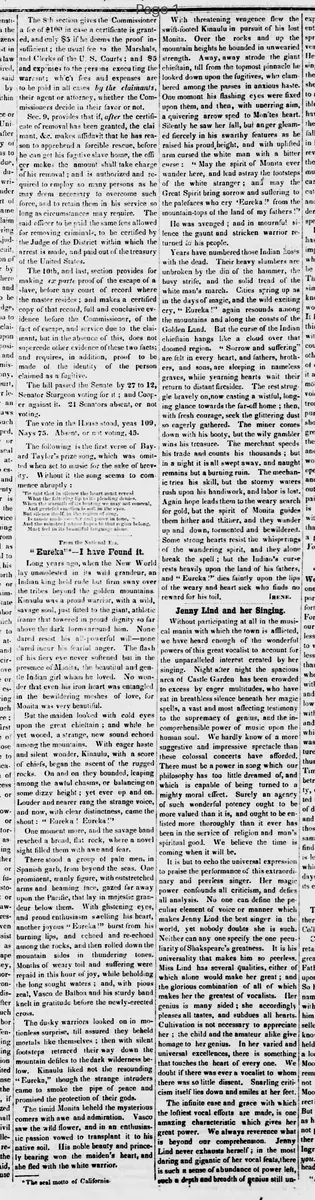
"Eureka"—I have Found it.
Long years ago, when the New World lay unmolested in its wild grandeur, an Indian king held rude but firm sway over the tribes beyond the golden mountains. Kinaulu was a proud warrior, with a wild, savage soul, just fitted to the giant, athletic frame that towered in proud dignity so far above the dark forms around him. None dared resist his all-powerful will—none dared incur his fearful anger. The flash of his fiery eye never softened but in the presence of Monita, the beautiful and gentle Indian girl whom he loved. No wonder that even his iron heart was entangled in the bewildering meshes of love, for Monita was very beautiful.
But the maiden looked with cold eyes upon the great chieftain; and while he yet wooed, a strange, new sound echoed among the mountains. With eager haste and silent wonder, Kinaulu, with a score of chiefs, began the ascent of the rugged rocks. On and on they bounded, leaping among the awful chasms, or balancing on some dizzy height; yet ever up and on. Louder and nearer rang the strange voice, and now, with clear distinctness, came the shout: "Eureka! Eureka!"
One moment more, and the savage band reached a broad, flat rock, where a novel sight filled them with awe and fear. There stood a group of pale men, in Spanish garb, from beyond the seas. One prominent, manly figure, with outstretched arms and beaming face, gazed far away upon the Pacific, that lay in majestic grandeur below them. With glistening eyes, and proud enthusiasm swelling his heart, another joyous "Eureka!" burst from his burning lips, and echoed and re-echoed among the rocks, and then rolled down the mountain sides in thundering tones.
Months of weary toil and suffering were repaid in this hour of joy, while beholding the long sought waters; and, with pious zeal, Vasco de Balboa and his sturdy band knelt in gratitude before the newly-erected cross.
The dusky warriors looked on in motionless surprise, till assured they beheld mortals like themselves; then with silent footsteps retraced their way down the mountain defiles to the dark wilderness below.
Kinaulu liked not the resounding "Eureka," though the strange intruders came to smoke the pipe of peace and promised the protection of their gods.
The timid Monita beheld the mysterious comers with awe and admiration. Vasco saw the wild flower, and in an enthusiastic passion vowed to transplant it to his native soil. His noble beauty and princely bearing won the maiden's heart, and she fled with the white warrior.
*The seal motto of California
With threatening vengeance flew the swift-footed Kinaulu in pursuit of his lost Monita. Over the rocks and up the mountain heights he bounded in unwearied strength. Away, away strode the giant chieftain, till from the topmost pinnacle he looked down upon the fugitives, who clambered among the passes in anxious haste. One moment his flashing eyes were fixed upon them, and then, with unerring aim, a quivering arrow sped to Monita's heart.
Silently he saw her fall, but anger gleamed fiercely in his swarthy features as he raised his proud height, and with uplifted arm cursed the white man with a bitter curse:
"May the spirit of Monita ever wander here, and lead astray the footsteps of the white stranger; and may the Great Spirit bring sorrow and suffering to the palefaces who cry 'Eureka!' from the mountain-tops of the land of my fathers!"
He was avenged; and in mournful silence the gaunt and stricken warrior returned to his people.
Years have numbered those Indians with the dead. Their heavy slumbers are unbroken by the din of the hammer, the busy strife, and the solid tread of the white man's march. Cities spring up as in the days of magic, and the wild exciting cry, "Eureka!" again resounds among the mountains and along the coasts of the Golden Land. But the curse of the Indian chieftain hangs like a cloud over that doomed region. "Sorrow and suffering" are felt in every heart, and fathers, brothers, and sons, are sleeping in nameless graves, while yearning hearts wait their return to distant firesides. The rest struggle bravely on, now casting a wistful, longing glance towards the far-off home; then, with fresh courage, seek the glittering dust so eagerly gathered. The miner comes down with his booty, but the wily gambler wins his treasure. The merchant speeds his trade and counts his thousands; but in a night it is all swept away, and naught remains but a burning ruin. The mechanic tries his skill, but the stormy waters rush upon his handiwork, and labor is lost. Again hope leads them to the weary search for gold, but the spirit of Monita guides them hither and thither, and they wander up and down, tormented and bewildered. Some strong hearts resist the whisperings of the wandering spirit, and they alone break the spell: but the Indian's curse rests heavily upon the land of his fathers, and "Eureka!" dies faintly upon the lips of the weary and heart-sick who finds no reward for his toil.
IRENE.
Long years ago, when the New World lay unmolested in its wild grandeur, an Indian king held rude but firm sway over the tribes beyond the golden mountains. Kinaulu was a proud warrior, with a wild, savage soul, just fitted to the giant, athletic frame that towered in proud dignity so far above the dark forms around him. None dared resist his all-powerful will—none dared incur his fearful anger. The flash of his fiery eye never softened but in the presence of Monita, the beautiful and gentle Indian girl whom he loved. No wonder that even his iron heart was entangled in the bewildering meshes of love, for Monita was very beautiful.
But the maiden looked with cold eyes upon the great chieftain; and while he yet wooed, a strange, new sound echoed among the mountains. With eager haste and silent wonder, Kinaulu, with a score of chiefs, began the ascent of the rugged rocks. On and on they bounded, leaping among the awful chasms, or balancing on some dizzy height; yet ever up and on. Louder and nearer rang the strange voice, and now, with clear distinctness, came the shout: "Eureka! Eureka!"
One moment more, and the savage band reached a broad, flat rock, where a novel sight filled them with awe and fear. There stood a group of pale men, in Spanish garb, from beyond the seas. One prominent, manly figure, with outstretched arms and beaming face, gazed far away upon the Pacific, that lay in majestic grandeur below them. With glistening eyes, and proud enthusiasm swelling his heart, another joyous "Eureka!" burst from his burning lips, and echoed and re-echoed among the rocks, and then rolled down the mountain sides in thundering tones.
Months of weary toil and suffering were repaid in this hour of joy, while beholding the long sought waters; and, with pious zeal, Vasco de Balboa and his sturdy band knelt in gratitude before the newly-erected cross.
The dusky warriors looked on in motionless surprise, till assured they beheld mortals like themselves; then with silent footsteps retraced their way down the mountain defiles to the dark wilderness below.
Kinaulu liked not the resounding "Eureka," though the strange intruders came to smoke the pipe of peace and promised the protection of their gods.
The timid Monita beheld the mysterious comers with awe and admiration. Vasco saw the wild flower, and in an enthusiastic passion vowed to transplant it to his native soil. His noble beauty and princely bearing won the maiden's heart, and she fled with the white warrior.
*The seal motto of California
With threatening vengeance flew the swift-footed Kinaulu in pursuit of his lost Monita. Over the rocks and up the mountain heights he bounded in unwearied strength. Away, away strode the giant chieftain, till from the topmost pinnacle he looked down upon the fugitives, who clambered among the passes in anxious haste. One moment his flashing eyes were fixed upon them, and then, with unerring aim, a quivering arrow sped to Monita's heart.
Silently he saw her fall, but anger gleamed fiercely in his swarthy features as he raised his proud height, and with uplifted arm cursed the white man with a bitter curse:
"May the spirit of Monita ever wander here, and lead astray the footsteps of the white stranger; and may the Great Spirit bring sorrow and suffering to the palefaces who cry 'Eureka!' from the mountain-tops of the land of my fathers!"
He was avenged; and in mournful silence the gaunt and stricken warrior returned to his people.
Years have numbered those Indians with the dead. Their heavy slumbers are unbroken by the din of the hammer, the busy strife, and the solid tread of the white man's march. Cities spring up as in the days of magic, and the wild exciting cry, "Eureka!" again resounds among the mountains and along the coasts of the Golden Land. But the curse of the Indian chieftain hangs like a cloud over that doomed region. "Sorrow and suffering" are felt in every heart, and fathers, brothers, and sons, are sleeping in nameless graves, while yearning hearts wait their return to distant firesides. The rest struggle bravely on, now casting a wistful, longing glance towards the far-off home; then, with fresh courage, seek the glittering dust so eagerly gathered. The miner comes down with his booty, but the wily gambler wins his treasure. The merchant speeds his trade and counts his thousands; but in a night it is all swept away, and naught remains but a burning ruin. The mechanic tries his skill, but the stormy waters rush upon his handiwork, and labor is lost. Again hope leads them to the weary search for gold, but the spirit of Monita guides them hither and thither, and they wander up and down, tormented and bewildered. Some strong hearts resist the whisperings of the wandering spirit, and they alone break the spell: but the Indian's curse rests heavily upon the land of his fathers, and "Eureka!" dies faintly upon the lips of the weary and heart-sick who finds no reward for his toil.
IRENE.
What sub-type of article is it?
Prose Fiction
Allegory
What themes does it cover?
Love Romance
Political
Commerce Trade
What keywords are associated?
Eureka
Kinaulu
Monita
Vasco De Balboa
Indian Curse
Gold Rush
California
Discovery
Pacific Ocean
What entities or persons were involved?
Irene.
Literary Details
Title
"Eureka"—I Have Found It.
Author
Irene.
Subject
The Seal Motto Of California
Key Lines
"May The Spirit Of Monita Ever Wander Here, And Lead Astray The Footsteps Of The White Stranger; And May The Great Spirit Bring Sorrow And Suffering To The Palefaces Who Cry 'Eureka!' From The Mountain Tops Of The Land Of My Fathers!"
"Eureka! Eureka!"