Thank you for visiting SNEWPapers!
Sign up free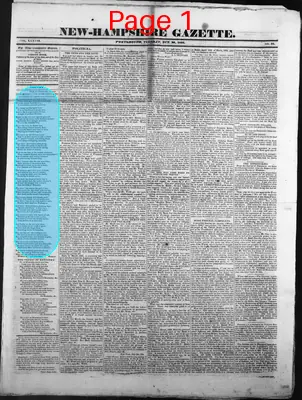
Poem
October 30, 1832
The New Hampshire Gazette
Portsmouth, Rockingham County, New Hampshire
What is this article about?
Poem imitating Campbell's 'Hohenlinden' describes the Battle of New Orleans, portraying the American forces under Jackson defeating the British invaders, emphasizing heroism, freedom, and victory. Ends with a call to support the chief on election day.
Clipping
OCR Quality
98%
Excellent
Full Text
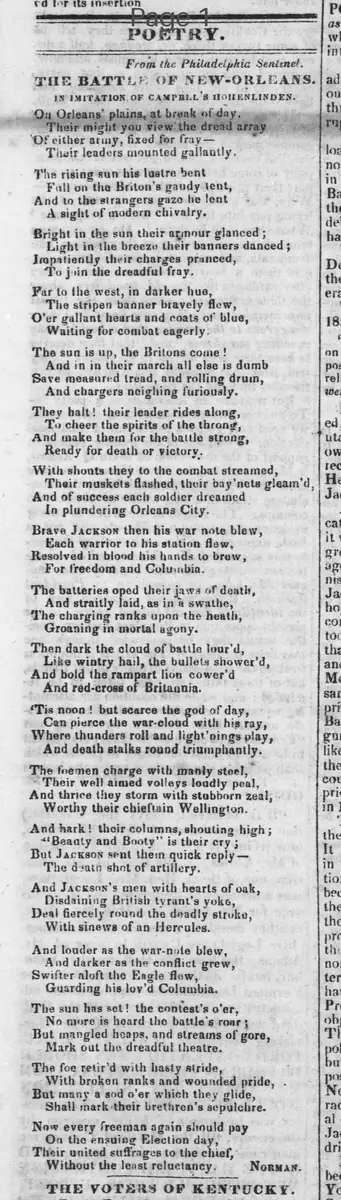
POETRY.
From the Philadelphia Sentinel.
THE BATTLE OF NEW-ORLEANS.
IN IMITATION OF CAMPBELL'S HOHENLINDEN.
On Orleans' plains, at break of day,
Their might you view the dread array
Of either army, fixed for fray—
Their leaders mounted gallantly.
The rising sun his lustre bent
Fall on the Briton's gaudy tent,
And to the stranger's gaze he lent
A sight of modern chivalry.
Bright in the sun their armour glanced;
Light in the breeze their banners danced;
Impatiently their chargers pranced,
To join the dreadful fray.
Far to the west, in darker hue,
The striped banner bravely flew,
O'er gallant hearts and coats of blue,
Waiting for combat eagerly.
The sun is up, the Britons come!
And in their march all else is dumb,
Save measured tread, and rolling drum,
And chargers neighing furiously.
They halt! their leader rides along
To cheer the spirits of the throng,
And make them for the battle strong,
Ready for death or victory.
With shouts they to the combat streamed,
Their muskets flashed, their bay'nets gleamed,
And of success each soldier dreamed
In plundering Orleans City.
Brave Jackson then his war note blew,
Each warrior to his station flew,
Resolved in blood his hands to strew,
For freedom and Columbia.
The batteries oped their jaws of death,
And straitly laid, as in a swathe,
The charging ranks upon the heath,
Groaning in mortal agony.
Then dark the cloud of battle lowered.
Like wintry hail, the bullets showered,
And bold the rampart lion cowered,
And red-cross of Britannia.
'Tis noon! but scarce the god of day,
Can pierce the war-cloud with his ray,
Where thunders roll and lightnings play,
And death stalks round triumphantly.
The foemen charge with manly steel,
Their well aimed volleys loudly peal,
And thrice they storm with stubborn zeal,
Worthy their chieftain Wellington.
And hark! their columns, shouting high;
"Beauty and Booty" is their cry;
But Jackson sent them quick reply—
The deadly shot of artillery.
And Jackson's men with hearts of oak,
Disdaining British tyrant's yoke,
Deal fiercely round the deadly stroke,
With sinews of a Hercules.
And louder as the war-note blew,
And darker as the conflict grew,
Swifter aloft the Eagle flew,
Guarding his loved Columbia.
The sun has set! the contest's o'er,
No more is heard the battle's roar;
But mangled heaps, and streams of gore,
Mark out the dreadful theatre.
The foe retired with hasty stride,
With broken ranks and wounded pride,
But many a sod o'er which they glide,
Shall mark their brethren's sepulchre.
Now every freeman again should pay,
On the ensuing Election day,
Their united suffrages to the chief,
Without the least reluctancy.
NORMAN.
From the Philadelphia Sentinel.
THE BATTLE OF NEW-ORLEANS.
IN IMITATION OF CAMPBELL'S HOHENLINDEN.
On Orleans' plains, at break of day,
Their might you view the dread array
Of either army, fixed for fray—
Their leaders mounted gallantly.
The rising sun his lustre bent
Fall on the Briton's gaudy tent,
And to the stranger's gaze he lent
A sight of modern chivalry.
Bright in the sun their armour glanced;
Light in the breeze their banners danced;
Impatiently their chargers pranced,
To join the dreadful fray.
Far to the west, in darker hue,
The striped banner bravely flew,
O'er gallant hearts and coats of blue,
Waiting for combat eagerly.
The sun is up, the Britons come!
And in their march all else is dumb,
Save measured tread, and rolling drum,
And chargers neighing furiously.
They halt! their leader rides along
To cheer the spirits of the throng,
And make them for the battle strong,
Ready for death or victory.
With shouts they to the combat streamed,
Their muskets flashed, their bay'nets gleamed,
And of success each soldier dreamed
In plundering Orleans City.
Brave Jackson then his war note blew,
Each warrior to his station flew,
Resolved in blood his hands to strew,
For freedom and Columbia.
The batteries oped their jaws of death,
And straitly laid, as in a swathe,
The charging ranks upon the heath,
Groaning in mortal agony.
Then dark the cloud of battle lowered.
Like wintry hail, the bullets showered,
And bold the rampart lion cowered,
And red-cross of Britannia.
'Tis noon! but scarce the god of day,
Can pierce the war-cloud with his ray,
Where thunders roll and lightnings play,
And death stalks round triumphantly.
The foemen charge with manly steel,
Their well aimed volleys loudly peal,
And thrice they storm with stubborn zeal,
Worthy their chieftain Wellington.
And hark! their columns, shouting high;
"Beauty and Booty" is their cry;
But Jackson sent them quick reply—
The deadly shot of artillery.
And Jackson's men with hearts of oak,
Disdaining British tyrant's yoke,
Deal fiercely round the deadly stroke,
With sinews of a Hercules.
And louder as the war-note blew,
And darker as the conflict grew,
Swifter aloft the Eagle flew,
Guarding his loved Columbia.
The sun has set! the contest's o'er,
No more is heard the battle's roar;
But mangled heaps, and streams of gore,
Mark out the dreadful theatre.
The foe retired with hasty stride,
With broken ranks and wounded pride,
But many a sod o'er which they glide,
Shall mark their brethren's sepulchre.
Now every freeman again should pay,
On the ensuing Election day,
Their united suffrages to the chief,
Without the least reluctancy.
NORMAN.
What sub-type of article is it?
Ballad
Ode
What themes does it cover?
War Military
Patriotism
Liberty Independence
What keywords are associated?
Battle New Orleans
Jackson Victory
British Defeat
American Patriotism
War Heroism
Columbia Freedom
Election Call
What entities or persons were involved?
Norman.
Poem Details
Title
The Battle Of New Orleans.
Author
Norman.
Subject
In Imitation Of Campbell's Hohenlinden.
Form / Style
Rhymed Stanzas Imitating Hohenlinden
Key Lines
On Orleans' Plains, At Break Of Day,
Their Might You View The Dread Array
Of Either Army, Fixed For Fray—
Their Leaders Mounted Gallantly.
"Beauty And Booty" Is Their Cry;
But Jackson Sent Them Quick Reply—
The Deadly Shot Of Artillery.
The Sun Has Set! The Contest's O'er,
No More Is Heard The Battle's Roar;
But Mangled Heaps, And Streams Of Gore,
Mark Out The Dreadful Theatre.
Now Every Freeman Again Should Pay,
On The Ensuing Election Day,
Their United Suffrages To The Chief,
Without The Least Reluctancy.