Thank you for visiting SNEWPapers!
Sign up free
Literary
April 10, 1840
Farmers' Gazette, And Cheraw Advertiser
Cheraw, Chesterfield County, South Carolina
What is this article about?
An essay from the Portland Advertiser praising the noble, independent life of the farmer or husbandman, who earns his bread through honest labor on his own land. It contrasts rural contentment and freedom with the cares of city life, quoting Shakespeare and Cowper, and invokes Roman veneration of agriculture.
Clipping
OCR Quality
95%
Excellent
Full Text
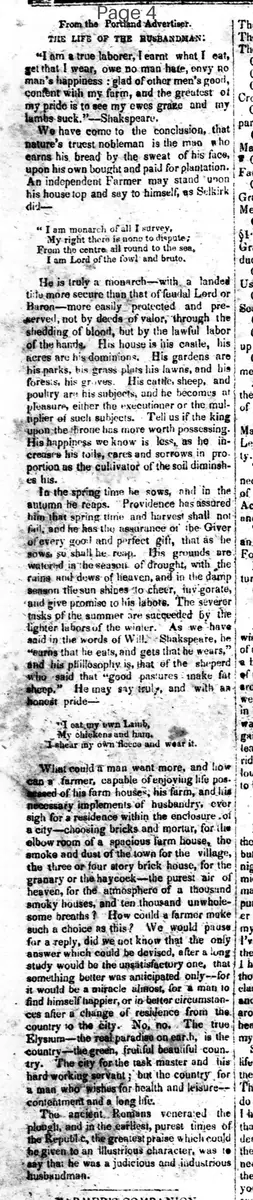
From the Portland Advertiser.
THE LIFE OF THE HUSBANDMAN:
"I am a true laborer, I earn what I eat,
get that I wear, owe no man hate, envy no
man's happiness: glad of other men's good,
content with my farm, and the greatest of
my pride is to see my ewes graze and my
lambs suck."—Shakespeare.
We have come to the conclusion, that
nature's truest nobleman is the man who
earns his bread by the sweat of his face,
upon his own bought and paid for plantation.
An independent Farmer may stand upon
his house top and say to himself, as Selkirk
did
"I am monarch of all I survey,
My right there is none to dispute;
From the centre all round to the sea.
I am Lord of the fowl and brute."
He is truly a monarch—with a landed
title more secure than that of feudal Lord or
Baron—more easily protected and preserved, not by deeds of valor, through the
shedding of blood, but by the lawful labor
of the hands. His house is his castle, his
acres are his dominions. His gardens are
his parks, his grass plats his lawns, and his
forests, his groves. His cattle, sheep, and
poultry are his subjects, and he becomes at
pleasure, either the executioner or the multiplier of such subjects. Tell us if the king
upon the throne has more worth possessing.
His happiness we know is less, as he increases his toils, cares and sorrows in proportion as the cultivator of the soil diminishes his.
In the springtime he sows, and in the
autumn he reaps. "Providence has assured
him that spring time and harvest shall not
fail: and he has the assurance of the Giver
of every good and perfect gift, that as he
sows so shall he reap. His grounds are
watered in the season of drought, with the
rains and dews of heaven, and in the damp
season the sun shines to cheer, invigorate,
and give promise to his labors. The severer
tasks of the summer are succeeded by the
lighter labors of the winter." As we have
said in the words of Will. Shakespeare, he
"earns that he eats, and gets that he wears,"
and his philosophy is, that of the shepherd
who said that "good pastures make fat
sheep." He may say truly, and with an
honest pride
I eat my own Lamb,
My chickens and ham,
I shear my own fleece and wear it.
What could a man want more, and how
can a farmer, capable of enjoying the possessions of his farm house; his farm, and his
necessary implements of husbandry, ever
sigh for a residence within the enclosure of
a city—choosing bricks and mortar, for the
elbow room of a spacious farm house, the
smoke and dust of the town or the village,
the three or four story brick house, for the
granary or the haycock—the purest air of
heaven, for the atmosphere of a thousand
smoky houses, and ten thousand unwholesome breaths? How could a farmer make
such a choice as this? We would pause
for a reply, did we not know that the only
answer which could be devised, after a long
study would be the unsatisfactory one, that
something better was anticipated only—or
it would be a miracle almost, for a man to
find himself happier, or in better circumstances after a change of residence from the
country to the city. No, no. The true
Elysium—the real paradise on earth, is the
country—the green, fruitful beautiful country. The city for the task master and his
hard working servant; but the country for
a man who wishes for health and leisure—
contentment and a long life.
The ancient Romans venerated the
plough, and in the earliest, purest times of
the Republic, the greatest praise which could
be given to an illustrious character, was to
say that he was a judicious and industrious
husbandman.
THE LIFE OF THE HUSBANDMAN:
"I am a true laborer, I earn what I eat,
get that I wear, owe no man hate, envy no
man's happiness: glad of other men's good,
content with my farm, and the greatest of
my pride is to see my ewes graze and my
lambs suck."—Shakespeare.
We have come to the conclusion, that
nature's truest nobleman is the man who
earns his bread by the sweat of his face,
upon his own bought and paid for plantation.
An independent Farmer may stand upon
his house top and say to himself, as Selkirk
did
"I am monarch of all I survey,
My right there is none to dispute;
From the centre all round to the sea.
I am Lord of the fowl and brute."
He is truly a monarch—with a landed
title more secure than that of feudal Lord or
Baron—more easily protected and preserved, not by deeds of valor, through the
shedding of blood, but by the lawful labor
of the hands. His house is his castle, his
acres are his dominions. His gardens are
his parks, his grass plats his lawns, and his
forests, his groves. His cattle, sheep, and
poultry are his subjects, and he becomes at
pleasure, either the executioner or the multiplier of such subjects. Tell us if the king
upon the throne has more worth possessing.
His happiness we know is less, as he increases his toils, cares and sorrows in proportion as the cultivator of the soil diminishes his.
In the springtime he sows, and in the
autumn he reaps. "Providence has assured
him that spring time and harvest shall not
fail: and he has the assurance of the Giver
of every good and perfect gift, that as he
sows so shall he reap. His grounds are
watered in the season of drought, with the
rains and dews of heaven, and in the damp
season the sun shines to cheer, invigorate,
and give promise to his labors. The severer
tasks of the summer are succeeded by the
lighter labors of the winter." As we have
said in the words of Will. Shakespeare, he
"earns that he eats, and gets that he wears,"
and his philosophy is, that of the shepherd
who said that "good pastures make fat
sheep." He may say truly, and with an
honest pride
I eat my own Lamb,
My chickens and ham,
I shear my own fleece and wear it.
What could a man want more, and how
can a farmer, capable of enjoying the possessions of his farm house; his farm, and his
necessary implements of husbandry, ever
sigh for a residence within the enclosure of
a city—choosing bricks and mortar, for the
elbow room of a spacious farm house, the
smoke and dust of the town or the village,
the three or four story brick house, for the
granary or the haycock—the purest air of
heaven, for the atmosphere of a thousand
smoky houses, and ten thousand unwholesome breaths? How could a farmer make
such a choice as this? We would pause
for a reply, did we not know that the only
answer which could be devised, after a long
study would be the unsatisfactory one, that
something better was anticipated only—or
it would be a miracle almost, for a man to
find himself happier, or in better circumstances after a change of residence from the
country to the city. No, no. The true
Elysium—the real paradise on earth, is the
country—the green, fruitful beautiful country. The city for the task master and his
hard working servant; but the country for
a man who wishes for health and leisure—
contentment and a long life.
The ancient Romans venerated the
plough, and in the earliest, purest times of
the Republic, the greatest praise which could
be given to an illustrious character, was to
say that he was a judicious and industrious
husbandman.
What sub-type of article is it?
Essay
What themes does it cover?
Agriculture Rural
Liberty Freedom
Moral Virtue
What keywords are associated?
Husbandman Life
Rural Independence
Pastoral Contentment
Farmer Virtues
Country Vs City
What entities or persons were involved?
From The Portland Advertiser
Literary Details
Title
The Life Of The Husbandman
Author
From The Portland Advertiser
Subject
In Praise Of The Farmer's Life
Key Lines
"I Am A True Laborer, I Earn What I Eat, Get That I Wear, Owe No Man Hate, Envy No Man's Happiness: Glad Of Other Men's Good, Content With My Farm, And The Greatest Of My Pride Is To See My Ewes Graze And My Lambs Suck."—Shakespeare.
"I Am Monarch Of All I Survey, My Right There Is None To Dispute; From The Centre All Round To The Sea. I Am Lord Of The Fowl And Brute."
I Eat My Own Lamb, My Chickens And Ham, I Shear My Own Fleece And Wear It.
The True Elysium—The Real Paradise On Earth, Is The Country—The Green, Fruitful Beautiful Country.