Thank you for visiting SNEWPapers!
Sign up free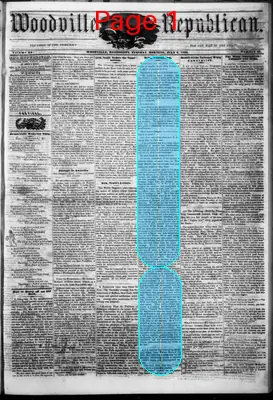
Editorial
July 6, 1852
The Woodville Republican
Woodville, Wilkinson County, Mississippi
What is this article about?
Editorial discusses Gen. Scott's stance on the Compromise and slavery, quoting newspapers to highlight Southern distrust and abolitionist leanings, warning that his election could lead to slavery's abolition, immigration restrictions, and Union dissolution, ending with an unrelated anecdote.
Clipping

OCR Quality
95%
Excellent
Full Text
Whig Consolation.
Whenever it is in our power to add one
crumb of comfort to our whig friends, it
will afford us pleasure to do so.
The editor of the Louisville Journal says:
"We ourselves know personally that
Gen. Scott is a most devoted friend to the
Compromise—we have heard the declaration from his own lips in the presence of
whigs, democrats and free-soilers."
An article from the New Orleans Bee, in
reference to the above statement, says:
"The people of the South continue to
convince very considerable distrust of him,
and to call for a written and public exposition of sentiments."
It further says:
"Gen. Scott is the special favorite of the
North: the cherished candidate of the free
soilers. He is petted by Greeley; kept under guardianship by Seward; and constantly admonished with paternal solicitude by Thurlow Weed—in short, he is in exceedingly bad company. He appears to consort with those who revel in fanaticism and make their politics subservient to sectional aggrandizement."
When doctors disagree, or rather editors,
who is to decide?
Gen. Scott says in his letter to J. P. Atkinson, Feb. 9, 1843, that,
"I am persuaded that it is a high moral
obligation of masters and slave-holding
States to employ all means not incompatible with the safety of both colors to ameliorate slavery even to extermination"
In other words he means abolition.
In further illustration of the opinion of
different editors, we quote from the New
York Herald, that has recently been publishing the letters of Gen. Scott:
"From the promise made to Abraham,
some two thousand years had elapsed before the advent of our Saviour, and the Israelites, the chosen people of God, were,
for wise purposes, suffered to remain in
bondage longer than the Africans have
been on our shore.
I do but
suggest the remedies and consolations of
slavery to inspire patience, hope, &c.
"How were the Israelites brought
out of bondage at last? By a high hand
and an outstretched arm—by the destruction of the first-born, of Egypt, and the
overthrow of Pharaoh and his host in the
Red sea. We do not say that Gen. Scott
contemplates a massacre in every house in
the southern States. But it is an undeniable fact that this passage in sacred history is the standing text from which the abolition
ists of the North—black, white and gray—
preach future vengeance, bloodshed, rebellion, and anarchy, when the slaves, aided
by the North, grow too numerous and too
powerful of their masters and the white
population of the South. If Gen. Scott
did not mean that the parallel should not
be complete, his allusion to the case of the
Israelites in Egypt was most unfortunate.
But we will assume that he only meant
abolition by moral and legal means, which
are very different from the instrumentality
that delivered Israel from the house of
bondage. We will assume that General
Scott had gradual abolition, and not a violent coup d'etat, in his eye. His first
step, therefore, with the aid of his party
will be to repeal the fugitive slave law, for
he ignores the veto power. The next will
be to annex Canada: the next to abolish
the naturalization laws; and finally to aid
and influence the abolition of slavery all
over the United States and Territories,
"The nomination, therefore, of General
Scott, which is already settled, cut and
dried' in the North, is the beginning of the
end. In the event of his election, there
will be a total change in the administration
of the government of the country. Emigration will be diminished—foreigners will
be disfranchised and discouraged, and the
Irish and Germans in particular will be
placed under worse disabilities than those
under which they groaned in their native
land. There will be a complete revolution
in the action of the government, and the
long threatened separation between the
North and South will at last explode in
open rupture There will be terrible commotion in Congress and throughout the
country. General Scott himself will be
the Executive to carry out these designs;
and as President and commander-in-chief,
he will enforce the new laws with all the
military and civil power of the North, and
at the point of the bayonet, He is not a
coward to shrink from the performance of
his duty whatever may be the consequences.
He was never born to yield or retreat. The
end of all will be, that a terrible and bloody
separation of the Union will take place, or
a military republic, somewhat like that of
the Romans, or the French, will be greatly
established, and our present institutions
will be remembered among the things of
the past.'
A butcher boy coming up Beekman street, from Fulton Market the
other day, carrying a large tray on his
shoulder, accidentally struck it against
a lady's head, and discomposed her
dress.
"The deuce take that tray!" cried
the lady in a towering passion.
"Madame," replied the youngster,
the deuce cannot take the tray."
Whenever it is in our power to add one
crumb of comfort to our whig friends, it
will afford us pleasure to do so.
The editor of the Louisville Journal says:
"We ourselves know personally that
Gen. Scott is a most devoted friend to the
Compromise—we have heard the declaration from his own lips in the presence of
whigs, democrats and free-soilers."
An article from the New Orleans Bee, in
reference to the above statement, says:
"The people of the South continue to
convince very considerable distrust of him,
and to call for a written and public exposition of sentiments."
It further says:
"Gen. Scott is the special favorite of the
North: the cherished candidate of the free
soilers. He is petted by Greeley; kept under guardianship by Seward; and constantly admonished with paternal solicitude by Thurlow Weed—in short, he is in exceedingly bad company. He appears to consort with those who revel in fanaticism and make their politics subservient to sectional aggrandizement."
When doctors disagree, or rather editors,
who is to decide?
Gen. Scott says in his letter to J. P. Atkinson, Feb. 9, 1843, that,
"I am persuaded that it is a high moral
obligation of masters and slave-holding
States to employ all means not incompatible with the safety of both colors to ameliorate slavery even to extermination"
In other words he means abolition.
In further illustration of the opinion of
different editors, we quote from the New
York Herald, that has recently been publishing the letters of Gen. Scott:
"From the promise made to Abraham,
some two thousand years had elapsed before the advent of our Saviour, and the Israelites, the chosen people of God, were,
for wise purposes, suffered to remain in
bondage longer than the Africans have
been on our shore.
I do but
suggest the remedies and consolations of
slavery to inspire patience, hope, &c.
"How were the Israelites brought
out of bondage at last? By a high hand
and an outstretched arm—by the destruction of the first-born, of Egypt, and the
overthrow of Pharaoh and his host in the
Red sea. We do not say that Gen. Scott
contemplates a massacre in every house in
the southern States. But it is an undeniable fact that this passage in sacred history is the standing text from which the abolition
ists of the North—black, white and gray—
preach future vengeance, bloodshed, rebellion, and anarchy, when the slaves, aided
by the North, grow too numerous and too
powerful of their masters and the white
population of the South. If Gen. Scott
did not mean that the parallel should not
be complete, his allusion to the case of the
Israelites in Egypt was most unfortunate.
But we will assume that he only meant
abolition by moral and legal means, which
are very different from the instrumentality
that delivered Israel from the house of
bondage. We will assume that General
Scott had gradual abolition, and not a violent coup d'etat, in his eye. His first
step, therefore, with the aid of his party
will be to repeal the fugitive slave law, for
he ignores the veto power. The next will
be to annex Canada: the next to abolish
the naturalization laws; and finally to aid
and influence the abolition of slavery all
over the United States and Territories,
"The nomination, therefore, of General
Scott, which is already settled, cut and
dried' in the North, is the beginning of the
end. In the event of his election, there
will be a total change in the administration
of the government of the country. Emigration will be diminished—foreigners will
be disfranchised and discouraged, and the
Irish and Germans in particular will be
placed under worse disabilities than those
under which they groaned in their native
land. There will be a complete revolution
in the action of the government, and the
long threatened separation between the
North and South will at last explode in
open rupture There will be terrible commotion in Congress and throughout the
country. General Scott himself will be
the Executive to carry out these designs;
and as President and commander-in-chief,
he will enforce the new laws with all the
military and civil power of the North, and
at the point of the bayonet, He is not a
coward to shrink from the performance of
his duty whatever may be the consequences.
He was never born to yield or retreat. The
end of all will be, that a terrible and bloody
separation of the Union will take place, or
a military republic, somewhat like that of
the Romans, or the French, will be greatly
established, and our present institutions
will be remembered among the things of
the past.'
A butcher boy coming up Beekman street, from Fulton Market the
other day, carrying a large tray on his
shoulder, accidentally struck it against
a lady's head, and discomposed her
dress.
"The deuce take that tray!" cried
the lady in a towering passion.
"Madame," replied the youngster,
the deuce cannot take the tray."
What sub-type of article is it?
Slavery Abolition
Partisan Politics
War Or Peace
What keywords are associated?
Gen Scott
Slavery Abolition
Compromise
Whig Party
Union Dissolution
Southern Distrust
Northern Fanaticism
What entities or persons were involved?
Gen. Scott
Louisville Journal
New Orleans Bee
New York Herald
Greeley
Seward
Thurlow Weed
Editorial Details
Primary Topic
Criticism Of Gen. Scott's Views On Slavery And Potential Impact On The Union
Stance / Tone
Anti Scott, Pro Southern, Alarmist Warning Of Abolition And Civil Strife
Key Figures
Gen. Scott
Louisville Journal
New Orleans Bee
New York Herald
Greeley
Seward
Thurlow Weed
Key Arguments
Gen. Scott Claims Devotion To The Compromise But Is Distrusted In The South
Scott Associates With Northern Abolitionists And Free Soilers
Scott's 1843 Letter Advocates Ameliorating Slavery To Extermination, Implying Abolition
Scott's Biblical Allusion To Israelites Parallels Abolitionist Rhetoric On Slave Rebellion
Scott's Election Would Lead To Repealing Fugitive Slave Law, Restricting Immigration, And Abolishing Slavery
This Would Cause Revolution, North South Separation, And Possible Bloody Conflict Or Military Republic