Thank you for visiting SNEWPapers!
Sign up free
Editorial
June 26, 1830
New Hampshire Statesman And Concord Register
Concord, Merrimack County, New Hampshire
What is this article about?
An editorial on the duty of active benevolence, emphasizing that all people, especially the upper classes, must investigate and understand the miseries of the poor—such as poverty, disease, and vice—to effectively remedy them.
Clipping
OCR Quality
98%
Excellent
Full Text
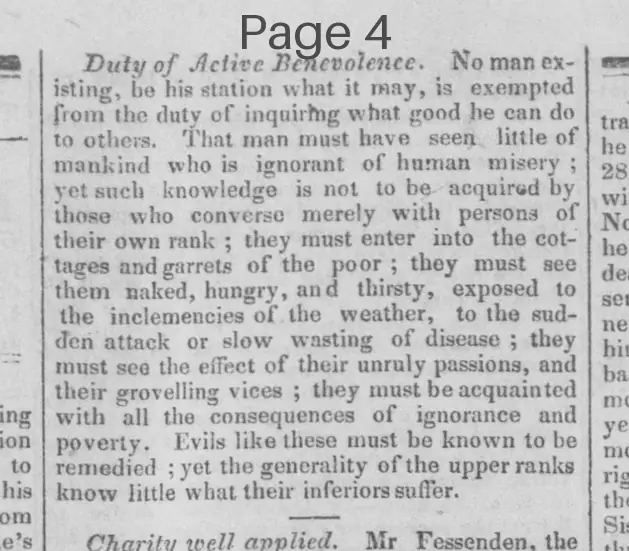
Duty of Active Benevolence. No man existing, be his station what it may, is exempted from the duty of inquiring what good he can do to others. That man must have seen little of mankind who is ignorant of human misery; yet such knowledge is not to be acquired by those who converse merely with persons of their own rank; they must enter into the cottages and garrets of the poor; they must see them naked, hungry, and thirsty, exposed to the inclemencies of the weather, to the sudden attack or slow wasting of disease; they must see the effect of their unruly passions, and their grovelling vices; they must be acquainted with all the consequences of ignorance and poverty. Evils like these must be known to be remedied; yet the generality of the upper ranks know little what their inferiors suffer.
What sub-type of article is it?
Moral Or Religious
Social Reform
What keywords are associated?
Active Benevolence
Human Misery
Poverty
Upper Ranks
Social Duty
Remedying Evils
Editorial Details
Primary Topic
Duty Of Active Benevolence Towards The Poor
Stance / Tone
Moral Exhortation To Understand And Remedy Human Misery
Key Arguments
No Person Is Exempted From Inquiring How To Do Good To Others
Ignorance Of Human Misery Comes From Limited Social Interactions
The Upper Ranks Must Visit The Poor To Witness Their Sufferings Firsthand
Knowledge Of Evils Like Poverty, Disease, Vice, Ignorance Is Essential For Remedies
Upper Classes Generally Unaware Of Inferiors' Hardships