Thank you for visiting SNEWPapers!
Sign up free
Literary
June 26, 1815
Daily National Intelligencer
Washington, District Of Columbia
What is this article about?
An essay by Agricola advocating for agricultural societies in Massachusetts, emphasizing agriculture's scientific nature and benefits from learned research. It highlights European examples from England and France, where such societies and government support have advanced farming, increased land values, and enriched tenants, urging similar establishments in America.
Clipping
OCR Quality
98%
Excellent
Full Text
FROM THE BOSTON DAILY ADVERTISER,
On the utility and importance of Agricultural Societies, and the history of the rise and progress of the Massachusetts Society for promoting agriculture.—
Addressed to the Hon. Legislature, and to the farmers throughout the state.
BY AGRICOLA.
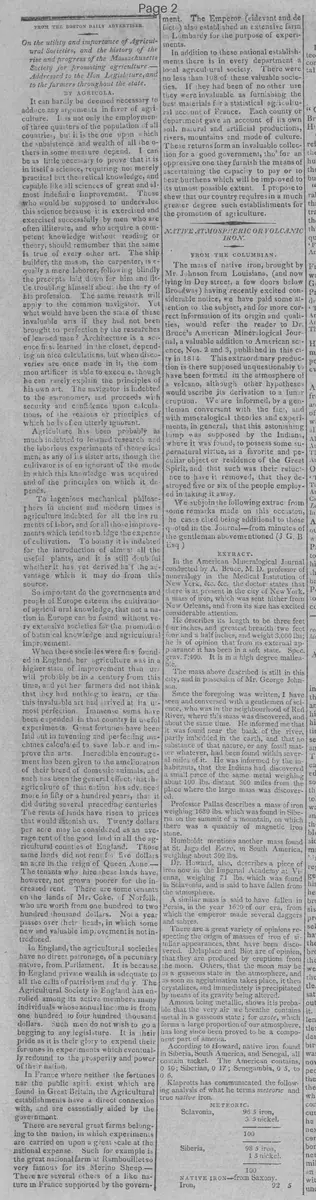
It can hardly be deemed necessary to adduce any arguments in favor of agriculture. It is not only the employment of three quarters of the population of all countries, but it is the one upon which the subsistence and wealth of all the others in some measure depend. It can be as little necessary to prove that it is in itself a science, requiring not merely practical but theoretical knowledge, and capable like all sciences of great and almost indefinite improvement. Those who would be supposed to undervalue this science because it is exercised and exercised successfully by men who are often illiterate, and who acquire a competent knowledge without reading or theory, should remember that the same is true of every other art. The ship builder, the mason, the carpenter, is equally a mere laborer, following blindly the precepts laid down for him and little troubling himself about the theory of his profession. The same remark will apply to the common navigator. Yet what would have been the state of these invaluable arts if they had not been brought to perfection by the researches of learned men? Architecture is a science first learned in the closet, depending on nice calculations, but when discoveries are once made in it, the common artificer is able to execute, though he can rarely explain the principles of his own art. The navigator is indebted to the astronomer, and proceeds with security and confidence upon calculations, of the reasons or principles of which he is often utterly ignorant.
Agriculture has been probably as much indebted to learned research and the laborious experiments of theoretical men, as any of its sister arts, though the cultivator is often ignorant of the mode in which this knowledge was acquired and of the principles on which it depends.
To ingenious mechanical philosophers in ancient and modern times is agriculture indebted for all the instruments of labor, and for all those improvements which tend to abridge the expense of cultivation. To botany it is indebted for the introduction of almost all the useful plants, and it is still doubtful whether it has yet derived half the advantage which it may do from this source.
So important do the governments and people of Europe esteem the cultivation of agricultural knowledge, that not a nation in Europe can be found without very extensive societies for the promotion of botanical knowledge and agricultural improvement.
When these societies were first founded in England, her agriculture was in a higher state of improvement than ours will probably be in a century from this time, and yet her farmers did not think that they had nothing to learn, or that this invaluable art had arrived at its utmost perfection. Immense sums have been expended in that country in useful experiments. Great fortunes have been laid out in inventing and perfecting machines calculated to save labor and improve the arts. Incredible encouragement has been given to the amelioration of their breed of domestic animals, and such has been the general effect, that the agriculture of that nation has advanced more in fifty or a hundred years, than it did during several preceding centuries. The rents of lands have risen to prices that would astonish us. Twenty dollars per acre may be considered as an average rent of the good land in all the agricultural counties of England. Those same lands did not rent for five dollars an acre in the reign of Queen Anne.
The tenants who hire these lands have, however, not grown poorer for the increased rent. There are some tenants on the lands of Mr. Coke, of Norfolk, who are worth from one hundred to two hundred thousand dollars. Not a year passes over their heads, in which some new and valuable improvement is not introduced.
In England, the agricultural societies have no direct patronage, of a pecuniary nature, from Parliament. It is because in England private wealth is adequate to all the calls of patriotism and duty. The Agricultural Society in England has enrolled among its active members many individuals whose annual income is from one hundred to four hundred thousand dollars. Such men do not wish to go a begging to any legislature. It is their pride as it is their glory to expend their fortunes in experiments which eventually redound to the prosperity and power of their nation.
In France where neither the fortunes nor the public spirit exist which are found in Great Britain, the Agricultural establishments have a direct connexion with, and are essentially aided by the government.
There are several great farms belonging to the nation, in which experiments are carried on upon a great scale at the national expense. Such for example is the great national farm at Rambouillet so very famous for its Merino Sheep. There are several others of a like nature in France supported by the government. The Emperor (ci-devant and de facto) also established an extensive farm in Lombardy for the purpose of experiments.
In addition to these national establishments there is in every department a local agricultural society. There were no less than 108 of these valuable societies. If they had been of no other use they were invaluable as furnishing the best materials for a statistical agricultural account of France. Each county or department gave an account of its own soil, natural and artificial productions, rivers, mountains and mode of culture.
These returns form an invaluable collection for a good government, tho' for an oppressive one they furnish the means of ascertaining the Capacity to pay or to bear burthens which will be improved to its utmost possible extent. I propose to shew that our country requires in a much greater degree such establishments for the promotion of agriculture.
On the utility and importance of Agricultural Societies, and the history of the rise and progress of the Massachusetts Society for promoting agriculture.—
Addressed to the Hon. Legislature, and to the farmers throughout the state.
BY AGRICOLA.
It can hardly be deemed necessary to adduce any arguments in favor of agriculture. It is not only the employment of three quarters of the population of all countries, but it is the one upon which the subsistence and wealth of all the others in some measure depend. It can be as little necessary to prove that it is in itself a science, requiring not merely practical but theoretical knowledge, and capable like all sciences of great and almost indefinite improvement. Those who would be supposed to undervalue this science because it is exercised and exercised successfully by men who are often illiterate, and who acquire a competent knowledge without reading or theory, should remember that the same is true of every other art. The ship builder, the mason, the carpenter, is equally a mere laborer, following blindly the precepts laid down for him and little troubling himself about the theory of his profession. The same remark will apply to the common navigator. Yet what would have been the state of these invaluable arts if they had not been brought to perfection by the researches of learned men? Architecture is a science first learned in the closet, depending on nice calculations, but when discoveries are once made in it, the common artificer is able to execute, though he can rarely explain the principles of his own art. The navigator is indebted to the astronomer, and proceeds with security and confidence upon calculations, of the reasons or principles of which he is often utterly ignorant.
Agriculture has been probably as much indebted to learned research and the laborious experiments of theoretical men, as any of its sister arts, though the cultivator is often ignorant of the mode in which this knowledge was acquired and of the principles on which it depends.
To ingenious mechanical philosophers in ancient and modern times is agriculture indebted for all the instruments of labor, and for all those improvements which tend to abridge the expense of cultivation. To botany it is indebted for the introduction of almost all the useful plants, and it is still doubtful whether it has yet derived half the advantage which it may do from this source.
So important do the governments and people of Europe esteem the cultivation of agricultural knowledge, that not a nation in Europe can be found without very extensive societies for the promotion of botanical knowledge and agricultural improvement.
When these societies were first founded in England, her agriculture was in a higher state of improvement than ours will probably be in a century from this time, and yet her farmers did not think that they had nothing to learn, or that this invaluable art had arrived at its utmost perfection. Immense sums have been expended in that country in useful experiments. Great fortunes have been laid out in inventing and perfecting machines calculated to save labor and improve the arts. Incredible encouragement has been given to the amelioration of their breed of domestic animals, and such has been the general effect, that the agriculture of that nation has advanced more in fifty or a hundred years, than it did during several preceding centuries. The rents of lands have risen to prices that would astonish us. Twenty dollars per acre may be considered as an average rent of the good land in all the agricultural counties of England. Those same lands did not rent for five dollars an acre in the reign of Queen Anne.
The tenants who hire these lands have, however, not grown poorer for the increased rent. There are some tenants on the lands of Mr. Coke, of Norfolk, who are worth from one hundred to two hundred thousand dollars. Not a year passes over their heads, in which some new and valuable improvement is not introduced.
In England, the agricultural societies have no direct patronage, of a pecuniary nature, from Parliament. It is because in England private wealth is adequate to all the calls of patriotism and duty. The Agricultural Society in England has enrolled among its active members many individuals whose annual income is from one hundred to four hundred thousand dollars. Such men do not wish to go a begging to any legislature. It is their pride as it is their glory to expend their fortunes in experiments which eventually redound to the prosperity and power of their nation.
In France where neither the fortunes nor the public spirit exist which are found in Great Britain, the Agricultural establishments have a direct connexion with, and are essentially aided by the government.
There are several great farms belonging to the nation, in which experiments are carried on upon a great scale at the national expense. Such for example is the great national farm at Rambouillet so very famous for its Merino Sheep. There are several others of a like nature in France supported by the government. The Emperor (ci-devant and de facto) also established an extensive farm in Lombardy for the purpose of experiments.
In addition to these national establishments there is in every department a local agricultural society. There were no less than 108 of these valuable societies. If they had been of no other use they were invaluable as furnishing the best materials for a statistical agricultural account of France. Each county or department gave an account of its own soil, natural and artificial productions, rivers, mountains and mode of culture.
These returns form an invaluable collection for a good government, tho' for an oppressive one they furnish the means of ascertaining the Capacity to pay or to bear burthens which will be improved to its utmost possible extent. I propose to shew that our country requires in a much greater degree such establishments for the promotion of agriculture.
What sub-type of article is it?
Essay
What themes does it cover?
Agriculture Rural
Political
What keywords are associated?
Agricultural Societies
Agriculture Science
European Models
Massachusetts Legislature
Farming Improvement
Botanical Knowledge
National Farms
What entities or persons were involved?
By Agricola.
Literary Details
Title
On The Utility And Importance Of Agricultural Societies, And The History Of The Rise And Progress Of The Massachusetts Society For Promoting Agriculture.—
Author
By Agricola.
Subject
Addressed To The Hon. Legislature, And To The Farmers Throughout The State.
Key Lines
It Can Hardly Be Deemed Necessary To Adduce Any Arguments In Favor Of Agriculture. It Is Not Only The Employment Of Three Quarters Of The Population Of All Countries, But It Is The One Upon Which The Subsistence And Wealth Of All The Others In Some Measure Depend.
So Important Do The Governments And People Of Europe Esteem The Cultivation Of Agricultural Knowledge, That Not A Nation In Europe Can Be Found Without Very Extensive Societies For The Promotion Of Botanical Knowledge And Agricultural Improvement.
The Agriculture Of That Nation Has Advanced More In Fifty Or A Hundred Years, Than It Did During Several Preceding Centuries. The Rents Of Lands Have Risen To Prices That Would Astonish Us.
I Propose To Shew That Our Country Requires In A Much Greater Degree Such Establishments For The Promotion Of Agriculture.