Thank you for visiting SNEWPapers!
Sign up free
Story
April 24, 1868
Southern Christian Advocate
Charleston, Charleston County, South Carolina
What is this article about?
A religious opinion piece critiques young converts indulging in worldly pleasures like dancing and circuses, arguing they are incompatible with Christian character and equate to enmity with God, urging separation from sensual influences to maintain moral integrity in churches.
Clipping
OCR Quality
95%
Excellent
Full Text
Contributions
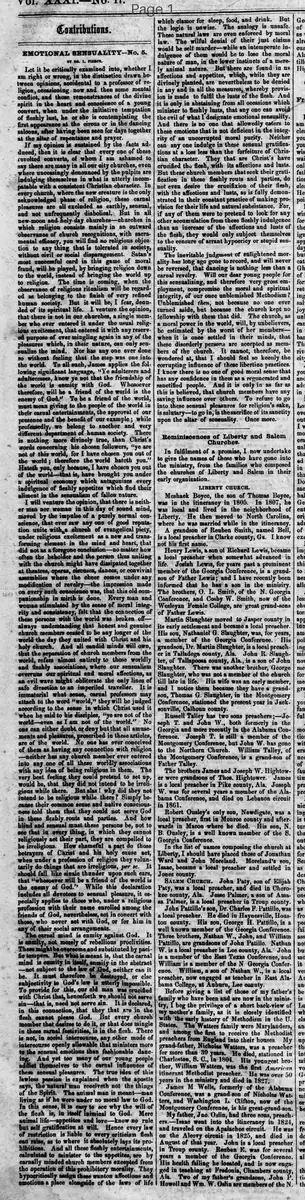
EMOTIONAL SENSUALITY-NO. 5
Let it be critically examined into, whether I am right or wrong, in the distinction drawn between opinions, accidental to a professor of religion, occasioning now and then some mental conflict, and those remonstrances of the divine spirit in the heart and conscience of a young convert, when under the initiatory temptation of fleshly lust, he or she is contemplating the first appearance at the circus or in the dancing saloons, after having been seen for days together at the altar of repentance and prayer.
If my opinion is sustained by the facts adduced, then it is clear that every one of these revolted converts, of whom I am ashamed to say there are many in all our city churches, even where unceasingly denounced by the pulpits are indulging themselves in what is utterly incompatible with a consistent Christian character. In every church, where the new creature is the only acknowledged phase of religion, these carnal pleasures are all excluded as earthly, sensual, and not unfrequently diabolical. But in all new-moon and holy-day churches—churches in which religion consists mainly in an outward observance of church recognitions, with sacramental efficacy, you will find no religious objection to any thing that is tolerated in society without civil or social disparagement. Satan's most successful card in this game of moral fraud, will be played, by bringing religion down to the world, instead of bringing the world up to religion. The time is coming, when the observance of religious ritualism will be regarded as belonging to the finish of very refined human society. But it will be, I fear, denuded of its spiritual life. I venture the opinion, that there is not in our churches, a single member who ever entered it under the usual religious excitement, that entered it with any reserved purpose of ever mingling again in any of the pleasures which, in their nature, can only sensualize the mind. Nor has any one ever done so without feeling that the step was one into the world. To all such, James applies the following significant language, "Ye adulterers and adulteresses, know ye not that the friendship of the world is enmity with God. Whosoever therefore, will be a friend of the world is the enemy of God." To be a friend of the world, must mean giving to the people of the world in their carnal entertainments, the approval of our presence and the benefit of our example; while professedly, we belong to another and very different department of human society. There is nothing more divinely true, than Christ's words concerning his chosen followers, "ye are not of this world, for I have chosen you out of the world; therefore the world hateth you." Hateth you, only because, I have chosen you out of the world—that is, have brought you under a spiritual economy which antagonizes every indulgence of fleshly appetites which find their aliment in the sensualism of fallen nature.
I will venture the opinion, that there is neither man nor woman in this day of sound mind, moved by the impulse of a purely normal conscience, that ever saw any one of good reputation uniting with a church of evangelical piety, under religious excitement as a new and transforming element in the mind and heart, that did not as a foregone conclusion—no matter how often the beholder and the person thus uniting with the church might have dissipated together at theatres, operas, circuses, dances, or convivial assemblies where the cheer comes under any modification of revelry—the impression made on every such conscience was, that this old companionship in mirth is done. Every man and woman stimulated by the sense of moral integrity and consistency, felt that the connection of these persons with the world was broken off—always understanding that honest and genuine church member ceased to be any longer of the world the day they united with "Christ and his holy church." And all candid minds will own, that the separation of church members from the world, refers almost entirely to those "worldly and fleshly associations, where our sensualism overpowers our spiritual and moral affections, as an evil wave might obliterate the only lines of safe direction to an imperiled traveller." It is immaterial what sense, carnal professors may attach to the word "world," they will be judged according to the sense in which Christ used it when he said to his disciples, "ye are not of the world—even as I am not of the world." No one can either doubt or deny but that all amusements and pleasures, proscribed in those articles, are of the "world." No one has ever conceived of them as having any connection with religion—neither has any church member ever entered into any one of all these worldly associations with any idea of being religious in them. The very best feeling they could pretend to set up, would be, that they did not intend to be irreligious while there. But alas! why did they not intend to be religious while there? Simply because their common sense and native consciousness told them that they could not serve God in these fleshly routs and parties. And how blind and sensual must these persons be, not to see that in every thing, in which they cannot religiously act their part, they are compelled to be irreligious. How shameful a part do those betrayers of Christ and his holy cause act, when under a profession of religion they voluntarily do things that are irreligious, per se. It should fall like sinaitic thunder upon such ears, that "whosoever will be a friend of the world is the enemy of God." While this declaration includes all devotees to sensual pleasure, it especially applies to those who, under a religious profession with their name enrolled among the friends of God, nevertheless, act in concert with those, who never act with God, or for him in any of their social arrangements.
The carnal mind is enmity against God. It is enmity, not merely of rebellious proclivities. These might be overcome and substituted by pacific tempers. But what is meant is, that the carnal mind is enmity in itself, enmity in the abstract—not subject to the law of God, neither can it be. It must therefore be destroyed, or else subjectivity to God's law is utterly impossible. To provide for this, our old man was crucified with Christ that, henceforth we should not serve sin—that is, need not serve sin. It is declared, in this connection, that they that are in the flesh cannot please God. But every church member that desires to do it, or that does mingle in these carnal festivities, is in the flesh. There is not, in social intercourse, any other mode of intercourse openly allowable that ministers more to the sensual emotions than fashionable dancing. And yet too many of our young people addict themselves to the carnal influences of these sensual pleasures. The true idea of this lawless passion is explained when the apostle says, the natural man receiveth not the things of the Spirit. The animal man is meant—man living as if he were under no moral law to God. In this sense, it is easy to see why the will of the flesh is, in itself inimical to God. Mere animal life—appetites and love—know no rule but self gratification at will. Hence every law of restriction is liable to every criticism flesh can raise, as to where it absolutely lays its prohibitions. And all these fleshly entertainments, calculated to minister to the appetites, are by carnally minded church members excepted from the operation of this prohibitory morality. They hypocritically assign these wanton affections and emotions a place alongside of the laws of life which clamor for sleep, food, and drink. But the logic is unwise. The analogy is unsafe. These natural laws are even enforced by moral law. The wilful denial of their just claims would be self murder—while an intemperate indulgence of them would be to lose the moral nature of man, in the lower instincts of a merely animal nature. But there are found in us affections and appetites, which, while they are divinely planted, are nevertheless to be denied in any and in all the measures, whereby provision is made to fulfil the lusts of the flesh. And it is only in abstaining from all occasions which minister to fleshly lusts, that any one can avoid the evil of what I designate emotional sensuality. And there is no one that allowedly caters to these emotions that is not deficient in the integrity of an uncorrupted moral purity. Neither can any one indulge in these sensual gratifications at a loss less than the forfeiture of Christian character. They that are Christ's have crucified the flesh, with its affections and lusts. But these church members that seek their gratification in these fleshly routs and parties, do not even desire the crucifixion of their flesh, with the affections and lusts, as is fully demonstrated in their constant practice of making provision for their life and natural subsistence. For if any of them were to pretend to look for any other accumulation from these fleshly indulgences than an increase of the affections and lusts of the flesh, they would only subject themselves to the censure of arrant hypocrisy or stupid sensuality.
The inevitable judgment of enlightened morality has long ago gone to record, and will never be reversed, that dancing is nothing less than a carnal revelry. Will our dear young people for this sensualizing, and therefore very gross employment, compromise the moral and spiritual integrity, of our once unblemished Methodism? Unblemished then, not because no one ever turned aside, but because the church kept no fellowship with them that did. The church, as a moral power in the world, will, by unbelievers, be estimated by the worst of her members when it is once settled in their minds, that these disorderly persons are accepted as members of the church. It cannot, therefore, be wondered at, that I should feel so keenly the corrupting influence of these libertine practices. I know there is no one of good moral sense that has any confidence in them as a regenerated and sanctified people. And it is only in as far as this is believed, that church members have any saving influence over others. To refuse to go into these sensual pleasures for religion's sake, is salutary—to go in, is the sacrifice of its sanctity upon the altar of sensuality. Once more.
EMOTIONAL SENSUALITY-NO. 5
Let it be critically examined into, whether I am right or wrong, in the distinction drawn between opinions, accidental to a professor of religion, occasioning now and then some mental conflict, and those remonstrances of the divine spirit in the heart and conscience of a young convert, when under the initiatory temptation of fleshly lust, he or she is contemplating the first appearance at the circus or in the dancing saloons, after having been seen for days together at the altar of repentance and prayer.
If my opinion is sustained by the facts adduced, then it is clear that every one of these revolted converts, of whom I am ashamed to say there are many in all our city churches, even where unceasingly denounced by the pulpits are indulging themselves in what is utterly incompatible with a consistent Christian character. In every church, where the new creature is the only acknowledged phase of religion, these carnal pleasures are all excluded as earthly, sensual, and not unfrequently diabolical. But in all new-moon and holy-day churches—churches in which religion consists mainly in an outward observance of church recognitions, with sacramental efficacy, you will find no religious objection to any thing that is tolerated in society without civil or social disparagement. Satan's most successful card in this game of moral fraud, will be played, by bringing religion down to the world, instead of bringing the world up to religion. The time is coming, when the observance of religious ritualism will be regarded as belonging to the finish of very refined human society. But it will be, I fear, denuded of its spiritual life. I venture the opinion, that there is not in our churches, a single member who ever entered it under the usual religious excitement, that entered it with any reserved purpose of ever mingling again in any of the pleasures which, in their nature, can only sensualize the mind. Nor has any one ever done so without feeling that the step was one into the world. To all such, James applies the following significant language, "Ye adulterers and adulteresses, know ye not that the friendship of the world is enmity with God. Whosoever therefore, will be a friend of the world is the enemy of God." To be a friend of the world, must mean giving to the people of the world in their carnal entertainments, the approval of our presence and the benefit of our example; while professedly, we belong to another and very different department of human society. There is nothing more divinely true, than Christ's words concerning his chosen followers, "ye are not of this world, for I have chosen you out of the world; therefore the world hateth you." Hateth you, only because, I have chosen you out of the world—that is, have brought you under a spiritual economy which antagonizes every indulgence of fleshly appetites which find their aliment in the sensualism of fallen nature.
I will venture the opinion, that there is neither man nor woman in this day of sound mind, moved by the impulse of a purely normal conscience, that ever saw any one of good reputation uniting with a church of evangelical piety, under religious excitement as a new and transforming element in the mind and heart, that did not as a foregone conclusion—no matter how often the beholder and the person thus uniting with the church might have dissipated together at theatres, operas, circuses, dances, or convivial assemblies where the cheer comes under any modification of revelry—the impression made on every such conscience was, that this old companionship in mirth is done. Every man and woman stimulated by the sense of moral integrity and consistency, felt that the connection of these persons with the world was broken off—always understanding that honest and genuine church member ceased to be any longer of the world the day they united with "Christ and his holy church." And all candid minds will own, that the separation of church members from the world, refers almost entirely to those "worldly and fleshly associations, where our sensualism overpowers our spiritual and moral affections, as an evil wave might obliterate the only lines of safe direction to an imperiled traveller." It is immaterial what sense, carnal professors may attach to the word "world," they will be judged according to the sense in which Christ used it when he said to his disciples, "ye are not of the world—even as I am not of the world." No one can either doubt or deny but that all amusements and pleasures, proscribed in those articles, are of the "world." No one has ever conceived of them as having any connection with religion—neither has any church member ever entered into any one of all these worldly associations with any idea of being religious in them. The very best feeling they could pretend to set up, would be, that they did not intend to be irreligious while there. But alas! why did they not intend to be religious while there? Simply because their common sense and native consciousness told them that they could not serve God in these fleshly routs and parties. And how blind and sensual must these persons be, not to see that in every thing, in which they cannot religiously act their part, they are compelled to be irreligious. How shameful a part do those betrayers of Christ and his holy cause act, when under a profession of religion they voluntarily do things that are irreligious, per se. It should fall like sinaitic thunder upon such ears, that "whosoever will be a friend of the world is the enemy of God." While this declaration includes all devotees to sensual pleasure, it especially applies to those who, under a religious profession with their name enrolled among the friends of God, nevertheless, act in concert with those, who never act with God, or for him in any of their social arrangements.
The carnal mind is enmity against God. It is enmity, not merely of rebellious proclivities. These might be overcome and substituted by pacific tempers. But what is meant is, that the carnal mind is enmity in itself, enmity in the abstract—not subject to the law of God, neither can it be. It must therefore be destroyed, or else subjectivity to God's law is utterly impossible. To provide for this, our old man was crucified with Christ that, henceforth we should not serve sin—that is, need not serve sin. It is declared, in this connection, that they that are in the flesh cannot please God. But every church member that desires to do it, or that does mingle in these carnal festivities, is in the flesh. There is not, in social intercourse, any other mode of intercourse openly allowable that ministers more to the sensual emotions than fashionable dancing. And yet too many of our young people addict themselves to the carnal influences of these sensual pleasures. The true idea of this lawless passion is explained when the apostle says, the natural man receiveth not the things of the Spirit. The animal man is meant—man living as if he were under no moral law to God. In this sense, it is easy to see why the will of the flesh is, in itself inimical to God. Mere animal life—appetites and love—know no rule but self gratification at will. Hence every law of restriction is liable to every criticism flesh can raise, as to where it absolutely lays its prohibitions. And all these fleshly entertainments, calculated to minister to the appetites, are by carnally minded church members excepted from the operation of this prohibitory morality. They hypocritically assign these wanton affections and emotions a place alongside of the laws of life which clamor for sleep, food, and drink. But the logic is unwise. The analogy is unsafe. These natural laws are even enforced by moral law. The wilful denial of their just claims would be self murder—while an intemperate indulgence of them would be to lose the moral nature of man, in the lower instincts of a merely animal nature. But there are found in us affections and appetites, which, while they are divinely planted, are nevertheless to be denied in any and in all the measures, whereby provision is made to fulfil the lusts of the flesh. And it is only in abstaining from all occasions which minister to fleshly lusts, that any one can avoid the evil of what I designate emotional sensuality. And there is no one that allowedly caters to these emotions that is not deficient in the integrity of an uncorrupted moral purity. Neither can any one indulge in these sensual gratifications at a loss less than the forfeiture of Christian character. They that are Christ's have crucified the flesh, with its affections and lusts. But these church members that seek their gratification in these fleshly routs and parties, do not even desire the crucifixion of their flesh, with the affections and lusts, as is fully demonstrated in their constant practice of making provision for their life and natural subsistence. For if any of them were to pretend to look for any other accumulation from these fleshly indulgences than an increase of the affections and lusts of the flesh, they would only subject themselves to the censure of arrant hypocrisy or stupid sensuality.
The inevitable judgment of enlightened morality has long ago gone to record, and will never be reversed, that dancing is nothing less than a carnal revelry. Will our dear young people for this sensualizing, and therefore very gross employment, compromise the moral and spiritual integrity, of our once unblemished Methodism? Unblemished then, not because no one ever turned aside, but because the church kept no fellowship with them that did. The church, as a moral power in the world, will, by unbelievers, be estimated by the worst of her members when it is once settled in their minds, that these disorderly persons are accepted as members of the church. It cannot, therefore, be wondered at, that I should feel so keenly the corrupting influence of these libertine practices. I know there is no one of good moral sense that has any confidence in them as a regenerated and sanctified people. And it is only in as far as this is believed, that church members have any saving influence over others. To refuse to go into these sensual pleasures for religion's sake, is salutary—to go in, is the sacrifice of its sanctity upon the altar of sensuality. Once more.
What sub-type of article is it?
Religious Essay
Moral Exhortation
What themes does it cover?
Moral Virtue
Deception
Providence Divine
What keywords are associated?
Emotional Sensuality
Christian Conduct
Worldly Pleasures
Church Hypocrisy
Fleshly Lusts
Moral Integrity
Sensual Gratifications
Where did it happen?
Our City Churches
Story Details
Location
Our City Churches
Story Details
The author argues that young Christian converts should avoid worldly sensual pleasures like dancing and circuses, as they conflict with spiritual life and equate to friendship with the world, which is enmity with God, citing biblical passages to emphasize moral separation and integrity.