Thank you for visiting SNEWPapers!
Sign up free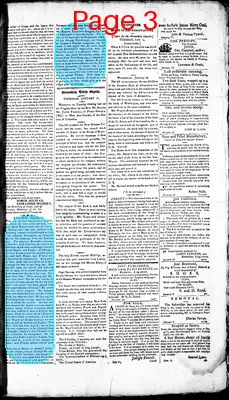
Alexandria Daily Gazette, Commercial & Political
Alexandria, Virginia
What is this article about?
Reports from Anholt via Munich and Stockholm detail Emperor Alexander's assurances of amity with Napoleon to Chevalier Debray, skeptical commentary on their relations, joy over Rudschuck's surrender hoping for peace with Turkey, and rumors of a Russo-Ottoman treaty amid conflicting war accounts.
Clipping
OCR Quality
Full Text
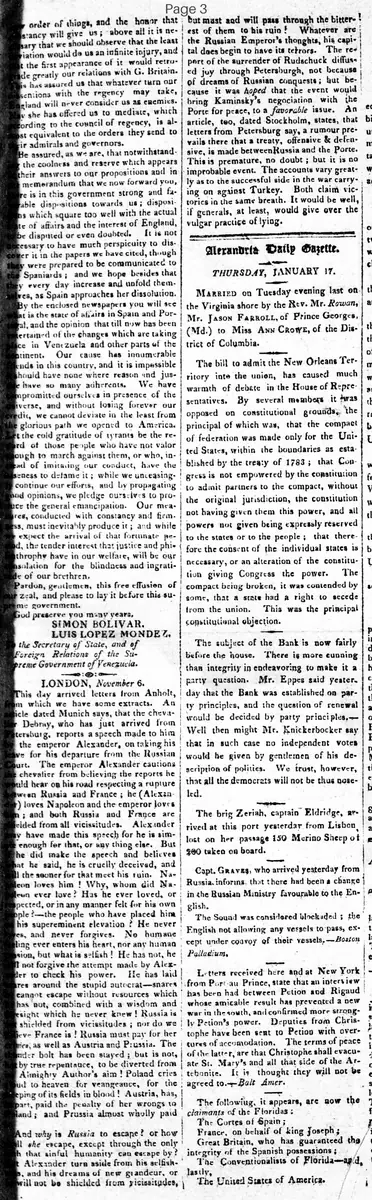
An article dated Munich says, that the chevalier Debray, who has just arrived from Petersburgh, reports a speech made to him by the emperor Alexander, on taking his leave for his departure from the Russian court. The emperor Alexander cautions the chevalier from believing the reports he would hear on his road respecting a rupture between Russia and France; he (Alexander) loves Napoleon and the emperor loves him: and both Russia and France are shielded from all vicissitudes.
Alexander may have made this speech for he is simple enough for that, or any thing else. But he did make the speech and believes what he said, he is cruelly deceived, and will the sooner for that meet his ruin. Napoleon loves him! Why, whom did Napoleon ever love? Has he ever loved, respected, or in any manner felt for his own people?-the people who have placed him in his supereminent elevation? He never loves, and never forgives. No humane feeling ever enters his heart, nor any human passion, but what is selfish! He has not, he will not forgive the attempt made by Alexander to check his power. He has laid snares around the stupid autocrat-snares he cannot escape without resources which he has not, combined with a wisdom and foresight which he never knew! Russia is shielded from vicissitudes: nor do we believe France is! Russia must pay for her crimes, as well as Austria and Prussia. The thunder bolt has been stayed; but is not, by true repentance, to be diverted from Almighty Author's aim! Poland cries aloud to heaven for vengeance, for the sweeping of its fields in blood! Austria, has, in part, paid the penalty of her wrongs to mankind; and Prussia almost wholly paid. And why is Russia to escape? or how will she escape, except through the only path that sinful humanity can escape by? Alexander turn aside from his selfishness, and his dreams of new grandeur, or he will not be shielded from vicissitudes, but must and will pass through the bitterest of them to his ruin!
Whatever are the Russian Emperor's thoughts, his capital does begin to have its terrors. The report of the surrender of Rudschuck diffused joy through Petersburgh, not because of dreams of Russian conquests; but because it was hoped that the event would bring Kaminsky's negociation with the Porte for peace, to a favorable issue.
An article, too, dated Stockholm, states, that letters from Petersburg say, a rumour prevails there that a treaty, offensive & defensive, is made between Russia and the Porte. This is premature, no doubt; but it is no improbable event. The accounts vary greatly as to the successful side in the war carrying on against Turkey. Both claim victories in the same breath. It would be well, if generals, at least, would give over the vulgar practice of lying.
What sub-type of article is it?
What keywords are associated?
What entities or persons were involved?
Where did it happen?
Foreign News Details
Primary Location
Russia
Event Date
November 6
Key Persons
Outcome
surrender of rudschuck; rumour of treaty between russia and the porte
Event Details
Letters from Anholt include extracts: An article from Munich reports chevalier Debray's account of emperor Alexander's speech assuring no rupture between Russia and France, emphasizing mutual love between Alexander and Napoleon. Commentary doubts Alexander's views, predicting Russia's ruin. Report of Rudschuck's surrender brings hope for successful peace negotiation with the Porte via Kaminsky. Stockholm article mentions rumour in Petersburg of offensive and defensive treaty between Russia and the Porte. Accounts of Russo-Turkish war vary, with both sides claiming victories.