Thank you for visiting SNEWPapers!
Sign up free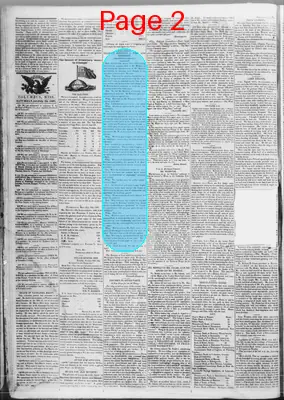
Literary
July 22, 1837
Columbus Democrat
Columbus, Lowndes County, Mississippi
What is this article about?
A continued dialogue between a Whig and a Democrat on a journey, debating Daniel Webster's opposition to Madison's administration, current political opposition, banks, tariffs, and nullification, ending at a farmer's house.
Clipping
OCR Quality
98%
Excellent
Full Text
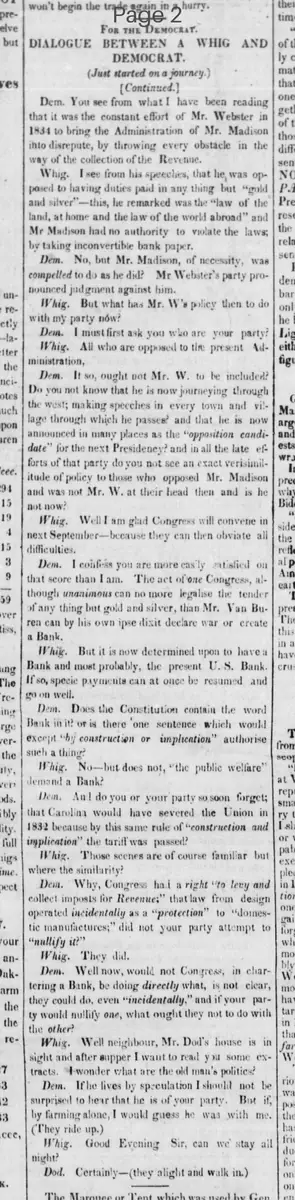
For the Democrat.
DIALOGUE BETWEEN A WHIG AND DEMOCRAT.
(Just started on a journey.)
[Continued.]
Dem. You see from what I have been reading that it was the constant effort of Mr. Webster in 1834 to bring the Administration of Mr. Madison into disrepute, by throwing every obstacle in the way of the collection of the Revenue.
Whig. I see from his speeches, that he was opposed to having duties paid in any thing but "gold and silver"—this, he remarked was the "law of the land, at home and the law of the world abroad" and Mr. Madison had no authority to violate the laws; by taking inconvertible bank paper.
Dem. No, but Mr. Madison, of necessity, was compelled to do as he did? Mr. Webster's party pronounced judgment against him.
Whig. But what has Mr. W's policy then to do with my party now?
Dem. I must first ask you who are your party?
Whig. All who are opposed to the present Administration,
Dem. If so, ought not Mr. W. to be included. Do you not know that he is now journeying through the west; making speeches in every town and village through which he passes? and that he is now announced in many places as the "opposition candidate" for the next Presidency? and in all the late efforts of that party do you not see an exact verisimilitude of policy to those who opposed Mr. Madison and was not Mr. W. at their head then and is he not now?
Whig. Well I am glad Congress will convene in next September—because they can then obviate all difficulties.
Dem. I confess you are more easily satisfied on that score than I am. The act of one Congress, although unanimous can no more legalise the tender of any thing but gold and silver, than Mr. Van Buren can by his own ipse dixit declare war or create a Bank.
Whig. But it is now determined upon to have a Bank and most probably the present U. S. Bank. If so, specie payments can at once be resumed and go on well.
Dem. Does the Constitution contain the word Bank in it or is there one sentence which would except "by construction or implication" authorise such a thing?
Whig. No—but does not, "the public welfare" demand a Bank?
Dem. And do you or your party so soon forget; that Carolina would have severed the Union in 1832 because by this same rule of "construction and implication" the tariff was passed?
Whig. Those scenes are of course familiar but where the similarity?
Dem. Why, Congress has a right "to levy and collect imposts for Revenue;" that law from design operated incidentally as a "protection" to "domestic manufactures;" did not your party attempt to "nullify it?"
Whig. They did.
Dem. Well now, would not Congress, in chartering a Bank, be doing directly what, is not clear they could do, even "incidentally," and if your party would nullify one, what ought they not to do with the other?
Whig. Well neighbour, Mr. Dod's house is in sight and after supper I want to read you some extracts. I wonder what are the old man's politics
Dem. If he lives by speculation I should not be surprised to hear that he is of your party. But if by farming alone, I would guess he was with me.
(They ride up.)
Whig. Good Evening Sir, can we stay all night?
Dod. Certainly—(they alight and walk in.)
DIALOGUE BETWEEN A WHIG AND DEMOCRAT.
(Just started on a journey.)
[Continued.]
Dem. You see from what I have been reading that it was the constant effort of Mr. Webster in 1834 to bring the Administration of Mr. Madison into disrepute, by throwing every obstacle in the way of the collection of the Revenue.
Whig. I see from his speeches, that he was opposed to having duties paid in any thing but "gold and silver"—this, he remarked was the "law of the land, at home and the law of the world abroad" and Mr. Madison had no authority to violate the laws; by taking inconvertible bank paper.
Dem. No, but Mr. Madison, of necessity, was compelled to do as he did? Mr. Webster's party pronounced judgment against him.
Whig. But what has Mr. W's policy then to do with my party now?
Dem. I must first ask you who are your party?
Whig. All who are opposed to the present Administration,
Dem. If so, ought not Mr. W. to be included. Do you not know that he is now journeying through the west; making speeches in every town and village through which he passes? and that he is now announced in many places as the "opposition candidate" for the next Presidency? and in all the late efforts of that party do you not see an exact verisimilitude of policy to those who opposed Mr. Madison and was not Mr. W. at their head then and is he not now?
Whig. Well I am glad Congress will convene in next September—because they can then obviate all difficulties.
Dem. I confess you are more easily satisfied on that score than I am. The act of one Congress, although unanimous can no more legalise the tender of any thing but gold and silver, than Mr. Van Buren can by his own ipse dixit declare war or create a Bank.
Whig. But it is now determined upon to have a Bank and most probably the present U. S. Bank. If so, specie payments can at once be resumed and go on well.
Dem. Does the Constitution contain the word Bank in it or is there one sentence which would except "by construction or implication" authorise such a thing?
Whig. No—but does not, "the public welfare" demand a Bank?
Dem. And do you or your party so soon forget; that Carolina would have severed the Union in 1832 because by this same rule of "construction and implication" the tariff was passed?
Whig. Those scenes are of course familiar but where the similarity?
Dem. Why, Congress has a right "to levy and collect imposts for Revenue;" that law from design operated incidentally as a "protection" to "domestic manufactures;" did not your party attempt to "nullify it?"
Whig. They did.
Dem. Well now, would not Congress, in chartering a Bank, be doing directly what, is not clear they could do, even "incidentally," and if your party would nullify one, what ought they not to do with the other?
Whig. Well neighbour, Mr. Dod's house is in sight and after supper I want to read you some extracts. I wonder what are the old man's politics
Dem. If he lives by speculation I should not be surprised to hear that he is of your party. But if by farming alone, I would guess he was with me.
(They ride up.)
Whig. Good Evening Sir, can we stay all night?
Dod. Certainly—(they alight and walk in.)
What sub-type of article is it?
Dialogue
Satire
What themes does it cover?
Political
Taxation Oppression
What keywords are associated?
Whig Democrat Dialogue
Daniel Webster
James Madison
Us Bank
Tariff Nullification
Political Opposition
Literary Details
Title
Dialogue Between A Whig And Democrat.
Subject
Debate On Historical And Current U.S. Political Policies Including Opposition To Administrations, Banks, And Tariffs.
Form / Style
Political Debate In Prose Dialogue Form.
Key Lines
Dem. You See From What I Have Been Reading That It Was The Constant Effort Of Mr. Webster In 1834 To Bring The Administration Of Mr. Madison Into Disrepute, By Throwing Every Obstacle In The Way Of The Collection Of The Revenue.
Whig. All Who Are Opposed To The Present Administration,
Dem. Does The Constitution Contain The Word Bank In It Or Is There One Sentence Which Would Except "By Construction Or Implication" Authorise Such A Thing?
Dem. Why, Congress Has A Right "To Levy And Collect Imposts For Revenue;" That Law From Design Operated Incidentally As A "Protection" To "Domestic Manufactures;" Did Not Your Party Attempt To "Nullify It?"
Whig. Well Neighbour, Mr. Dod's House Is In Sight And After Supper I Want To Read You Some Extracts.