Thank you for visiting SNEWPapers!
Sign up free
Literary
January 31, 1825
New Hampshire Statesman
Concord, Merrimack County, New Hampshire
What is this article about?
Excerpt from Prof. Everett's oration at Plymouth, reflecting on the Pilgrims' settlement in New England. It argues that adversity and lack of royal patronage strengthened their character, leading to a resilient nation. Describes their hardships, voyage on the Mayflower, and trials that forged their success.
Clipping
OCR Quality
95%
Excellent
Full Text
From Prof. Everett's Oration delivered at Plymouth.
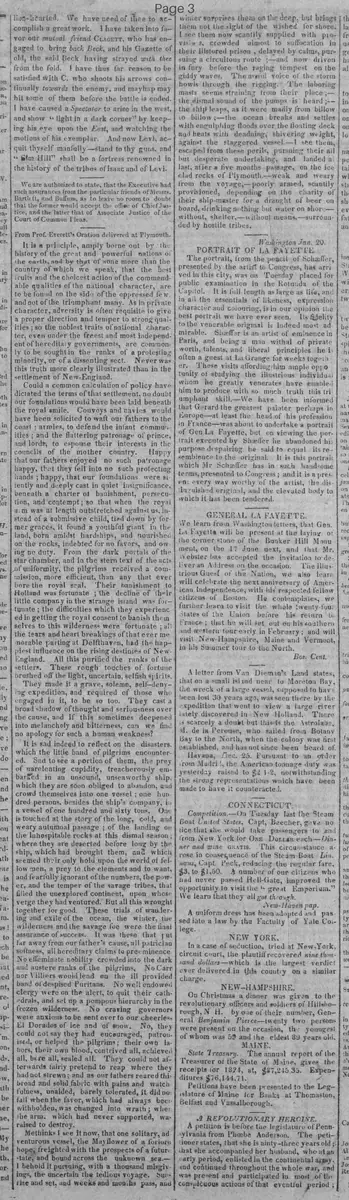
It is a principle, amply borne out by the history of the great and powerful nations of the earth, and by that of none more than the country of which we speak, that the best fruits and the choicest action of the commendable qualities of the national character, are to be found on the side of the oppressed few, and not of the triumphant many. As in private character, adversity is often requisite to give a proper direction and temper to strong qualities: so the noblest traits of national character, even under the freest and most independent of hereditary governments, are commonly to be sought in the ranks of a protesting minority, or of a dissenting sect. Never was this truth more clearly illustrated than in the settlement of New-England.
Could a common calculation of policy have dictated the terms of that settlement, no doubt our foundations would have been laid beneath the royal smile. Convoys and navies would have been solicited to waft our fathers to the coast; armies, to defend the infant communities; and the flattering patronage of prince, and lords, to espouse their interests in the councils of the mother country. Happy that our fathers enjoyed no such patronage; happy, that they fell into no such protecting hands; happy, that our foundations were silently and deeply cast in quiet insignificance, beneath a charter of banishment, persecution, and contempt; so that when the royal arm was at length outstretched against us, instead of a submissive child, tied down by former graces, it found a youthful giant in the land, born amidst hardships, and nourished on the rocks, indebted for no favors, and owing no duty. From the dark portals of the star chamber, and in the stern text of the acts of uniformity, the pilgrims received a commission, more efficient, than any that ever bore the royal seal. Their banishment to Holland was fortunate; the decline of their little company in the strange island was fortunate; the difficulties which they experienced in getting the royal consent to banish themselves to this wilderness were fortunate; all the tears and heart breakings of that ever memorable parting at Delfthaven, had the happiest influence on the rising destinies of New-England. All this purified the ranks of the settlers. These rough touches of fortune brushed off the light, uncertain, selfish spirits. They made it a grave, solemn, self-denying expedition, and required of those who engaged in it, to be so too. They cast a broad shadow of thought and seriousness over the cause, and if this sometimes deepened into melancholy and bitterness, can we find no apology for such a human weakness?
It is sad indeed to reflect on the disasters, which the little band of pilgrims encountered. Sad to see a portion of them, the prey of unrelenting cupidity, treacherously embarked in an unsound, unseaworthy ship, which they are soon obliged to abandon, and crowd themselves into one vessel; one hundred persons, besides the ship's company, in a vessel of one hundred and sixty tons. One is touched at the story of the long, cold, and weary autumnal passage; of the landing on the inhospitable rocks at this dismal season; where they are deserted before long by the ship, which had brought them, and which seemed their only hold upon the world of fellow men, a prey to the elements and to want, and fearfully ignorant of the numbers, the power, and the temper of the savage tribes, that filled the unexplored continent, upon whose verge they had ventured. But all this wrought together for good. These trials of wandering and exile of the ocean, the winter, the wilderness and the savage foe were the final assurance of success. It was these that jut far away from our father's cause, all patrician softness, all hereditary claims to preeminence. No effeminate nobility crowded into the dark and austere ranks of the pilgrims. No Carr nor Villiers would lead on the ill provided band of despised Puritans. No well endowed clergy were on the alert, to quit their cathedrals, and set up a pompous hierarchy in the frozen wilderness. No craving governors were anxious to be sent over to our cheerless El Dorados of ice and of snow. No, they could not say they had encouraged, patronized, or helped the pilgrims; their own labors, their own blood, contrived all, achieved all, bore all, sealed all. They could not afterwards fairly pretend to reap where they had not sown; and as our fathers reared this broad and solid fabric with pains and watchfulness, unaided, barely tolerated, it did not fall when the favor, which had always been withholden, was changed into wrath; when the arm, which had never supported, was raised to destroy.
Methinks I see it now, that one solitary, adventurous vessel, the Mayflower of a forlorn hope, freighted with the prospects of a future state, and bound across the unknown sea.—I behold it pursuing, with a thousand misgivings, the uncertain the tedious voyage. Suns rise and set, and weeks and months pass, and winter surprises them on the deep, but brings them not the sight of the wished for shore. I see them now scantily supplied with provisions, crowded almost to suffocation in their illstored prison, delayed by calms, pursuing a circuitous route;—and now driven in fury before the raging tempest on the giddy waves. The awful voice of the storm howls through the rigging. The laboring masts seems straining from their place;—the dismal sound of the pumps is heard ;—the ship leaps, as it were madly from billow to billow;—the ocean breaks and settles with engulphing floods over the floating deck and beats with deadning, shivering weight, against the staggered vessel.—I see them, escaped from these perils, pursuing their all but desperate undertaking, and landed at last, after a five months passage, on the ice clad rocks of Plymouth.—weak and weary from the voyage,—poorly armed, scantily provisioned, depending on the charity of their ship-master for a draught of beer on board, drinking nothing but water on shore—without shelter,—without means,—surrounded by hostile tribes.
It is a principle, amply borne out by the history of the great and powerful nations of the earth, and by that of none more than the country of which we speak, that the best fruits and the choicest action of the commendable qualities of the national character, are to be found on the side of the oppressed few, and not of the triumphant many. As in private character, adversity is often requisite to give a proper direction and temper to strong qualities: so the noblest traits of national character, even under the freest and most independent of hereditary governments, are commonly to be sought in the ranks of a protesting minority, or of a dissenting sect. Never was this truth more clearly illustrated than in the settlement of New-England.
Could a common calculation of policy have dictated the terms of that settlement, no doubt our foundations would have been laid beneath the royal smile. Convoys and navies would have been solicited to waft our fathers to the coast; armies, to defend the infant communities; and the flattering patronage of prince, and lords, to espouse their interests in the councils of the mother country. Happy that our fathers enjoyed no such patronage; happy, that they fell into no such protecting hands; happy, that our foundations were silently and deeply cast in quiet insignificance, beneath a charter of banishment, persecution, and contempt; so that when the royal arm was at length outstretched against us, instead of a submissive child, tied down by former graces, it found a youthful giant in the land, born amidst hardships, and nourished on the rocks, indebted for no favors, and owing no duty. From the dark portals of the star chamber, and in the stern text of the acts of uniformity, the pilgrims received a commission, more efficient, than any that ever bore the royal seal. Their banishment to Holland was fortunate; the decline of their little company in the strange island was fortunate; the difficulties which they experienced in getting the royal consent to banish themselves to this wilderness were fortunate; all the tears and heart breakings of that ever memorable parting at Delfthaven, had the happiest influence on the rising destinies of New-England. All this purified the ranks of the settlers. These rough touches of fortune brushed off the light, uncertain, selfish spirits. They made it a grave, solemn, self-denying expedition, and required of those who engaged in it, to be so too. They cast a broad shadow of thought and seriousness over the cause, and if this sometimes deepened into melancholy and bitterness, can we find no apology for such a human weakness?
It is sad indeed to reflect on the disasters, which the little band of pilgrims encountered. Sad to see a portion of them, the prey of unrelenting cupidity, treacherously embarked in an unsound, unseaworthy ship, which they are soon obliged to abandon, and crowd themselves into one vessel; one hundred persons, besides the ship's company, in a vessel of one hundred and sixty tons. One is touched at the story of the long, cold, and weary autumnal passage; of the landing on the inhospitable rocks at this dismal season; where they are deserted before long by the ship, which had brought them, and which seemed their only hold upon the world of fellow men, a prey to the elements and to want, and fearfully ignorant of the numbers, the power, and the temper of the savage tribes, that filled the unexplored continent, upon whose verge they had ventured. But all this wrought together for good. These trials of wandering and exile of the ocean, the winter, the wilderness and the savage foe were the final assurance of success. It was these that jut far away from our father's cause, all patrician softness, all hereditary claims to preeminence. No effeminate nobility crowded into the dark and austere ranks of the pilgrims. No Carr nor Villiers would lead on the ill provided band of despised Puritans. No well endowed clergy were on the alert, to quit their cathedrals, and set up a pompous hierarchy in the frozen wilderness. No craving governors were anxious to be sent over to our cheerless El Dorados of ice and of snow. No, they could not say they had encouraged, patronized, or helped the pilgrims; their own labors, their own blood, contrived all, achieved all, bore all, sealed all. They could not afterwards fairly pretend to reap where they had not sown; and as our fathers reared this broad and solid fabric with pains and watchfulness, unaided, barely tolerated, it did not fall when the favor, which had always been withholden, was changed into wrath; when the arm, which had never supported, was raised to destroy.
Methinks I see it now, that one solitary, adventurous vessel, the Mayflower of a forlorn hope, freighted with the prospects of a future state, and bound across the unknown sea.—I behold it pursuing, with a thousand misgivings, the uncertain the tedious voyage. Suns rise and set, and weeks and months pass, and winter surprises them on the deep, but brings them not the sight of the wished for shore. I see them now scantily supplied with provisions, crowded almost to suffocation in their illstored prison, delayed by calms, pursuing a circuitous route;—and now driven in fury before the raging tempest on the giddy waves. The awful voice of the storm howls through the rigging. The laboring masts seems straining from their place;—the dismal sound of the pumps is heard ;—the ship leaps, as it were madly from billow to billow;—the ocean breaks and settles with engulphing floods over the floating deck and beats with deadning, shivering weight, against the staggered vessel.—I see them, escaped from these perils, pursuing their all but desperate undertaking, and landed at last, after a five months passage, on the ice clad rocks of Plymouth.—weak and weary from the voyage,—poorly armed, scantily provisioned, depending on the charity of their ship-master for a draught of beer on board, drinking nothing but water on shore—without shelter,—without means,—surrounded by hostile tribes.
What sub-type of article is it?
Essay
What themes does it cover?
Patriotism
Liberty Freedom
Religious
What keywords are associated?
Pilgrims
New England
Settlement
Mayflower
Persecution
Adversity
Voyage
Plymouth
What entities or persons were involved?
Prof. Everett
Literary Details
Title
From Prof. Everett's Oration Delivered At Plymouth
Author
Prof. Everett
Subject
Settlement Of New England
Form / Style
Oration In Prose
Key Lines
Never Was This Truth More Clearly Illustrated Than In The Settlement Of New England.
Happy That Our Fathers Enjoyed No Such Patronage; Happy, That They Fell Into No Such Protecting Hands;
From The Dark Portals Of The Star Chamber, And In The Stern Text Of The Acts Of Uniformity, The Pilgrims Received A Commission, More Efficient, Than Any That Ever Bore The Royal Seal.
Methinks I See It Now, That One Solitary, Adventurous Vessel, The Mayflower Of A Forlorn Hope, Freighted With The Prospects Of A Future State, And Bound Across The Unknown Sea.
I See Them, Escaped From These Perils, Pursuing Their All But Desperate Undertaking, And Landed At Last, After A Five Months Passage, On The Ice Clad Rocks Of Plymouth.