Thank you for visiting SNEWPapers!
Sign up free
Literary
November 21, 1908
The San Juan Islander
Friday Harbor, San Juan County, Washington
What is this article about?
An article describes an ancient Scottish May Day custom in the Highlands, as reported in Sir John Sinclair's 1791 Statistical Account of Scotland. Boys dig a trench, bake a cake, and draw lots; the one drawing the blackened piece leaps through fire, a remnant of human sacrifice for summer fertility. (From Gentleman's Magazine.)
Clipping
OCR Quality
98%
Excellent
Full Text
MAY FIRES.
Ancient Scotch Custom Which Involved Human Sacrifice.
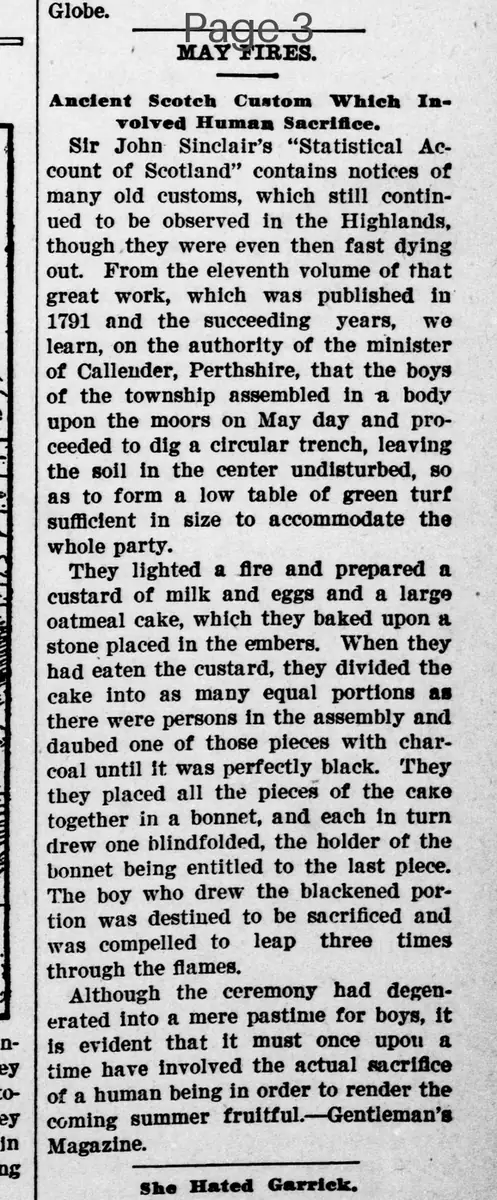
Sir John Sinclair's "Statistical Account of Scotland" contains notices of many old customs, which still continued to be observed in the Highlands, though they were even then fast dying out. From the eleventh volume of that great work, which was published in 1791 and the succeeding years, we learn, on the authority of the minister of Callender, Perthshire, that the boys of the township assembled in a body upon the moors on May day and proceeded to dig a circular trench, leaving the soil in the center undisturbed, so as to form a low table of green turf sufficient in size to accommodate the whole party.
They lighted a fire and prepared a custard of milk and eggs and a large oatmeal cake, which they baked upon a stone placed in the embers. When they had eaten the custard, they divided the cake into as many equal portions as there were persons in the assembly and daubed one of those pieces with charcoal until it was perfectly black. They then placed all the pieces of the cake together in a bonnet, and each in turn drew one blindfolded, the holder of the bonnet being entitled to the last piece. The boy who drew the blackened portion was destined to be sacrificed and was compelled to leap three times through the flames.
Although the ceremony had degenerated into a mere pastime for boys, it is evident that it must once upon a time have involved the actual sacrifice of a human being in order to render the coming summer fruitful.—Gentleman's Magazine.
Ancient Scotch Custom Which Involved Human Sacrifice.
Sir John Sinclair's "Statistical Account of Scotland" contains notices of many old customs, which still continued to be observed in the Highlands, though they were even then fast dying out. From the eleventh volume of that great work, which was published in 1791 and the succeeding years, we learn, on the authority of the minister of Callender, Perthshire, that the boys of the township assembled in a body upon the moors on May day and proceeded to dig a circular trench, leaving the soil in the center undisturbed, so as to form a low table of green turf sufficient in size to accommodate the whole party.
They lighted a fire and prepared a custard of milk and eggs and a large oatmeal cake, which they baked upon a stone placed in the embers. When they had eaten the custard, they divided the cake into as many equal portions as there were persons in the assembly and daubed one of those pieces with charcoal until it was perfectly black. They then placed all the pieces of the cake together in a bonnet, and each in turn drew one blindfolded, the holder of the bonnet being entitled to the last piece. The boy who drew the blackened portion was destined to be sacrificed and was compelled to leap three times through the flames.
Although the ceremony had degenerated into a mere pastime for boys, it is evident that it must once upon a time have involved the actual sacrifice of a human being in order to render the coming summer fruitful.—Gentleman's Magazine.
What sub-type of article is it?
Essay
What themes does it cover?
Seasonal Cycle
Religious
What keywords are associated?
May Fires
Scotch Custom
Human Sacrifice
Highlands Ritual
Perthshire
Callender
Sinclair Account
What entities or persons were involved?
Gentleman's Magazine
Literary Details
Title
May Fires.
Author
Gentleman's Magazine
Subject
Ancient Scotch Custom Which Involved Human Sacrifice
Key Lines
They Lighted A Fire And Prepared A Custard Of Milk And Eggs And A Large Oatmeal Cake, Which They Baked Upon A Stone Placed In The Embers.
The Boy Who Drew The Blackened Portion Was Destined To Be Sacrificed And Was Compelled To Leap Three Times Through The Flames.
Although The Ceremony Had Degenerated Into A Mere Pastime For Boys, It Is Evident That It Must Once Upon A Time Have Involved The Actual Sacrifice Of A Human Being In Order To Render The Coming Summer Fruitful.