Thank you for visiting SNEWPapers!
Sign up free
Literary
November 5, 1934
Henderson Daily Dispatch
Henderson, Vance County, North Carolina
What is this article about?
In Chapter 16 of 'The Blonde,' Nathaniel Greenleaf visits Countess Thorlund at the legation to discuss her potential role in counter-espionage. She reveals servant Jensen's suspicious disappearance linked to spy Captain Duval's suicide. They search Jensen's room, finding nothing incriminating. The Countess speculates on the profile of elusive spy J-37 as an inconspicuous, intelligent woman in her 30s.
Merged-components note: Merged sequential components on same page as they form a single serialized story chapter.
Clipping
OCR Quality
95%
Excellent
Full Text
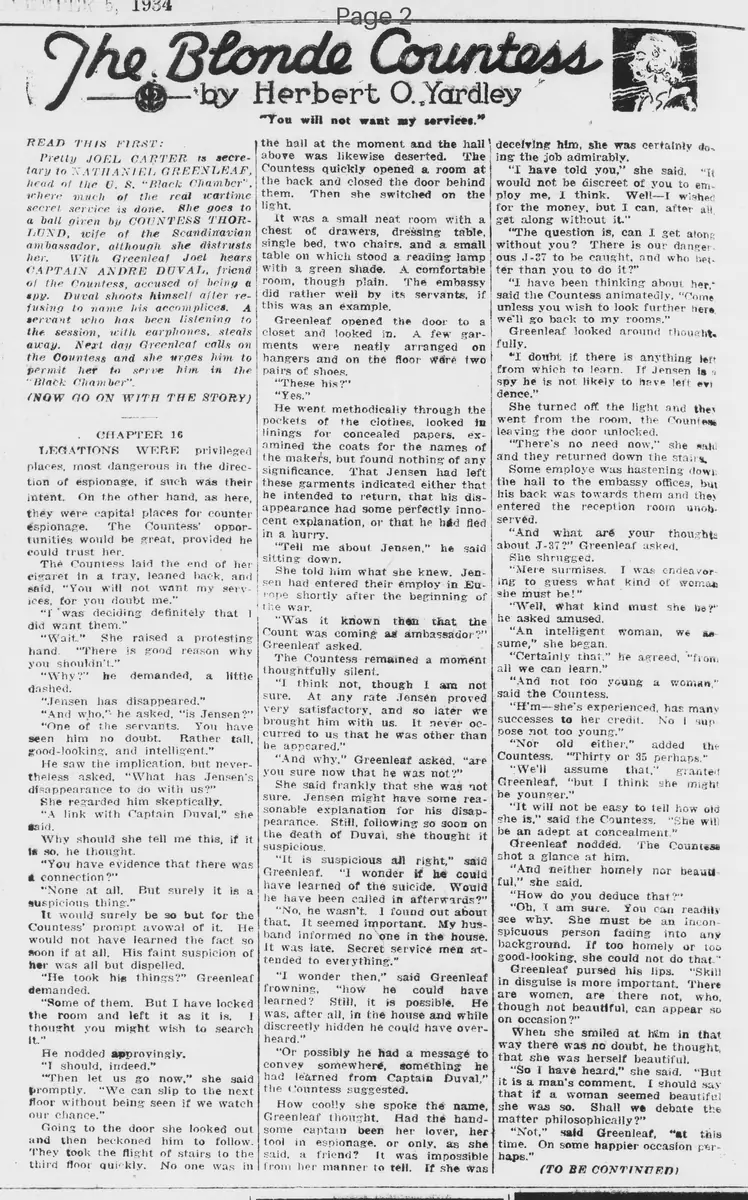
The Blonde
by
Herbert O. Yardley
Countess
"You will not want my services."
READ THIS FIRST:
Pretty JOEL CARTER is secretary to NATHANIEL GREENLEAF head of the U. S. "Black Chamber", where much of the real wartime secret service is done. She goes to a ball given by COUNTESS THORLUND, wife of the Scandinavian ambassador, although she distrusts her.
With Greenleaf Joel hears CAPTAIN ANDRE DUVAL, friend of the Countess, accused of being a spy. Duval shoots himself after refusing to name his accomplices. A servant who has been listening to the session, with earphones, steals away. Next day Greenleaf calls on the Countess and she urges him to permit her to serve him in the "Black Chamber"
(NOW GO ON WITH THE STORY)
CHAPTER 16
LEGATIONS WERE privileged places, most dangerous in the direction of espionage, if such was their intent. On the other hand, as here, they were capital places for counter espionage. The Countess' opportunities would be great, provided he could trust her.
The Countess laid the end of her cigarette in a tray, leaned back, and said, "You will not want my services, for you doubt me."
"I was deciding definitely that I did want them."
"Wait." She raised a protesting hand.
"There is good reason why you shouldn't."
"Why?" he demanded, a little dashed.
"Jensen has disappeared."
"And who," he asked, "is Jensen?"
"One of the servants. You have seen him no doubt. Rather tall, good-looking, and intelligent."
He saw the implication, but nevertheless asked. "What has Jensen's disappearance to do with us?"
She regarded him skeptically.
"A link with Captain Duval," she said.
Why should she tell me this, if it is so, he thought
"You have evidence that there was connection?"
"None at all. But surely it is a suspicious thing."
It would surely be so but for the Countess' prompt avowal of it. He would not have learned the fact so soon if at all. His faint suspicion of her was all but dispelled.
"He took his things?" Greenleaf demanded.
"Some of them. But I have locked the room and left it as it is. I thought you might wish to search it."
He nodded approvingly.
"I should, indeed."
Then let us go now," she said promptly. "We can slip to the next floor without being seen if we watch our chance."
Going to the door she looked out and then beckoned him to follow.
They took the flight of stairs to the third floor quickly. No one was in the hall at the moment and the hall above was likewise deserted. The Countess quickly opened a room at the back and closed the door behind them.
Then she switched on the light.
It was a small neat room with a chest of drawers, dressing table, single bed, two chairs, and a small table on which stood a reading lamp with a green shade. A comfortable room, though plain. The embassy did rather well by its servants, if this was an example.
Greenleaf opened the door to a closet and looked in.
A few garments were neatly arranged on hangers and on the floor were two pairs of shoes.
"These his?"
"Yes."
He went methodically through the pockets of the clothes, looked in linings for concealed papers, examined the coats for the names of the makers, but found nothing of any significance.
That Jensen had left these garments indicated either that he intended to return, that his disappearance had some perfectly innocent explanation, or that he had fled in a hurry.
"Tell me about Jensen," he said sitting down.
She told him what she knew. Jensen had entered their employ in Europe shortly after the beginning of the war.
"Was it known then that the Count was coming as ambassador?" Greenleaf asked.
The Countess remained a moment thoughtfully silent.
"I think not, though I am not sure.
At any rate Jensen proved very satisfactory, and so later we brought him with us. It never occurred to us that he was other than he appeared."
"And why," Greenleaf asked, "are you sure now that he was not?"
She said frankly that she was not sure.
Jensen might have some reasonable explanation for his disappearance. Still, following so soon on the death of Duval, she thought it suspicious.
"It is suspicious all right," said Greenleaf.
"I wonder if he could have learned of the suicide. Would he have been called in afterwards?"
"No, he wasn't. I found out about that. It seemed important. My husband informed no one in the house. It was late. Secret service men attended to everything."
"I wonder then," said Greenleaf frowning, "how he could have learned?
Still, it is possible. He was, after all, in the house and while discreetly hidden he could have overheard."
"Or possibly he had a message to convey somewhere, something he had learned from Captain Duval," the Countess suggested.
How coolly she spoke the name, Greenleaf thought.
Had the handsome captain been her lover, her tool in espionage, or only, as she said, a friend?
It was impossible from her manner to tell.
If she was deceiving him, she was certainly doing the job admirably.
"I have told you," she said. "It would not be discreet of you to employ me, I think. Well—I wished for the money, but I can, after all get along without it."
"The question is, can I get along without you? There is our dangerous J-37 to be caught, and who better than you to do it?"
"I have been thinking about her," said the Countess animatedly. "Come unless you wish to look further here we'll go back to my rooms."
Greenleaf looked around thoughtfully.
I doubt if there is anything left from which to learn. If Jensen is a spy he is not likely to have left evidence."
She turned off the light and they went from the room, the Countess leaving the door unlocked.
"There's no need now," she said and they returned down the stairs.
Some employee was hastening down the hall to the embassy offices, but his back was towards them and they entered the reception room unobserved.
"And what are your thoughts about J-37?" Greenleaf asked.
She shrugged.
"Mere surmises. I was endeavoring to guess what kind of woman she must be!"
Well, what kind must she be?" he asked amused.
"An intelligent woman, we assume," she began.
"Certainly that," he agreed, "from all we can learn."
"And not too young a woman," said the Countess.
"H'm—she's experienced, has many successes to her credit. No I suppose not too young."
"Nor old either," added the Countess.
"Thirty or 35 perhaps."
"We'll assume that," granted Greenleaf, "but I think she might be younger."
"It will not be easy to tell how old she is," said the Countess. "She will be an adept at concealment."
Greenleaf nodded. The Countess shot a glance at him.
"And neither homely nor beautiful," she said.
"How do you deduce that?"
"Oh, I am sure. You can readily see why. She must be an inconspicuous person fading into any background. If too homely or too good-looking, she could not do that."
Greenleaf pursed his lips. "Skill in disguise is more important. There are women, are there not, who, though not beautiful, can appear so on occasion?"
When she smiled at him in that way there was no doubt, he thought, that she was herself beautiful.
"So I have heard," she said. "But it is a man's comment. I should say that if a woman seemed beautiful she was so.
Shall we debate the matter philosophically?"
"Not," said Greenleaf, "at this time. On some happier occasion perhaps."
(TO BE CONTINUED)
by
Herbert O. Yardley
Countess
"You will not want my services."
READ THIS FIRST:
Pretty JOEL CARTER is secretary to NATHANIEL GREENLEAF head of the U. S. "Black Chamber", where much of the real wartime secret service is done. She goes to a ball given by COUNTESS THORLUND, wife of the Scandinavian ambassador, although she distrusts her.
With Greenleaf Joel hears CAPTAIN ANDRE DUVAL, friend of the Countess, accused of being a spy. Duval shoots himself after refusing to name his accomplices. A servant who has been listening to the session, with earphones, steals away. Next day Greenleaf calls on the Countess and she urges him to permit her to serve him in the "Black Chamber"
(NOW GO ON WITH THE STORY)
CHAPTER 16
LEGATIONS WERE privileged places, most dangerous in the direction of espionage, if such was their intent. On the other hand, as here, they were capital places for counter espionage. The Countess' opportunities would be great, provided he could trust her.
The Countess laid the end of her cigarette in a tray, leaned back, and said, "You will not want my services, for you doubt me."
"I was deciding definitely that I did want them."
"Wait." She raised a protesting hand.
"There is good reason why you shouldn't."
"Why?" he demanded, a little dashed.
"Jensen has disappeared."
"And who," he asked, "is Jensen?"
"One of the servants. You have seen him no doubt. Rather tall, good-looking, and intelligent."
He saw the implication, but nevertheless asked. "What has Jensen's disappearance to do with us?"
She regarded him skeptically.
"A link with Captain Duval," she said.
Why should she tell me this, if it is so, he thought
"You have evidence that there was connection?"
"None at all. But surely it is a suspicious thing."
It would surely be so but for the Countess' prompt avowal of it. He would not have learned the fact so soon if at all. His faint suspicion of her was all but dispelled.
"He took his things?" Greenleaf demanded.
"Some of them. But I have locked the room and left it as it is. I thought you might wish to search it."
He nodded approvingly.
"I should, indeed."
Then let us go now," she said promptly. "We can slip to the next floor without being seen if we watch our chance."
Going to the door she looked out and then beckoned him to follow.
They took the flight of stairs to the third floor quickly. No one was in the hall at the moment and the hall above was likewise deserted. The Countess quickly opened a room at the back and closed the door behind them.
Then she switched on the light.
It was a small neat room with a chest of drawers, dressing table, single bed, two chairs, and a small table on which stood a reading lamp with a green shade. A comfortable room, though plain. The embassy did rather well by its servants, if this was an example.
Greenleaf opened the door to a closet and looked in.
A few garments were neatly arranged on hangers and on the floor were two pairs of shoes.
"These his?"
"Yes."
He went methodically through the pockets of the clothes, looked in linings for concealed papers, examined the coats for the names of the makers, but found nothing of any significance.
That Jensen had left these garments indicated either that he intended to return, that his disappearance had some perfectly innocent explanation, or that he had fled in a hurry.
"Tell me about Jensen," he said sitting down.
She told him what she knew. Jensen had entered their employ in Europe shortly after the beginning of the war.
"Was it known then that the Count was coming as ambassador?" Greenleaf asked.
The Countess remained a moment thoughtfully silent.
"I think not, though I am not sure.
At any rate Jensen proved very satisfactory, and so later we brought him with us. It never occurred to us that he was other than he appeared."
"And why," Greenleaf asked, "are you sure now that he was not?"
She said frankly that she was not sure.
Jensen might have some reasonable explanation for his disappearance. Still, following so soon on the death of Duval, she thought it suspicious.
"It is suspicious all right," said Greenleaf.
"I wonder if he could have learned of the suicide. Would he have been called in afterwards?"
"No, he wasn't. I found out about that. It seemed important. My husband informed no one in the house. It was late. Secret service men attended to everything."
"I wonder then," said Greenleaf frowning, "how he could have learned?
Still, it is possible. He was, after all, in the house and while discreetly hidden he could have overheard."
"Or possibly he had a message to convey somewhere, something he had learned from Captain Duval," the Countess suggested.
How coolly she spoke the name, Greenleaf thought.
Had the handsome captain been her lover, her tool in espionage, or only, as she said, a friend?
It was impossible from her manner to tell.
If she was deceiving him, she was certainly doing the job admirably.
"I have told you," she said. "It would not be discreet of you to employ me, I think. Well—I wished for the money, but I can, after all get along without it."
"The question is, can I get along without you? There is our dangerous J-37 to be caught, and who better than you to do it?"
"I have been thinking about her," said the Countess animatedly. "Come unless you wish to look further here we'll go back to my rooms."
Greenleaf looked around thoughtfully.
I doubt if there is anything left from which to learn. If Jensen is a spy he is not likely to have left evidence."
She turned off the light and they went from the room, the Countess leaving the door unlocked.
"There's no need now," she said and they returned down the stairs.
Some employee was hastening down the hall to the embassy offices, but his back was towards them and they entered the reception room unobserved.
"And what are your thoughts about J-37?" Greenleaf asked.
She shrugged.
"Mere surmises. I was endeavoring to guess what kind of woman she must be!"
Well, what kind must she be?" he asked amused.
"An intelligent woman, we assume," she began.
"Certainly that," he agreed, "from all we can learn."
"And not too young a woman," said the Countess.
"H'm—she's experienced, has many successes to her credit. No I suppose not too young."
"Nor old either," added the Countess.
"Thirty or 35 perhaps."
"We'll assume that," granted Greenleaf, "but I think she might be younger."
"It will not be easy to tell how old she is," said the Countess. "She will be an adept at concealment."
Greenleaf nodded. The Countess shot a glance at him.
"And neither homely nor beautiful," she said.
"How do you deduce that?"
"Oh, I am sure. You can readily see why. She must be an inconspicuous person fading into any background. If too homely or too good-looking, she could not do that."
Greenleaf pursed his lips. "Skill in disguise is more important. There are women, are there not, who, though not beautiful, can appear so on occasion?"
When she smiled at him in that way there was no doubt, he thought, that she was herself beautiful.
"So I have heard," she said. "But it is a man's comment. I should say that if a woman seemed beautiful she was so.
Shall we debate the matter philosophically?"
"Not," said Greenleaf, "at this time. On some happier occasion perhaps."
(TO BE CONTINUED)
What sub-type of article is it?
Prose Fiction
What themes does it cover?
Political
War Peace
What keywords are associated?
Espionage
Black Chamber
Countess Thorlund
Jensen Disappearance
J 37 Spy
Duval Suicide
Wartime Secrets
What entities or persons were involved?
Herbert O. Yardley
Literary Details
Title
Chapter 16
Author
Herbert O. Yardley
Subject
Espionage Investigation In The Legation
Key Lines
"You Will Not Want My Services, For You Doubt Me."
"Jensen Has Disappeared."
"A Link With Captain Duval," She Said.
"There Is Our Dangerous J 37 To Be Caught, And Who Better Than You To Do It?"
"An Intelligent Woman, We Assume," She Began.