Thank you for visiting SNEWPapers!
Sign up free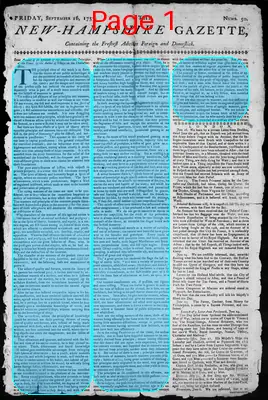
Literary
September 16, 1757
The New Hampshire Gazette
Portsmouth, Rockingham County, New Hampshire
What is this article about?
This essay critiques the depraved principles and manners of the times as the root of public failures, contrasting lingering virtues like liberty, humanity, and equity with the dominant vain, luxurious, and selfish effeminacy among the elite, exemplified by pampered upbringing and superficial education.
Clipping
OCR Quality
95%
Excellent
Full Text
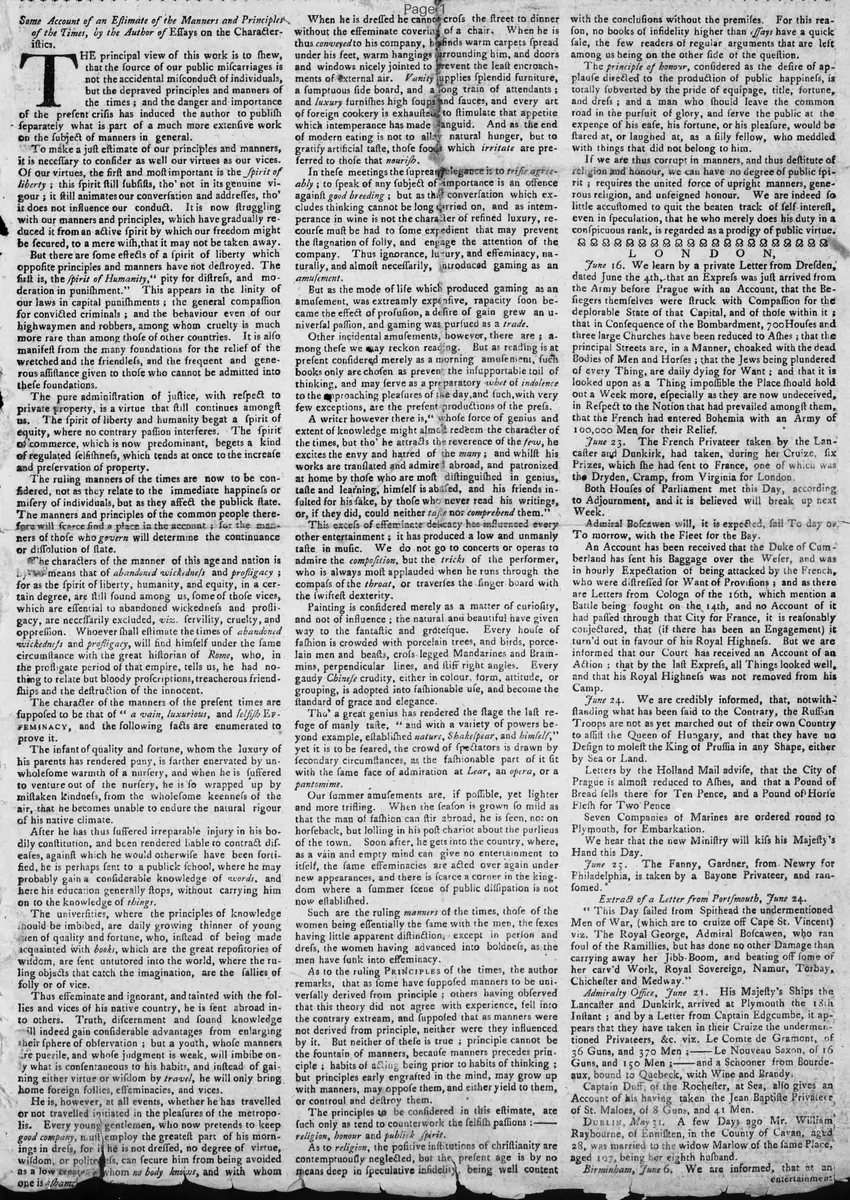
Some Account of an Estimate of the Manners and Principles of the Times, by the Author of Essays on the Characteristics.
The principal view of this work is to shew that the source of our public miscarriages is not the accidental misconduct of individuals, but the depraved principles and manners of the times; and the danger and importance of the present crisis has induced the author to publish separately what is part of a much more extensive work on the subject of manners in general.
To make a just estimate of our principles and manners, it is necessary to consider as well our virtues as our vices. Of our virtues, the first and most important is the spirit of liberty; this spirit still subsists, tho' not in its genuine vigour; it still animates our conversation and address, tho' it does not influence our conduct. It is now struggling with our manners and principles, which have gradually reduced it from an active spirit by which our freedom might be secured, to a mere wish, that it may not be taken away.
But there are some effects of a spirit of liberty which opposite principles and manners have not destroyed. The first is, the spirit of Humanity, pity for distress, and moderation in punishment. This appears in the lenity of our laws in capital punishments; the general compassion for convicted criminals; and the behaviour even of our highwaymen and robbers, among whom cruelty is much more rare than among those of other countries. It is also manifest from the many foundations for the relief of the wretched and the friendless, and the frequent and generous assistance given to those who cannot be admitted into these foundations.
The pure administration of justice, with respect to private property, is a virtue that still continues amongst us. The spirit of liberty and humanity begat a spirit of equity, where no contrary passion interferes. The spirit of commerce, which is now predominant, begets a kind of regulated selfishness, which tends at once to the increase and preservation of property.
The ruling manners of the times are now to be considered, not as they relate to the immediate happiness or misery of individuals, but as they affect the public state. The manners and principles of the common people therefore will scarce find a place in the account; for the manners of those who govern will determine the continuance or dissolution of state.
The character of the manner of this age and nation is that of abandoned wickedness and profligacy; for as the spirit of liberty, humanity, and equity, in a certain degree, are still found among us, some of those vices, which are essential to abandoned wickedness and profligacy, are necessarily excluded, viz. servility, cruelty, and oppression. Whoever shall estimate the times of abandoned wickedness and profligacy, will find himself under the same circumstance with the great historian of Rome, who, in the profligate period of that empire, tells us, he had nothing to relate but bloody proscriptions, treacherous friendships and the destruction of the innocent.
The character of the manners of the present times are supposed to be that of "a vain, luxurious, and Selfish EFFEMINACY, and the following facts are enumerated to prove it."
The infant of quality and fortune, whom the luxury of his parents has rendered puny, is farther enervated by unwholesome warmth of a nursery, and when he is suffered to venture out of the nursery, he is so wrapped up by mistaken kindness, from the wholesome keenness of the air, that he becomes unable to endure the natural rigour of his native climate.
After he has thus suffered irreparable injury in his bodily constitution, and been rendered liable to contract diseases, against which he would otherwise have been fortified, he is perhaps sent to a public school, where he may probably gain a considerable knowledge of words, and here his education generally stops, without carrying him on to the knowledge of things.
The universities, where the principles of knowledge should be imbibed, are daily growing thinner of young men of quality and fortune, who, instead of being made acquainted with books, which are the great repositories of wisdom, are sent untutored into the world, where the ruling objects that catch the imagination, are the allies of folly or of vice.
Thus effeminate and ignorant, and tainted with the follies and vices of his native country, he is sent abroad into others. Truth, discernment and sound knowledge will indeed gain considerable advantages from enlarging their sphere of observation; but a youth, whose manners are puerile, and whose judgment is weak, will imbibe only what is consonantaneous to his habits, and instead of gaining either virtue or wisdom by travel, he will only bring home foreign follies, effeminacies, and vices.
He is, however, at all events, whether he has travelled or not travelled initiated in the pleasures of the metropolis. Every young gentleman, who now pretends to keep good company, must employ the greatest part of his mornings in dress, for if he is not dressed, no degree of virtue, wisdom, or politeness, can secure him from being avoided as a low creature whom no body knows, and with whom one is ashamed.
The principal view of this work is to shew that the source of our public miscarriages is not the accidental misconduct of individuals, but the depraved principles and manners of the times; and the danger and importance of the present crisis has induced the author to publish separately what is part of a much more extensive work on the subject of manners in general.
To make a just estimate of our principles and manners, it is necessary to consider as well our virtues as our vices. Of our virtues, the first and most important is the spirit of liberty; this spirit still subsists, tho' not in its genuine vigour; it still animates our conversation and address, tho' it does not influence our conduct. It is now struggling with our manners and principles, which have gradually reduced it from an active spirit by which our freedom might be secured, to a mere wish, that it may not be taken away.
But there are some effects of a spirit of liberty which opposite principles and manners have not destroyed. The first is, the spirit of Humanity, pity for distress, and moderation in punishment. This appears in the lenity of our laws in capital punishments; the general compassion for convicted criminals; and the behaviour even of our highwaymen and robbers, among whom cruelty is much more rare than among those of other countries. It is also manifest from the many foundations for the relief of the wretched and the friendless, and the frequent and generous assistance given to those who cannot be admitted into these foundations.
The pure administration of justice, with respect to private property, is a virtue that still continues amongst us. The spirit of liberty and humanity begat a spirit of equity, where no contrary passion interferes. The spirit of commerce, which is now predominant, begets a kind of regulated selfishness, which tends at once to the increase and preservation of property.
The ruling manners of the times are now to be considered, not as they relate to the immediate happiness or misery of individuals, but as they affect the public state. The manners and principles of the common people therefore will scarce find a place in the account; for the manners of those who govern will determine the continuance or dissolution of state.
The character of the manner of this age and nation is that of abandoned wickedness and profligacy; for as the spirit of liberty, humanity, and equity, in a certain degree, are still found among us, some of those vices, which are essential to abandoned wickedness and profligacy, are necessarily excluded, viz. servility, cruelty, and oppression. Whoever shall estimate the times of abandoned wickedness and profligacy, will find himself under the same circumstance with the great historian of Rome, who, in the profligate period of that empire, tells us, he had nothing to relate but bloody proscriptions, treacherous friendships and the destruction of the innocent.
The character of the manners of the present times are supposed to be that of "a vain, luxurious, and Selfish EFFEMINACY, and the following facts are enumerated to prove it."
The infant of quality and fortune, whom the luxury of his parents has rendered puny, is farther enervated by unwholesome warmth of a nursery, and when he is suffered to venture out of the nursery, he is so wrapped up by mistaken kindness, from the wholesome keenness of the air, that he becomes unable to endure the natural rigour of his native climate.
After he has thus suffered irreparable injury in his bodily constitution, and been rendered liable to contract diseases, against which he would otherwise have been fortified, he is perhaps sent to a public school, where he may probably gain a considerable knowledge of words, and here his education generally stops, without carrying him on to the knowledge of things.
The universities, where the principles of knowledge should be imbibed, are daily growing thinner of young men of quality and fortune, who, instead of being made acquainted with books, which are the great repositories of wisdom, are sent untutored into the world, where the ruling objects that catch the imagination, are the allies of folly or of vice.
Thus effeminate and ignorant, and tainted with the follies and vices of his native country, he is sent abroad into others. Truth, discernment and sound knowledge will indeed gain considerable advantages from enlarging their sphere of observation; but a youth, whose manners are puerile, and whose judgment is weak, will imbibe only what is consonantaneous to his habits, and instead of gaining either virtue or wisdom by travel, he will only bring home foreign follies, effeminacies, and vices.
He is, however, at all events, whether he has travelled or not travelled initiated in the pleasures of the metropolis. Every young gentleman, who now pretends to keep good company, must employ the greatest part of his mornings in dress, for if he is not dressed, no degree of virtue, wisdom, or politeness, can secure him from being avoided as a low creature whom no body knows, and with whom one is ashamed.
What sub-type of article is it?
Essay
Satire
What themes does it cover?
Social Manners
Moral Virtue
Liberty Freedom
What keywords are associated?
Manners
Principles
Liberty
Effeminacy
Luxury
Education
Vice
Virtue
Society
What entities or persons were involved?
By The Author Of Essays On The Characteristics
Literary Details
Title
Some Account Of An Estimate Of The Manners And Principles Of The Times
Author
By The Author Of Essays On The Characteristics
Subject
Critique Of Depraved Principles And Manners Of The Times
Form / Style
Prose Essay On Social And Moral Critique
Key Lines
The Principal View Of This Work Is To Shew That The Source Of Our Public Miscarriages Is Not The Accidental Misconduct Of Individuals, But The Depraved Principles And Manners Of The Times
Of Our Virtues, The First And Most Important Is The Spirit Of Liberty; This Spirit Still Subsists, Tho' Not In Its Genuine Vigour
The Character Of The Manners Of The Present Times Are Supposed To Be That Of "A Vain, Luxurious, And Selfish Effeminacy, And The Following Facts Are Enumerated To Prove It."
Every Young Gentleman, Who Now Pretends To Keep Good Company, Must Employ The Greatest Part Of His Mornings In Dress