Thank you for visiting SNEWPapers!
Sign up free
Poem
February 21, 1891
Frostburg Mining Journal
Frostburg, Allegany County, Maryland
What is this article about?
A nostalgic poem reminiscing about the poet's father, who coped with life's troubles—war, marriage, crop failures, and death—by whistling a somber tune to hide his grief from the family, portraying his stoic kindness.
Clipping
OCR Quality
95%
Excellent
Full Text
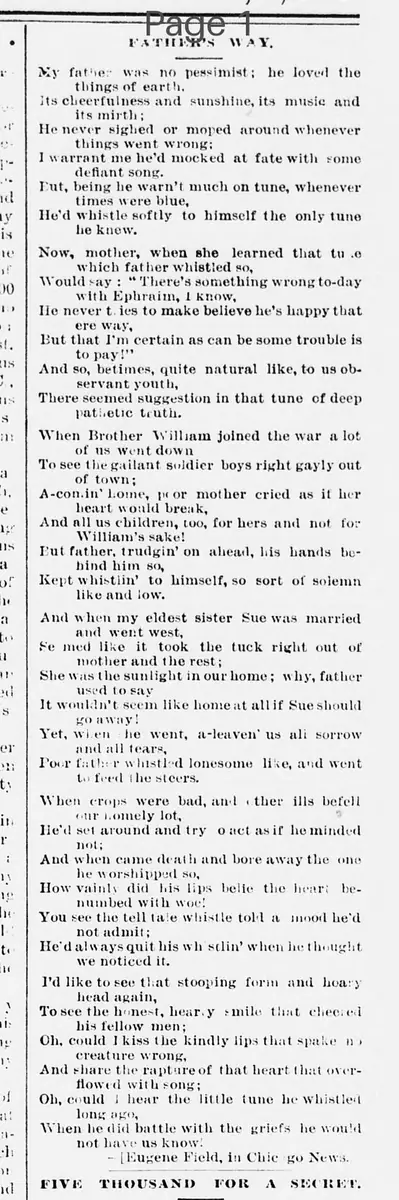
FATHER'S WAY.
My father was no near saint; he loved the things of earth,
its cheerfulness and sunshine, its music and its mirth;
He never sighed or moped around whenever things went wrong;
I warrant me he'd mocked at fate with some defiant song;
But, being he warn't much on tune, whenever times were blue,
He'd whistle mostly to himself the only tune he knew.
Now, mother, when she learned that tune which father whistled so,
Would say : "There's something wrong to-day with Ephraim, I know,
He never tries to make believe he's happy that ere way,
But that I'm certain as can be some trouble is to pay!"
And so, betimes, quite natural like, to us observant youth,
There seemed suggestion in that tune of deep pathetic truth.
When Brother William joined the war a lot of us went down
To see the gallant soldier boys right gayly out of town;
A-coming home, poor mother cried as if her heart would break,
And all us children, too, for hers and not for William's sake!
But father, trudgin' on ahead, his hands behind him so,
Kept whistlin' to himself, so sort of solemn-like and low.
And when my eldest sister Sue was married and went west,
I met like it took the pluck right out of mother and the rest;
She was the sunlight in our home; why, father used to say
It wouldn't seem like home at all if Sue should go away!
Yet, when she went, a-leavin' us all sorrow and all tears,
Our father whistled lonesome-like, and went to feed the steers.
When crops were bad, and other ills befell our humble lot,
I'd see him worry and try to act as if he did not;
And when came death and bore away the one he worshipped most,
How plain did his lip tell the pain he numbed with woe.
You see the old time whistle told a mood he'd not admit;
He'd always quit his whistlin' when he thought we noticed it.
I'd like to see that stooping form and hoary head again,
To see the hand, hearty and kind that cheered his fellow men;
Oh, could I kiss the kindly lips that spake no creature wrong,
And share the rapture of that heart that overflowed with song;
Oh, could I hear the little tune he whistled long ago,
When he did battle with the griefs he would not have us know.
- Eugene Field, in Chicago News.
My father was no near saint; he loved the things of earth,
its cheerfulness and sunshine, its music and its mirth;
He never sighed or moped around whenever things went wrong;
I warrant me he'd mocked at fate with some defiant song;
But, being he warn't much on tune, whenever times were blue,
He'd whistle mostly to himself the only tune he knew.
Now, mother, when she learned that tune which father whistled so,
Would say : "There's something wrong to-day with Ephraim, I know,
He never tries to make believe he's happy that ere way,
But that I'm certain as can be some trouble is to pay!"
And so, betimes, quite natural like, to us observant youth,
There seemed suggestion in that tune of deep pathetic truth.
When Brother William joined the war a lot of us went down
To see the gallant soldier boys right gayly out of town;
A-coming home, poor mother cried as if her heart would break,
And all us children, too, for hers and not for William's sake!
But father, trudgin' on ahead, his hands behind him so,
Kept whistlin' to himself, so sort of solemn-like and low.
And when my eldest sister Sue was married and went west,
I met like it took the pluck right out of mother and the rest;
She was the sunlight in our home; why, father used to say
It wouldn't seem like home at all if Sue should go away!
Yet, when she went, a-leavin' us all sorrow and all tears,
Our father whistled lonesome-like, and went to feed the steers.
When crops were bad, and other ills befell our humble lot,
I'd see him worry and try to act as if he did not;
And when came death and bore away the one he worshipped most,
How plain did his lip tell the pain he numbed with woe.
You see the old time whistle told a mood he'd not admit;
He'd always quit his whistlin' when he thought we noticed it.
I'd like to see that stooping form and hoary head again,
To see the hand, hearty and kind that cheered his fellow men;
Oh, could I kiss the kindly lips that spake no creature wrong,
And share the rapture of that heart that overflowed with song;
Oh, could I hear the little tune he whistled long ago,
When he did battle with the griefs he would not have us know.
- Eugene Field, in Chicago News.
What sub-type of article is it?
Ballad
Elegy
What themes does it cover?
Moral Virtue
Death Mourning
What keywords are associated?
Father
Whistling
Grief
Family
Stoicism
War
Marriage
Death
What entities or persons were involved?
Eugene Field
Poem Details
Title
Father's Way.
Author
Eugene Field
Subject
Reminiscence Of Father's Stoic Coping With Family Griefs
Form / Style
Rhymed Quatrains
Key Lines
He'd Whistle Mostly To Himself The Only Tune He Knew.
But Father, Trudgin' On Ahead, His Hands Behind Him So,
Kept Whistlin' To Himself, So Sort Of Solemn Like And Low.
You See The Old Time Whistle Told A Mood He'd Not Admit;
He'd Always Quit His Whistlin' When He Thought We Noticed It.
Oh, Could I Hear The Little Tune He Whistled Long Ago,
When He Did Battle With The Griefs He Would Not Have Us Know.