Thank you for visiting SNEWPapers!
Sign up free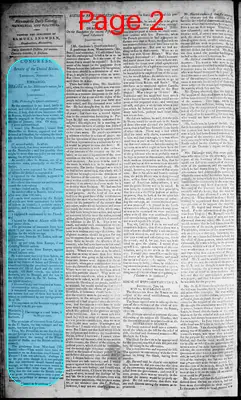
Story
January 17, 1809
Alexandria Daily Gazette, Commercial & Political
Alexandria, Virginia
What is this article about?
Continuation of Mr. Pickering's speech in the U.S. Senate on November 30, 1808, debating repeal of the embargo. He presents insurance data from Boston and Salem offices showing low risks and few captures for U.S. vessels in foreign trade despite British and French restrictions.
Clipping

OCR Quality
95%
Excellent
Full Text
CONGRESS.
Senate of the United States.
Thursday, November 30.
EMBARGO.
DEBATE on Mr. Hillhouse's motion for a repeal.
[Continued.]
[Mr. Pickering's Speech continued.]
By the statement in my hand, lately received, and which is of unquestionable authority, I find, that at one insurance office in Boston, 43 policies have been written, on vessels engaged in foreign voyages since the first of January, 1808. Of these, 5 were undetermined.
1 vessel (the Neutrality) bound from Marseilles to Boston, captured and condemned at Gibraltar, for violating the blockade declared by the British orders in council.
37 arrived safely. In all 43.
It is stated, that there were three policies on the Neutrality; and that possibly there might be more than one policy on one vessel among the 37 safe arrivals.
At another office in Boston, out of seventy-five risks, principally to the West Indies,
3 vessels were captured by the French, of which the British re-captured 2.
1 captured by the British, supposed to be French property.
10—about this number are undetermined
—and the rest—about 55 have ended safely. In all 75.
At another office in Boston, out of somewhat more than 100 risks.
vessels were captured by the British.
of which two were condemned for breach of orders in council; 1 probably enemy's property, and 1 remained under adjudication.
1 captured & condemned by the French :
and
1 seized by them at Alicant while they had power there.
The premiums of insurance have been about 15 per cent. to and from the West Indies, for the whole voyage.
7 per cent. from the W. Indies, with cargo on board.
9 to 10 per cent. from Europe, if not violating British orders.
4 to 5 per cent. from Europe, against French capture only.
By a statement received from Salem, on the correctness of which I can rely, I find that in the district of Salem and Beverly 22 vessels sailed by the president's permission between the 5th of April and the 10th of August. Of these vessels, one sailed to Sumatra, one to Senegal, and the rest to the different ports in the W. Indies. Of the whole number,
4
1 returned leaky and remained at home.
12 returned in safety, and
9 remained undetermined; but it was not known that any of them had been detained or condemned by any foreign power.
In all 22.
The insurance on the Sumatra voyage out and home was 22 per cent.
Martinico,
The voyage out and home, 9
to 10 per cent.
Havanna,
Surinam,
The premium of insurance from Calcutta to the U. States, the last summer and autumn, has been at 8 per cent.
Thus, Mr. President, we see that the risk on our foreign trade has been very little increased since the issuing of the French decree of Berlin and the British orders in council.
The gentleman from Maryland (Mr. Smith) asks—What would have been the insurance on an American vessel bound to France? I am not informed. Perhaps 75 to 90 per cent. though it is not probable that our merchants would hazard such a voyage. or that the underwriters would insure them—But what does this prove?
Why that the risk under the British orders is so great, in attempting to enter a port in France, as perhaps to amount to an actual blockade.
[Speech to be continued.]
Senate of the United States.
Thursday, November 30.
EMBARGO.
DEBATE on Mr. Hillhouse's motion for a repeal.
[Continued.]
[Mr. Pickering's Speech continued.]
By the statement in my hand, lately received, and which is of unquestionable authority, I find, that at one insurance office in Boston, 43 policies have been written, on vessels engaged in foreign voyages since the first of January, 1808. Of these, 5 were undetermined.
1 vessel (the Neutrality) bound from Marseilles to Boston, captured and condemned at Gibraltar, for violating the blockade declared by the British orders in council.
37 arrived safely. In all 43.
It is stated, that there were three policies on the Neutrality; and that possibly there might be more than one policy on one vessel among the 37 safe arrivals.
At another office in Boston, out of seventy-five risks, principally to the West Indies,
3 vessels were captured by the French, of which the British re-captured 2.
1 captured by the British, supposed to be French property.
10—about this number are undetermined
—and the rest—about 55 have ended safely. In all 75.
At another office in Boston, out of somewhat more than 100 risks.
vessels were captured by the British.
of which two were condemned for breach of orders in council; 1 probably enemy's property, and 1 remained under adjudication.
1 captured & condemned by the French :
and
1 seized by them at Alicant while they had power there.
The premiums of insurance have been about 15 per cent. to and from the West Indies, for the whole voyage.
7 per cent. from the W. Indies, with cargo on board.
9 to 10 per cent. from Europe, if not violating British orders.
4 to 5 per cent. from Europe, against French capture only.
By a statement received from Salem, on the correctness of which I can rely, I find that in the district of Salem and Beverly 22 vessels sailed by the president's permission between the 5th of April and the 10th of August. Of these vessels, one sailed to Sumatra, one to Senegal, and the rest to the different ports in the W. Indies. Of the whole number,
4
1 returned leaky and remained at home.
12 returned in safety, and
9 remained undetermined; but it was not known that any of them had been detained or condemned by any foreign power.
In all 22.
The insurance on the Sumatra voyage out and home was 22 per cent.
Martinico,
The voyage out and home, 9
to 10 per cent.
Havanna,
Surinam,
The premium of insurance from Calcutta to the U. States, the last summer and autumn, has been at 8 per cent.
Thus, Mr. President, we see that the risk on our foreign trade has been very little increased since the issuing of the French decree of Berlin and the British orders in council.
The gentleman from Maryland (Mr. Smith) asks—What would have been the insurance on an American vessel bound to France? I am not informed. Perhaps 75 to 90 per cent. though it is not probable that our merchants would hazard such a voyage. or that the underwriters would insure them—But what does this prove?
Why that the risk under the British orders is so great, in attempting to enter a port in France, as perhaps to amount to an actual blockade.
[Speech to be continued.]
What sub-type of article is it?
Historical Event
What themes does it cover?
Misfortune
What keywords are associated?
Embargo Debate
Insurance Policies
Vessel Captures
Boston Offices
Salem District
British Orders
French Decree
What entities or persons were involved?
Mr. Pickering
Mr. Hillhouse
Mr. Smith
Where did it happen?
Senate Of The United States
Story Details
Key Persons
Mr. Pickering
Mr. Hillhouse
Mr. Smith
Location
Senate Of The United States
Event Date
Thursday, November 30, 1808
Story Details
Mr. Pickering presents data from Boston and Salem insurance offices on policies for U.S. vessels in foreign trade since January 1808, detailing captures, safe arrivals, undetermined cases, and premiums, arguing that risks have not greatly increased due to French and British restrictions.