Thank you for visiting SNEWPapers!
Sign up free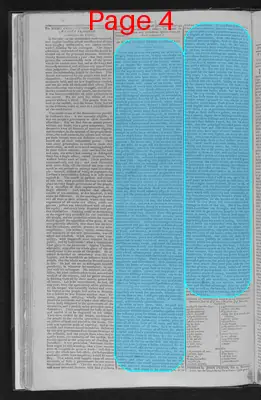
Literary
July 8, 1789
Gazette Of The United States
New York, New York County, New York
What is this article about?
This essay, continued from a prior issue, advocates for taxes on luxury imports (rum, tea, silks, etc.) to pay public debts and secure creditors, arguing it would boost industry, circulation of cash, and national prosperity without the burdens of direct taxes on polls and estates, benefiting all classes including farmers and merchants.
Clipping
OCR Quality
95%
Excellent
Full Text
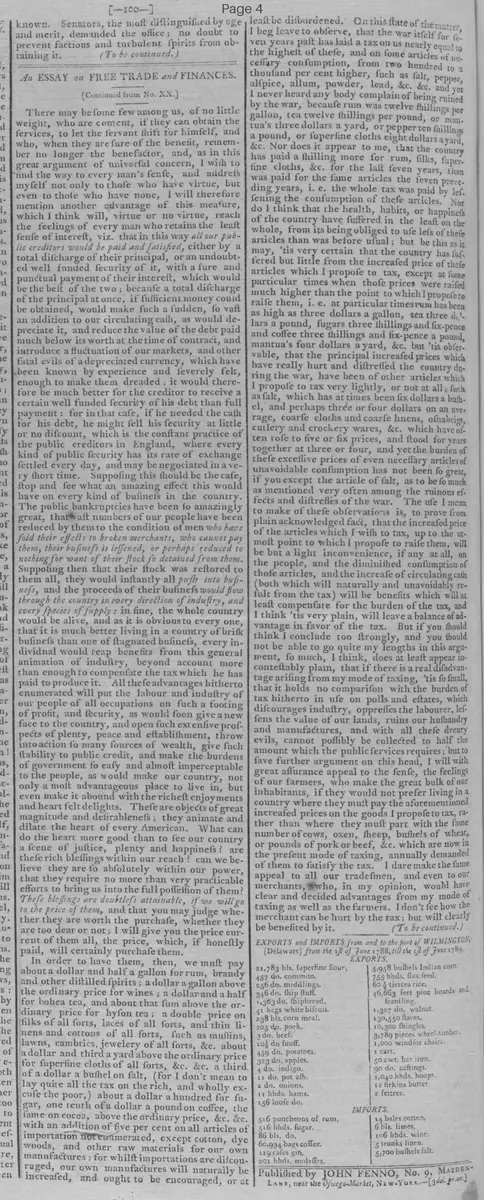
An ESSAY on FREE TRADE and FINANCES.
[Continued from No. XX.]
There may be some few among us, of no little weight, who are content, if they can obtain the services, to let the servant shift for himself, and who, when they are sure of the benefit, remember no longer the benefactor, and, as in this great argument of universal concern, I wish to find the way to every man's sense, and address myself not only to those who have virtue, but even to those who have none, I will therefore mention another advantage of this measure, which I think will, virtue or no virtue, reach the feelings of every man who retains the least sense of interest, viz. that in this way all our public creditors would be paid and satisfied, either by a total discharge of their principal, or an undoubted well funded security of it, with a sure and punctual payment of their interest, which would be the best of the two; because a total discharge of the principal at once, if sufficient money could be obtained, would make such a sudden, so vast an addition to our circulating cash, as would depreciate it, and reduce the value of the debt paid much below its worth at the time of contract, and introduce a fluctuation of our markets, and other fatal evils of a depreciated currency, which have been known by experience and severely felt, enough to make them dreaded; it would therefore be much better for the creditor to receive a certain well funded security of his debt than full payment: for in that case, if he needed the cash for his debt, he might sell his security at little or no discount, which is the constant practice of the public creditors in England, where every kind of public security has its rate of exchange settled every day, and may be negotiated in a very short time. Supposing this should be the case, stop and see what an amazing effect this would have on every kind of business in the country. The public bankruptcies have been so amazingly great, that vast numbers of our people have been reduced by them to the condition of men who have sold their effects to broken merchants, who cannot pay them, their business is lessened, or perhaps reduced to nothing for want of their stock so detained from them. Supposing then that their stock was restored to them all, they would instantly all push into business, and the proceeds of their business would flow through the country in every direction of industry, and every species of supply: in fine, the whole country would be alive, and as it is obvious to every one, that it is much better living in a country of brisk business than one of stagnated business, every individual would reap benefits from this general animation of industry, beyond account more than enough to compensate the tax which he has paid to produce it. All these advantages hitherto enumerated will put the labour and industry of our people of all occupations on such a footing of profit, and security, as would soon give a new face to the country, and open such extensive prospects of plenty, peace and establishment, throw into action so many sources of wealth, give such stability to public credit, and make the burdens of government so easy and almost imperceptible to the people, as would make our country, not only a most advantageous place to live in, but even make it abound with the richest enjoyments and heart felt delights. These are objects of great magnitude and desirableness; they animate and dilate the heart of every American. What can do the heart more good than to see our country a scene of justice, plenty and happiness? are these rich blessings within our reach? can we believe they are so absolutely within our power, that they require no more than very practicable efforts to bring us into the full possession of them? These blessings are doubtless attainable, if we will go to the price of them, and that you may judge whether they are worth the purchase, whether they are too dear or not; I will give you the price current of them all, the price, which, if honestly paid, will certainly purchase them.
In order to have them, then, we must pay about a dollar and half a gallon for rum, brandy and other distilled spirits; a dollar a gallon above the ordinary price for wines; a dollar and a half for bohea tea, and about that sum above the ordinary price for hyson tea; a double price on silks of all sorts, laces of all sorts, and thin linens and cottons of all sorts, such as muslins, lawns, cambrics, jewelry of all sorts, &c. about a dollar and third a yard above the ordinary price for superfine cloths of all sorts, &c. &c. a third of a dollar a bushel on salt, (for I don't mean to lay quite all the tax on the rich, and wholly excuse the poor,) about a dollar a hundred for sugar, one tenth of a dollar a pound on coffee, the same on cocoa, above the ordinary price, &c. &c. with an addition of five per cent on all articles of importation not enumerated, except cotton, dye woods, and other raw materials for our own manufactures; for whilst importations are discouraged, our own manufactures will naturally be increased, and ought to be encouraged, or at least be disburdened. On this state of the matter, I beg leave to observe, that the war itself for seven years past has laid a tax on us nearly equal to the highest of these, and on some articles of necessary consumption, from two hundred to a thousand per cent higher, such as salt, pepper, allspice, allum, powder, lead, &c. &c. and yet I never heard any body complain of being ruined by the war, because rum was twelve shillings per gallon, tea twelve shillings per pound, or mantua's three dollars a yard, or pepper ten shillings a pound, or superfine cloths eight dollars a yard, &c. Nor does it appear to me, that the country has paid a shilling more for rum, silks, superfine cloths, &c. for the last seven years, than was paid for the same articles the seven preceding years, i. e. the whole tax was paid by lessening the consumption of these articles. Nor do I think that the health, habits, or happiness of the country have suffered in the least on the whole, from its being obliged to use less of these articles than was before usual; but be this as it may, 'tis very certain that the country has suffered but little from the increased price of these articles which I propose to tax, except at some particular times when those prices were raised much higher than the point to which I propose to raise them, i. e. at particular times rum has been as high as three dollars a gallon, tea three dollars a pound, sugars three shillings and six-pence and coffee three shillings and six-pence a pound, mantua's four dollars a yard, &c. but 'tis observable, that the principal increased prices which have really hurt and distressed the country during the war, have been of other articles which I propose to tax very lightly, or not at all; such as salt, which has at times been six dollars a bushel, and perhaps three or four dollars on an average, coarse cloths and coarse linens, onabrics, cutlery and crockery wares, &c. which have often rose to five or six prices, and stood for years together at three or four, and yet the burden of these excessive prices of even necessary articles of unavoidable consumption has not been so great, if you except the article of salt, as to be so much as mentioned very often among the ruinous effects and distresses of the war. The use I mean to make of these observations is, to prove from plain acknowledged fact, that the increased price of the articles which I wish to tax, up to the utmost point to which I propose to raise them, will be but a light inconvenience, if any at all, on the people, and the diminished consumption of those articles, and the increase of circulating cash (both which will naturally and unavoidably result from the tax) will be benefits which will at least compensate for the burden of the tax, and I think 'tis very plain, will leave a balance of advantage in favor of the tax. But if you should think I conclude too strongly, and you should not be able to go quite my lengths in this argument, so much, I think, does at least appear incontestably plain, that if there is a real disadvantage arising from my mode of taxing, 'tis so small, that it holds no comparison with the burden of tax hitherto in use on polls and estates, which discourages industry, oppresses the labourer, lessens the value of our lands, ruins our husbandry and manufactures, and with all these dreary evils, cannot possibly be collected to half the amount which the public service requires; but to save further argument on this head, I will with great assurance appeal to the sense, the feelings of our farmers, who make the great bulk of our inhabitants, if they would not prefer living in a country where they must pay the aforementioned increased prices on the goods I propose to tax, rather than where they must part with the same number of cows, oxen, sheep, bushels of wheat, or pounds of pork or beef, &c. which are now in the present mode of taxing, annually demanded of them to satisfy the tax. I dare make the same appeal to all our tradesmen, and even to our merchants, who, in my opinion, would have clear and decided advantages from my mode of taxing as well as the farmers. I don't see how the merchant can be hurt by the tax; but will clearly be benefited by it.
(To be continued.)
[Continued from No. XX.]
There may be some few among us, of no little weight, who are content, if they can obtain the services, to let the servant shift for himself, and who, when they are sure of the benefit, remember no longer the benefactor, and, as in this great argument of universal concern, I wish to find the way to every man's sense, and address myself not only to those who have virtue, but even to those who have none, I will therefore mention another advantage of this measure, which I think will, virtue or no virtue, reach the feelings of every man who retains the least sense of interest, viz. that in this way all our public creditors would be paid and satisfied, either by a total discharge of their principal, or an undoubted well funded security of it, with a sure and punctual payment of their interest, which would be the best of the two; because a total discharge of the principal at once, if sufficient money could be obtained, would make such a sudden, so vast an addition to our circulating cash, as would depreciate it, and reduce the value of the debt paid much below its worth at the time of contract, and introduce a fluctuation of our markets, and other fatal evils of a depreciated currency, which have been known by experience and severely felt, enough to make them dreaded; it would therefore be much better for the creditor to receive a certain well funded security of his debt than full payment: for in that case, if he needed the cash for his debt, he might sell his security at little or no discount, which is the constant practice of the public creditors in England, where every kind of public security has its rate of exchange settled every day, and may be negotiated in a very short time. Supposing this should be the case, stop and see what an amazing effect this would have on every kind of business in the country. The public bankruptcies have been so amazingly great, that vast numbers of our people have been reduced by them to the condition of men who have sold their effects to broken merchants, who cannot pay them, their business is lessened, or perhaps reduced to nothing for want of their stock so detained from them. Supposing then that their stock was restored to them all, they would instantly all push into business, and the proceeds of their business would flow through the country in every direction of industry, and every species of supply: in fine, the whole country would be alive, and as it is obvious to every one, that it is much better living in a country of brisk business than one of stagnated business, every individual would reap benefits from this general animation of industry, beyond account more than enough to compensate the tax which he has paid to produce it. All these advantages hitherto enumerated will put the labour and industry of our people of all occupations on such a footing of profit, and security, as would soon give a new face to the country, and open such extensive prospects of plenty, peace and establishment, throw into action so many sources of wealth, give such stability to public credit, and make the burdens of government so easy and almost imperceptible to the people, as would make our country, not only a most advantageous place to live in, but even make it abound with the richest enjoyments and heart felt delights. These are objects of great magnitude and desirableness; they animate and dilate the heart of every American. What can do the heart more good than to see our country a scene of justice, plenty and happiness? are these rich blessings within our reach? can we believe they are so absolutely within our power, that they require no more than very practicable efforts to bring us into the full possession of them? These blessings are doubtless attainable, if we will go to the price of them, and that you may judge whether they are worth the purchase, whether they are too dear or not; I will give you the price current of them all, the price, which, if honestly paid, will certainly purchase them.
In order to have them, then, we must pay about a dollar and half a gallon for rum, brandy and other distilled spirits; a dollar a gallon above the ordinary price for wines; a dollar and a half for bohea tea, and about that sum above the ordinary price for hyson tea; a double price on silks of all sorts, laces of all sorts, and thin linens and cottons of all sorts, such as muslins, lawns, cambrics, jewelry of all sorts, &c. about a dollar and third a yard above the ordinary price for superfine cloths of all sorts, &c. &c. a third of a dollar a bushel on salt, (for I don't mean to lay quite all the tax on the rich, and wholly excuse the poor,) about a dollar a hundred for sugar, one tenth of a dollar a pound on coffee, the same on cocoa, above the ordinary price, &c. &c. with an addition of five per cent on all articles of importation not enumerated, except cotton, dye woods, and other raw materials for our own manufactures; for whilst importations are discouraged, our own manufactures will naturally be increased, and ought to be encouraged, or at least be disburdened. On this state of the matter, I beg leave to observe, that the war itself for seven years past has laid a tax on us nearly equal to the highest of these, and on some articles of necessary consumption, from two hundred to a thousand per cent higher, such as salt, pepper, allspice, allum, powder, lead, &c. &c. and yet I never heard any body complain of being ruined by the war, because rum was twelve shillings per gallon, tea twelve shillings per pound, or mantua's three dollars a yard, or pepper ten shillings a pound, or superfine cloths eight dollars a yard, &c. Nor does it appear to me, that the country has paid a shilling more for rum, silks, superfine cloths, &c. for the last seven years, than was paid for the same articles the seven preceding years, i. e. the whole tax was paid by lessening the consumption of these articles. Nor do I think that the health, habits, or happiness of the country have suffered in the least on the whole, from its being obliged to use less of these articles than was before usual; but be this as it may, 'tis very certain that the country has suffered but little from the increased price of these articles which I propose to tax, except at some particular times when those prices were raised much higher than the point to which I propose to raise them, i. e. at particular times rum has been as high as three dollars a gallon, tea three dollars a pound, sugars three shillings and six-pence and coffee three shillings and six-pence a pound, mantua's four dollars a yard, &c. but 'tis observable, that the principal increased prices which have really hurt and distressed the country during the war, have been of other articles which I propose to tax very lightly, or not at all; such as salt, which has at times been six dollars a bushel, and perhaps three or four dollars on an average, coarse cloths and coarse linens, onabrics, cutlery and crockery wares, &c. which have often rose to five or six prices, and stood for years together at three or four, and yet the burden of these excessive prices of even necessary articles of unavoidable consumption has not been so great, if you except the article of salt, as to be so much as mentioned very often among the ruinous effects and distresses of the war. The use I mean to make of these observations is, to prove from plain acknowledged fact, that the increased price of the articles which I wish to tax, up to the utmost point to which I propose to raise them, will be but a light inconvenience, if any at all, on the people, and the diminished consumption of those articles, and the increase of circulating cash (both which will naturally and unavoidably result from the tax) will be benefits which will at least compensate for the burden of the tax, and I think 'tis very plain, will leave a balance of advantage in favor of the tax. But if you should think I conclude too strongly, and you should not be able to go quite my lengths in this argument, so much, I think, does at least appear incontestably plain, that if there is a real disadvantage arising from my mode of taxing, 'tis so small, that it holds no comparison with the burden of tax hitherto in use on polls and estates, which discourages industry, oppresses the labourer, lessens the value of our lands, ruins our husbandry and manufactures, and with all these dreary evils, cannot possibly be collected to half the amount which the public service requires; but to save further argument on this head, I will with great assurance appeal to the sense, the feelings of our farmers, who make the great bulk of our inhabitants, if they would not prefer living in a country where they must pay the aforementioned increased prices on the goods I propose to tax, rather than where they must part with the same number of cows, oxen, sheep, bushels of wheat, or pounds of pork or beef, &c. which are now in the present mode of taxing, annually demanded of them to satisfy the tax. I dare make the same appeal to all our tradesmen, and even to our merchants, who, in my opinion, would have clear and decided advantages from my mode of taxing as well as the farmers. I don't see how the merchant can be hurt by the tax; but will clearly be benefited by it.
(To be continued.)
What sub-type of article is it?
Essay
What themes does it cover?
Commerce Trade
Political
What keywords are associated?
Free Trade
Finances
Taxation
Public Debt
Import Duties
American Economy
Luxury Goods
Literary Details
Title
An Essay On Free Trade And Finances.
Key Lines
These Are Objects Of Great Magnitude And Desirableness; They Animate And Dilate The Heart Of Every American. What Can Do The Heart More Good Than To See Our Country A Scene Of Justice, Plenty And Happiness?
In Order To Have Them, Then, We Must Pay About A Dollar And Half A Gallon For Rum, Brandy And Other Distilled Spirits; A Dollar A Gallon Above The Ordinary Price For Wines; A Dollar And A Half For Bohea Tea, And About That Sum Above The Ordinary Price For Hyson Tea;
I Will With Great Assurance Appeal To The Sense, The Feelings Of Our Farmers, Who Make The Great Bulk Of Our Inhabitants, If They Would Not Prefer Living In A Country Where They Must Pay The Aforementioned Increased Prices On The Goods I Propose To Tax, Rather Than Where They Must Part With The Same Number Of Cows, Oxen, Sheep, Bushels Of Wheat, Or Pounds Of Pork Or Beef, &C.