Thank you for visiting SNEWPapers!
Sign up free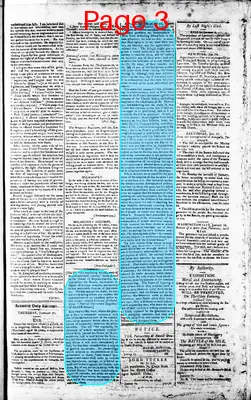
Editorial
January 17, 1805
Alexandria Daily Advertiser
Alexandria, Virginia
What is this article about?
Editorial criticizes a bill passed by the House regulating armed merchant vessels, arguing it prohibits self-defense, endangers U.S. commerce, and stems from the administration's enmity toward trade, possibly linked to French complaints about St. Domingo supplies.
Clipping
OCR Quality
98%
Excellent
Full Text
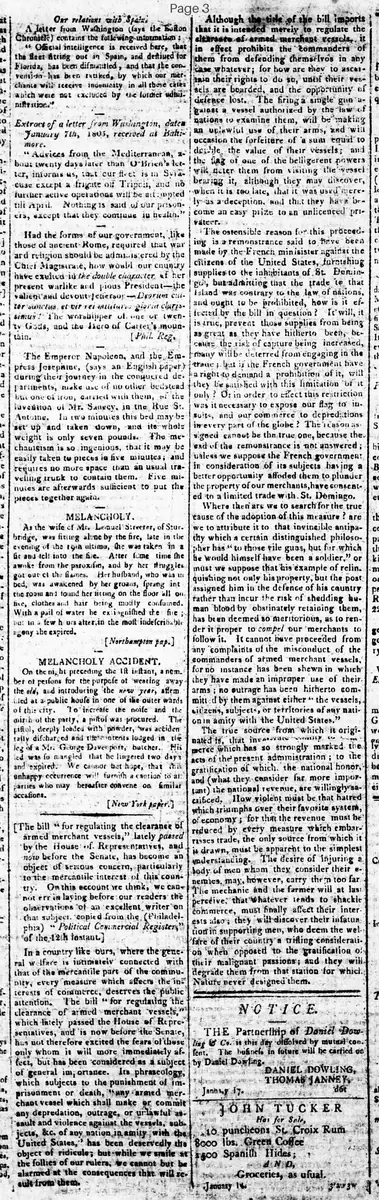
The bill "for regulating the clearance of armed merchant vessels;" lately passed by the House of Representatives, and now before the Senate, has become an object of serious concern, particularly to the mercantile interest of this country. On this account we think, we cannot err in laying before our readers the observations of an excellent writer on that subject, copied from the (Philadelphia) "Political Commercial Register of the 12th Instant."
In a country like ours, where the general welfare is intimately connected with that of the mercantile part of the community; every measure which affects the interests of commerce, deserves the public attention. The bill "for regulating the clearance of armed merchant vessels," which lately passed the House of Representatives, and is now before the Senate, has not therefore excited the fears of those only whom it will more immediately affect, but has been considered as a subject of general importance. Its phraseology, which subjects to the punishment of imprisonment or death, "any armed merchant vessel which shall make or commit any depredation, outrage, or unlawful assault and violence against the vessels, subjects, &c. of any nation in amity with the United States," has been deservedly the object of ridicule; but while we smile at the follies of our rulers, we cannot but be alarmed at the consequences that will result from them.
Although the title of the bill imports that it is intended merely to regulate the clearance of armed merchant vessels, it in effect prohibits the commanders of them from defending themselves in any case whatever: for how are they to ascertain their rights to do so, until their vessels are boarded, and the opportunity of defence lost. The firing a single gun against a vessel authorized by the law of nations to examine them, will be making an unlawful use of their arms, and will occasion the forfeiture of a sum equal to double the value of their vessels: and the flag of one of the belligerent powers will deter them from visiting the vessel bearing it, although they may discover, when it is too late, that it was used merely as a deception, and that they have become an easy prize to an unlicensed privateer.
The ostensible reason for this proceeding is a remonstrance said to have been made by the French minister against the citizens of the United States, furnishing supplies to the inhabitants of St. Domingo, but admitting that the trade to that island was contrary to the law of nations, and ought to be prohibited, how is it effected by the bill in question? It will, it is true, prevent those supplies from being as great as they have hitherto been, because the risk of capture being increased, many will be deterred from engaging in the trade; but if the French government have a right to demand a prohibition of it, will they be satisfied with this limitation of it only? Or in order to effect this restriction was it necessary to expose our flag to insults, and our commerce to depredations in every part of the globe? The reason assigned cannot be the true one, because the end of the remonstrance is not answered; unless we suppose the French government in consideration of its subjects having a better opportunity afforded them to plunder the property of our merchants, have consented to a limited trade with St. Domingo.
Where then are we to search for the true cause of the adoption of this measure? are we to attribute it to that invincible antipathy which a certain distinguished philosopher has "to those vile guns, but for which he would himself have been a soldier," or must we suppose that his example of relinquishing not only his property, but the post assigned him in the defence of his country rather than incur the risk of shedding human blood by obstinately retaining them, has been deemed so meritorious, as to render it proper to compel our merchants to follow it. It cannot have proceeded from any complaints of the misconduet of the commanders of armed merchant vessels, for no instance has been shewn in which they have made an improper use of their arms; no outrage has been hitherto committed by them against either "the vessels, citizens, subjects, or territories of any nation in amity with the United States."
The true source from which it originated is, that inveterate enmity to commerce which has so strongly marked the acts of the present administration; to the gratification of which, the national honor, and (what they consider far more important) the national revenue, are willingly sacrificed. How violent must be that hatred which triumphs over their favorite system of economy; for that the revenue must be reduced by every measure which embarrasses trade, the only source from which it is drawn, must be apparent to the simplest understanding: The desire of injuring a body of men whom they consider their enemies, may, however, carry them too far. The mechanic and the farmer will at last perceive, that whatever tends to shackle commerce, must finally affect their interests also; they will discover their infatuation in supporting men, who deem the welfare of their country a trifling consideration "when opposed to the gratification of their malignant passions;" and they will degrade them from that station for which Nature never designed them.
In a country like ours, where the general welfare is intimately connected with that of the mercantile part of the community; every measure which affects the interests of commerce, deserves the public attention. The bill "for regulating the clearance of armed merchant vessels," which lately passed the House of Representatives, and is now before the Senate, has not therefore excited the fears of those only whom it will more immediately affect, but has been considered as a subject of general importance. Its phraseology, which subjects to the punishment of imprisonment or death, "any armed merchant vessel which shall make or commit any depredation, outrage, or unlawful assault and violence against the vessels, subjects, &c. of any nation in amity with the United States," has been deservedly the object of ridicule; but while we smile at the follies of our rulers, we cannot but be alarmed at the consequences that will result from them.
Although the title of the bill imports that it is intended merely to regulate the clearance of armed merchant vessels, it in effect prohibits the commanders of them from defending themselves in any case whatever: for how are they to ascertain their rights to do so, until their vessels are boarded, and the opportunity of defence lost. The firing a single gun against a vessel authorized by the law of nations to examine them, will be making an unlawful use of their arms, and will occasion the forfeiture of a sum equal to double the value of their vessels: and the flag of one of the belligerent powers will deter them from visiting the vessel bearing it, although they may discover, when it is too late, that it was used merely as a deception, and that they have become an easy prize to an unlicensed privateer.
The ostensible reason for this proceeding is a remonstrance said to have been made by the French minister against the citizens of the United States, furnishing supplies to the inhabitants of St. Domingo, but admitting that the trade to that island was contrary to the law of nations, and ought to be prohibited, how is it effected by the bill in question? It will, it is true, prevent those supplies from being as great as they have hitherto been, because the risk of capture being increased, many will be deterred from engaging in the trade; but if the French government have a right to demand a prohibition of it, will they be satisfied with this limitation of it only? Or in order to effect this restriction was it necessary to expose our flag to insults, and our commerce to depredations in every part of the globe? The reason assigned cannot be the true one, because the end of the remonstrance is not answered; unless we suppose the French government in consideration of its subjects having a better opportunity afforded them to plunder the property of our merchants, have consented to a limited trade with St. Domingo.
Where then are we to search for the true cause of the adoption of this measure? are we to attribute it to that invincible antipathy which a certain distinguished philosopher has "to those vile guns, but for which he would himself have been a soldier," or must we suppose that his example of relinquishing not only his property, but the post assigned him in the defence of his country rather than incur the risk of shedding human blood by obstinately retaining them, has been deemed so meritorious, as to render it proper to compel our merchants to follow it. It cannot have proceeded from any complaints of the misconduet of the commanders of armed merchant vessels, for no instance has been shewn in which they have made an improper use of their arms; no outrage has been hitherto committed by them against either "the vessels, citizens, subjects, or territories of any nation in amity with the United States."
The true source from which it originated is, that inveterate enmity to commerce which has so strongly marked the acts of the present administration; to the gratification of which, the national honor, and (what they consider far more important) the national revenue, are willingly sacrificed. How violent must be that hatred which triumphs over their favorite system of economy; for that the revenue must be reduced by every measure which embarrasses trade, the only source from which it is drawn, must be apparent to the simplest understanding: The desire of injuring a body of men whom they consider their enemies, may, however, carry them too far. The mechanic and the farmer will at last perceive, that whatever tends to shackle commerce, must finally affect their interests also; they will discover their infatuation in supporting men, who deem the welfare of their country a trifling consideration "when opposed to the gratification of their malignant passions;" and they will degrade them from that station for which Nature never designed them.
What sub-type of article is it?
Economic Policy
Foreign Affairs
Partisan Politics
What keywords are associated?
Armed Merchant Vessels
Commerce Regulation
French Remonstrance
St Domingo Trade
Administration Enmity
Self Defense Prohibition
What entities or persons were involved?
House Of Representatives
Senate
French Minister
Present Administration
Editorial Details
Primary Topic
Criticism Of Bill Regulating Armed Merchant Vessels
Stance / Tone
Strongly Critical Of The Bill And Administration
Key Figures
House Of Representatives
Senate
French Minister
Present Administration
Key Arguments
Bill Prohibits Self Defense By Armed Merchant Vessels
Phraseology Subjects Vessels To Severe Punishments For Any Use Of Arms
Exposes U.S. Commerce To Depredations And Insults
Ostensible Reason Is French Remonstrance On St. Domingo Trade But Does Not Fully Address It
True Cause Is Administration's Enmity To Commerce
No Prior Misconduct By Armed Merchant Vessels
Harms National Revenue And Honor
Will Eventually Affect Mechanics And Farmers