Thank you for visiting SNEWPapers!
Sign up free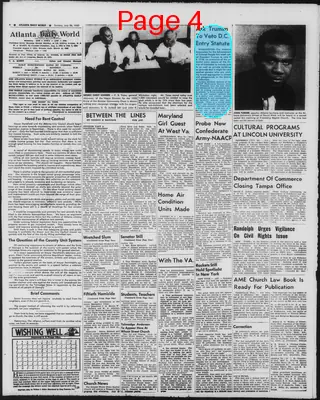
Atlanta Daily World
Atlanta, Fulton County, Georgia
What is this article about?
The NAACP asked President Truman to veto H.R. 1758, extending the D.C. unlawful entry statute to public buildings, arguing it could be used against those working to end segregation in D.C. schools and playgrounds.
Clipping
OCR Quality
Full Text
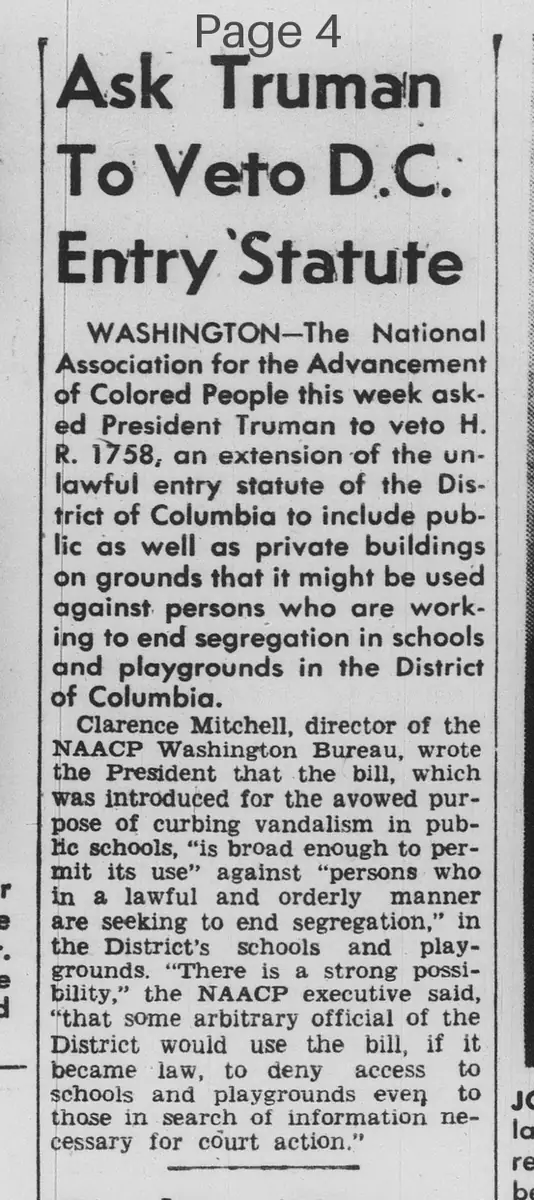
WASHINGTON-The National Association for the Advancement of Colored People this week asked President Truman to veto H R. 1758, an extension of the unlawful entry statute of the District of Columbia to include public as well as private buildings on grounds that it might be used against persons who are working to end segregation in schools and playgrounds in the District of Columbia.
Clarence Mitchell, director of the NAACP Washington Bureau, wrote the President that the bill, which was introduced for the avowed purpose of curbing vandalism in public schools, "is broad enough to permit its use" against persons who in a lawful and orderly manner are seeking to end segregation." in the District's schools and playgrounds. "There is a strong possibility," the NAACP executive said, "that some arbitrary official of the District would use the bill, if it became law, to deny access to schools and playgrounds even to those in search of information necessary for court action."
What sub-type of article is it?
What keywords are associated?
What entities or persons were involved?
Where did it happen?
Domestic News Details
Primary Location
Washington
Event Date
This Week
Key Persons
Event Details
The National Association for the Advancement of Colored People asked President Truman to veto H R. 1758, an extension of the unlawful entry statute of the District of Columbia to include public as well as private buildings, on grounds that it might be used against persons working to end segregation in schools and playgrounds. Clarence Mitchell wrote that the bill is broad enough to permit its use against those seeking to end segregation in a lawful manner, and that arbitrary officials might deny access even for court action information.