Thank you for visiting SNEWPapers!
Sign up free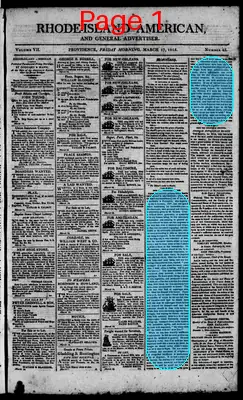
Literary
March 17, 1815
The Rhode Island American, And General Advertiser
Providence, Providence County, Rhode Island
What is this article about?
Excerpt from the Edinburgh Review on Bernard le Bovier de Fontenelle's death in January 1757, aged nearly 100. Describes his emotionless, selfish character through anecdotes from M. Grimm, highlighting his wit, indifference to others, and lack of religious sentiment, tolerated in France for his amusing nature.
Clipping
OCR Quality
95%
Excellent
Full Text
FROM THE EDINBURGH REVIEW
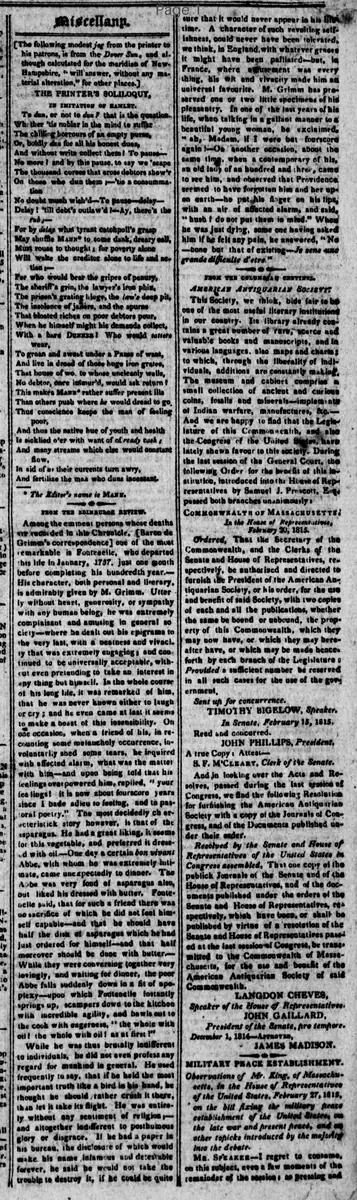
Among the curious persons whose deaths are recorded in this Chronicle, [Baron de Grimm's correspondence] one of the most remarkable is Fontenelle, who departed this life in January, 1757, just one month before completing his hundredth year. His character, both personal and literary, is admirably given by M. Grimm. Utterly without heart, generosity, or sympathy with any human being, he was extremely complaisant and amusing in general society—where he dealt out his epigrams to the very last, with a neatness and vivacity that was extremely engaging and continued to be universally acceptable, without even pretending to take an interest in any thing but himself. In the whole course of his long life, it was remarked of him, that he was never known either to laugh or cry; and he even came at last it seems to make a boast of this insensibility. On one occasion, when a friend of his, in recounting some melancholy occurrence, involuntarily shed some tears, he inquired with affected alarm, what was the matter with him—and upon being told that his feelings overpowered him, replied, "your feelings! it is now about fourscore years since I bade adieu to feeling, and to pastoral poetry." The most decidedly characteristic story however, is that of the asparagus. He had a great liking, it seems, for this vegetable, and preferred it dressed with oil. One day a certain bon vivant Abbé, with whom he was extremely intimate, came unexpectedly to dinner. The Abbé was very fond of asparagus also, but liked his dressed with butter. Fontenelle said, that for such a friend there was no sacrifice of which he did not feel him-self capable—and that he should have half the dish of asparagus which he had just ordered for himself—and that half moreover should be done with butter. While they were conversing together very lovingly, and waiting for dinner, the poor Abbe falls suddenly down in a fit of apoplexy—upon which Fontenelle instantly springs up, scampers down to the kitchen with incredible agility, and bawls out to the cook with eagerness, "the whole with oil! the whole with oil as at first!"
While he was thus brutally indifferent to individuals, he did not even profess any regard for mankind in general. He used frequently to say, that if he held the most important truth like a bird in his hand, he thought he should rather crush it there, than let it take its flight. He was entirely without any sentiment of religion— and altogether indifferent to posthumous glory or disgrace. If he had a paper in his bureau, the disclosure of which would make his name infamous and detestable forever, he said he would not take the trouble to destroy it, if he could be quite sure that it would never appear in his lifetime. A character of such revolting selfishness, could never have been tolerated, we think, in England, with whatever grace it might have been palliated but, in France, where amusement was every-thing, his wit and vivacity made him a universal favourite. M. Grimm has preserved one or two little specimens of his pleasantry. In one of the last years of his life, when talking in a gallant manner to a beautiful young woman, he exclaimed "ah, Madam, if I were but fourscore again!—On another occasion, about the same time, when a contemporary of his, an old lady of an hundred and three, came to see him, and observed that Providence seemed to have forgotten him and her upon earth—he put his finger on his lips with an air of affected alarm, and said, "hush! do not put them in mind." When he was just dying, some one having asked him if he felt any pain, he answered, "No —none but that of existence—Je sens une très grande difficulté d'être."
Among the curious persons whose deaths are recorded in this Chronicle, [Baron de Grimm's correspondence] one of the most remarkable is Fontenelle, who departed this life in January, 1757, just one month before completing his hundredth year. His character, both personal and literary, is admirably given by M. Grimm. Utterly without heart, generosity, or sympathy with any human being, he was extremely complaisant and amusing in general society—where he dealt out his epigrams to the very last, with a neatness and vivacity that was extremely engaging and continued to be universally acceptable, without even pretending to take an interest in any thing but himself. In the whole course of his long life, it was remarked of him, that he was never known either to laugh or cry; and he even came at last it seems to make a boast of this insensibility. On one occasion, when a friend of his, in recounting some melancholy occurrence, involuntarily shed some tears, he inquired with affected alarm, what was the matter with him—and upon being told that his feelings overpowered him, replied, "your feelings! it is now about fourscore years since I bade adieu to feeling, and to pastoral poetry." The most decidedly characteristic story however, is that of the asparagus. He had a great liking, it seems, for this vegetable, and preferred it dressed with oil. One day a certain bon vivant Abbé, with whom he was extremely intimate, came unexpectedly to dinner. The Abbé was very fond of asparagus also, but liked his dressed with butter. Fontenelle said, that for such a friend there was no sacrifice of which he did not feel him-self capable—and that he should have half the dish of asparagus which he had just ordered for himself—and that half moreover should be done with butter. While they were conversing together very lovingly, and waiting for dinner, the poor Abbe falls suddenly down in a fit of apoplexy—upon which Fontenelle instantly springs up, scampers down to the kitchen with incredible agility, and bawls out to the cook with eagerness, "the whole with oil! the whole with oil as at first!"
While he was thus brutally indifferent to individuals, he did not even profess any regard for mankind in general. He used frequently to say, that if he held the most important truth like a bird in his hand, he thought he should rather crush it there, than let it take its flight. He was entirely without any sentiment of religion— and altogether indifferent to posthumous glory or disgrace. If he had a paper in his bureau, the disclosure of which would make his name infamous and detestable forever, he said he would not take the trouble to destroy it, if he could be quite sure that it would never appear in his lifetime. A character of such revolting selfishness, could never have been tolerated, we think, in England, with whatever grace it might have been palliated but, in France, where amusement was every-thing, his wit and vivacity made him a universal favourite. M. Grimm has preserved one or two little specimens of his pleasantry. In one of the last years of his life, when talking in a gallant manner to a beautiful young woman, he exclaimed "ah, Madam, if I were but fourscore again!—On another occasion, about the same time, when a contemporary of his, an old lady of an hundred and three, came to see him, and observed that Providence seemed to have forgotten him and her upon earth—he put his finger on his lips with an air of affected alarm, and said, "hush! do not put them in mind." When he was just dying, some one having asked him if he felt any pain, he answered, "No —none but that of existence—Je sens une très grande difficulté d'être."
What sub-type of article is it?
Essay
What themes does it cover?
Death Mortality
Moral Virtue
What keywords are associated?
Fontenelle
Biography
Selfishness
Wit
Asparagus Anecdote
Edinburgh Review
Grimm Correspondence
What entities or persons were involved?
From The Edinburgh Review
Literary Details
Author
From The Edinburgh Review
Subject
Character Of Fontenelle Upon His Death
Form / Style
Biographical Sketch With Anecdotes
Key Lines
"Your Feelings! It Is Now About Fourscore Years Since I Bade Adieu To Feeling, And To Pastoral Poetry."
"The Whole With Oil! The Whole With Oil As At First!"
"Ah, Madam, If I Were But Fourscore Again!"
"Hush! Do Not Put Them In Mind."
"No—None But That Of Existence—Je Sens Une Très Grande Difficulté D'être."