Thank you for visiting SNEWPapers!
Sign up free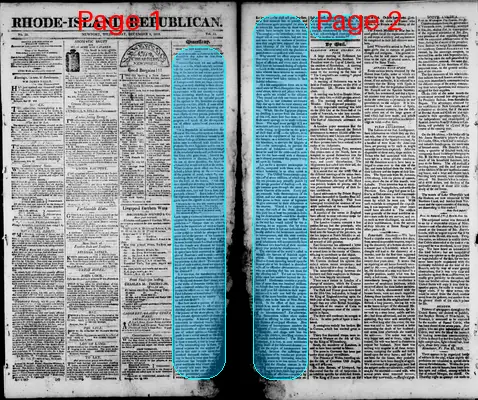
Editorial
December 8, 1819
The Rhode Island Republican
Newport, Newport County, Rhode Island
What is this article about?
Extract from Jeremiah B. Gilman's address to the New Hampshire Moral Society condemns intemperance as a widespread vice causing personal degradation, family ruin, crime, poverty, and societal desolation, comparing its toll unfavorably to dueling and Hindu suttee, urging patriotic action against it.
Merged-components note: Continuation of the extract from the address on intemperance across pages; relabeled to editorial as it is an opinionated piece on social issues.
Clippings

1 of 2
OCR Quality
85%
Good
Full Text
FROM THE NEW HAMPSHIRE PATRIOT.
Extract from an address delivered by Jeremiah B. Gilman, Esq. before the New Hampshire Moral Society
" But were we not suffering from recent evils, which naturally increase with the years of our republic, which belong to the luxuries and extravagance of prosperity, or which are adopted with the follies and fashions and refined population of Europe—still there are those existing amongst us truly alarming in their effects.
Permit me to name a single vice—a vice co-extensive with our country—a vice whose desolating march may be traced by its ravages from the splendid palaces of the opulent to the humblest dwelling of poverty—a vice, which, if none other existed in the land, by its degrading and destructive nature should arouse the utmost efforts of every patriot, philanthropist and christian to check its destroying progress—I speak of the intemperate use of ardent spirits !—Of DRUNKENNESS!!
" It is impossible to contemplate the effects of this vice, even upon an individual; but with the extremest torture to all the better feelings of human nature. Our fellow man is endowed with faculties to promote his own happiness and to rise in intellectual improvement to a knowledge of the wonderful works and perfections of that God who gave them. & Should he: by misfortune or disease, be deprived the use of those faculties, the heart is adamant that would not melt at the scene.
What emotions must affect us, then, to behold a fellow being in the exercise of all the powers of mind, voluntarily surrendering them and placing himself below the level of the brutes. " Oh that men should put an enemy in their mouths to steal away their brains"—to be now a sensible man, by and by a fool, and presently a beast." Keen indeed is then the reproach contained in the poet's panegyric upon the dignity of our nature :
" Where is the man, who with ennobling pride?
Beholds not his own nature I Where is he,
Who but with deep amazement, awe allied,
Must muse the mysteries of the human mind,
The miniature of Deity ?"
Look upon a victim to intemperance and suppose he has parents to witness his degradation—" Sharper than an adder's tooth is the ingratitude of such a thank-less child." Is he a husband father— the gulph in which he plunges is the grave too of the partner of his bosom. his unoffending offspring. And is this its most horrid feature ? Shall it be told that the female sex descend to invoke this curse ? That the scenes of domestic quiet have been converted to orgies of Bacchus ; and woman—woman herself not only a devotee, but ministering priestess at the altar! To arouse our dread of such a scene, must we approach the gulph to look upon the condition of the damned ?
It is too true. the transforming magic of intemperance has sometimes converted to " fiends and demons dire" those. who. in the walks of domestic virtue. are ever justly esteemed ministering angels to all alleviate the afflictions of our pilgrimage
Fatal influence of intoxication! If thou hadst no other name to be known by let us call thee devil!":
But how small a portion of this evil have we witnessed in its effect upon individual character or the domestic circle The poison of its atmosphere. like the fatal simoon, spreads universal desolation in its progress. A learned judge long conversant in criminal courts. has declared that nine tenths—and might have said nine hundredths of crime originate in the use of ardent spirits.—Almost every grade from a trivial assault to the foul murder commences first in drunkenness
Is there a tumult, a riot in your streets —The intoxicating cup is there.
The annual expense for the support of paupers in this state is now more than one hundred thousand dollars. Some may be found in your alms house misfortune has brought there.
great multitude who tenant these abodes of misery' will trace their. to its origin in the use of yonder penitentiary—as wearing out his existence
For larceny; — they shall tell you drunkenness first reduced him to penury, and drunkenness again prompted the attempt to relieve his necessities by those means which have brought him to his fate. The burglar, — the incendiary, the man-slayer will at once exclaim, had not reason been lost in the madness of intoxication they might have enjoyed the common blessings of life with their fellow men, unencumbered with the shackles of punishment—unpolluted with crime. Why should we affect surprise then, that every day brings with it a new catalogue of offences, and every court should send here an increased throng of culprits. —Look at the numerous poisoned fountains whence issue streams to contaminate the community, and cease to wonder that so many have fallen victims to their baleful influence.
At a fair computation there are in the small state of New Hampshire two thousand shops, taverns and places where ardent spirits are retailed to the citizens. They crowd not only our towns and villages, but in our remotest settlements they rise up to mar the rural scenery and blast the humble labors of honest industry: While, like the Egyptian plagues, no dwelling is secure from the intrusion of this evil, more fatal than these, it ever finds some apology to be made welcome there. The aged must partake of it as a stimulant necessary to their constitution —the young, as agreeable to the gaiety of their time of life; the epicure, as essential to the enjoyment of his feast; — the hungry, as a substitute for food; — the laborious, to alleviate the fatigues of toil; —the unoccupied, to prevent the lassitude of indolence.—In winter it must be used for the cold—and in summer for the heat—and with a thousand such absurd pretences this poison is urged upon its victims.
Let us for a moment contemplate its effects, compared with those evils over which humanity is so often called to weep. The United States contain a population of seven millions, of which possibly ten persons may annually perish by the savage practice of dueling.—A single instance goes through the most obscure Gazette of the union. Every pulpit resounds with denunciations of the crime, and our state and national assemblies pause in their career of legislation —to give utterance to their abhorrence of the custom. Would it be extravagant to say, that each of the dram shops in this state has at least ten persons in training or destruction ?—can it be doubted that every shop has one victim? But as the real fact would indeed be too alarming, let us suppose, that by every ten shops there is but one individual annually added to the hecatomb sacrificed to intemperance, and this state containing little more than two hundred thousand inhabitants will unconcernedly have witnessed two hundred of their number every year perish by drunkenness !
The attention of the world is called to witness the horrors of Asiatick superstition. The distressing scene of the Hindoo female throwing herself upon the funeral pile of her husband is described with all its afflictive circumstances—and who so unfeeling that has not tears for the affecting tale? Yet can we be moved by none but miseries beyond the Atlantick? Hindoostan contains a population of more than one hundred millions. Admit that two thousand of the number each year fall victims to their superstition—it is only one half the proportion of the more horrible sacrifice to intemperance in the State of New-Hampshire. Is the effect of their custom, which is so much smaller in amount, made equal by the greater aggravation its circumstances? Far otherwise. The disconsolate widow there makes herself an offering to what she believes the dictates of conjugal affection. Here the votary of intemperance sunders the aliments of love—violates every feeling of humanity, and drags with him his wife or his children, unwilling victims to his cruel conflagration ! The Hindoo ceremony, it is true, at once terminates the death of the inebriated devotee ;— but are the orgies of intemperance less mindful, because the sufferings and wretchedness of its votaries are protracted—constantly increasing miseries, the event is no less certain ? But should the Hindoo custom is the consequence of pagan superstition. It is their faith they practice. of affection—required by sanctioned by their religion—and, as they believe, service
Extract from an address delivered by Jeremiah B. Gilman, Esq. before the New Hampshire Moral Society
" But were we not suffering from recent evils, which naturally increase with the years of our republic, which belong to the luxuries and extravagance of prosperity, or which are adopted with the follies and fashions and refined population of Europe—still there are those existing amongst us truly alarming in their effects.
Permit me to name a single vice—a vice co-extensive with our country—a vice whose desolating march may be traced by its ravages from the splendid palaces of the opulent to the humblest dwelling of poverty—a vice, which, if none other existed in the land, by its degrading and destructive nature should arouse the utmost efforts of every patriot, philanthropist and christian to check its destroying progress—I speak of the intemperate use of ardent spirits !—Of DRUNKENNESS!!
" It is impossible to contemplate the effects of this vice, even upon an individual; but with the extremest torture to all the better feelings of human nature. Our fellow man is endowed with faculties to promote his own happiness and to rise in intellectual improvement to a knowledge of the wonderful works and perfections of that God who gave them. & Should he: by misfortune or disease, be deprived the use of those faculties, the heart is adamant that would not melt at the scene.
What emotions must affect us, then, to behold a fellow being in the exercise of all the powers of mind, voluntarily surrendering them and placing himself below the level of the brutes. " Oh that men should put an enemy in their mouths to steal away their brains"—to be now a sensible man, by and by a fool, and presently a beast." Keen indeed is then the reproach contained in the poet's panegyric upon the dignity of our nature :
" Where is the man, who with ennobling pride?
Beholds not his own nature I Where is he,
Who but with deep amazement, awe allied,
Must muse the mysteries of the human mind,
The miniature of Deity ?"
Look upon a victim to intemperance and suppose he has parents to witness his degradation—" Sharper than an adder's tooth is the ingratitude of such a thank-less child." Is he a husband father— the gulph in which he plunges is the grave too of the partner of his bosom. his unoffending offspring. And is this its most horrid feature ? Shall it be told that the female sex descend to invoke this curse ? That the scenes of domestic quiet have been converted to orgies of Bacchus ; and woman—woman herself not only a devotee, but ministering priestess at the altar! To arouse our dread of such a scene, must we approach the gulph to look upon the condition of the damned ?
It is too true. the transforming magic of intemperance has sometimes converted to " fiends and demons dire" those. who. in the walks of domestic virtue. are ever justly esteemed ministering angels to all alleviate the afflictions of our pilgrimage
Fatal influence of intoxication! If thou hadst no other name to be known by let us call thee devil!":
But how small a portion of this evil have we witnessed in its effect upon individual character or the domestic circle The poison of its atmosphere. like the fatal simoon, spreads universal desolation in its progress. A learned judge long conversant in criminal courts. has declared that nine tenths—and might have said nine hundredths of crime originate in the use of ardent spirits.—Almost every grade from a trivial assault to the foul murder commences first in drunkenness
Is there a tumult, a riot in your streets —The intoxicating cup is there.
The annual expense for the support of paupers in this state is now more than one hundred thousand dollars. Some may be found in your alms house misfortune has brought there.
great multitude who tenant these abodes of misery' will trace their. to its origin in the use of yonder penitentiary—as wearing out his existence
For larceny; — they shall tell you drunkenness first reduced him to penury, and drunkenness again prompted the attempt to relieve his necessities by those means which have brought him to his fate. The burglar, — the incendiary, the man-slayer will at once exclaim, had not reason been lost in the madness of intoxication they might have enjoyed the common blessings of life with their fellow men, unencumbered with the shackles of punishment—unpolluted with crime. Why should we affect surprise then, that every day brings with it a new catalogue of offences, and every court should send here an increased throng of culprits. —Look at the numerous poisoned fountains whence issue streams to contaminate the community, and cease to wonder that so many have fallen victims to their baleful influence.
At a fair computation there are in the small state of New Hampshire two thousand shops, taverns and places where ardent spirits are retailed to the citizens. They crowd not only our towns and villages, but in our remotest settlements they rise up to mar the rural scenery and blast the humble labors of honest industry: While, like the Egyptian plagues, no dwelling is secure from the intrusion of this evil, more fatal than these, it ever finds some apology to be made welcome there. The aged must partake of it as a stimulant necessary to their constitution —the young, as agreeable to the gaiety of their time of life; the epicure, as essential to the enjoyment of his feast; — the hungry, as a substitute for food; — the laborious, to alleviate the fatigues of toil; —the unoccupied, to prevent the lassitude of indolence.—In winter it must be used for the cold—and in summer for the heat—and with a thousand such absurd pretences this poison is urged upon its victims.
Let us for a moment contemplate its effects, compared with those evils over which humanity is so often called to weep. The United States contain a population of seven millions, of which possibly ten persons may annually perish by the savage practice of dueling.—A single instance goes through the most obscure Gazette of the union. Every pulpit resounds with denunciations of the crime, and our state and national assemblies pause in their career of legislation —to give utterance to their abhorrence of the custom. Would it be extravagant to say, that each of the dram shops in this state has at least ten persons in training or destruction ?—can it be doubted that every shop has one victim? But as the real fact would indeed be too alarming, let us suppose, that by every ten shops there is but one individual annually added to the hecatomb sacrificed to intemperance, and this state containing little more than two hundred thousand inhabitants will unconcernedly have witnessed two hundred of their number every year perish by drunkenness !
The attention of the world is called to witness the horrors of Asiatick superstition. The distressing scene of the Hindoo female throwing herself upon the funeral pile of her husband is described with all its afflictive circumstances—and who so unfeeling that has not tears for the affecting tale? Yet can we be moved by none but miseries beyond the Atlantick? Hindoostan contains a population of more than one hundred millions. Admit that two thousand of the number each year fall victims to their superstition—it is only one half the proportion of the more horrible sacrifice to intemperance in the State of New-Hampshire. Is the effect of their custom, which is so much smaller in amount, made equal by the greater aggravation its circumstances? Far otherwise. The disconsolate widow there makes herself an offering to what she believes the dictates of conjugal affection. Here the votary of intemperance sunders the aliments of love—violates every feeling of humanity, and drags with him his wife or his children, unwilling victims to his cruel conflagration ! The Hindoo ceremony, it is true, at once terminates the death of the inebriated devotee ;— but are the orgies of intemperance less mindful, because the sufferings and wretchedness of its votaries are protracted—constantly increasing miseries, the event is no less certain ? But should the Hindoo custom is the consequence of pagan superstition. It is their faith they practice. of affection—required by sanctioned by their religion—and, as they believe, service
What sub-type of article is it?
Temperance
Moral Or Religious
Social Reform
What keywords are associated?
Intemperance
Drunkenness
Ardent Spirits
Moral Society
Crime Origins
Pauperism
Temperance Movement
New Hampshire
What entities or persons were involved?
Jeremiah B. Gilman
New Hampshire Moral Society
Editorial Details
Primary Topic
Dangers Of Intemperance And Drunkenness
Stance / Tone
Moral Exhortation Against Drunkenness
Key Figures
Jeremiah B. Gilman
New Hampshire Moral Society
Key Arguments
Intemperate Use Of Ardent Spirits Degrades Individuals Below Brutes
Drunkenness Destroys Families, Affecting Parents, Spouses, And Children
Women Sometimes Become Victims Or Enablers Of Intemperance
Nine Tenths Of Crimes Originate In Drunkenness
Intemperance Causes Poverty, Leading To Pauperism And Imprisonment
Two Thousand Shops In New Hampshire Retail Ardent Spirits, Spreading The Vice
Annual Deaths From Intemperance Exceed Those From Dueling And Rival Hindu Suttee In Proportion
Intemperance Demands Utmost Efforts From Patriots, Philanthropists, And Christians To Check It