Thank you for visiting SNEWPapers!
Sign up free
Literary
June 3, 1929
The Ironton News
Ironton, Lawrence County, Ohio
What is this article about?
In Moisson during the French Revolution, Citizen Lauzet advises Deseze to stay loyal to the government before ordering his family's deportation to Paris under armed escort. On a stormy market day, the invalid Citizeness Deseze and daughter Madeleine are forcibly removed from home amid crowd sympathy, overseen by Lauzet and Chauvelin.
Clipping
OCR Quality
85%
Good
Full Text
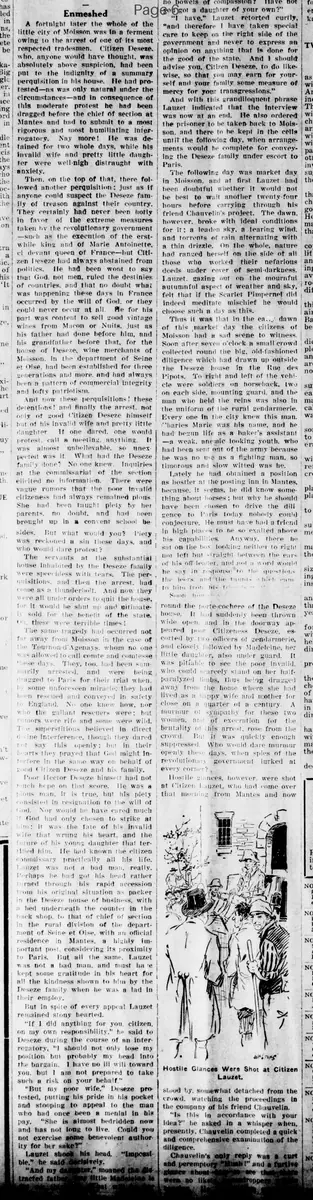
"I have" Lauzet retorted curtly. "and therefore I have taken special care to keep on the right side of the government and never to express an opinion on anything that is done for the good of the state. And I should advise you, Citizen Deseze, to do likewise, so that you may earn for yourself and your family some measure of mercy for your transgressions." And with this grandiloquent phrase Lauzet indicated that the interview was now at an end. He also ordered the prisoner to be taken back to Moisson, and there to be kept in the cells until the following day, when arrangements would be complete for conveying the Deseze family under escort to Paris. The following day was market day in Moisson, and at first Lauzet had been doubtful whether it would not be best to wait another twenty-four hours before carrying through his friend Chauvelin's project. The dawn, however, broke with ideal conditions for it; a leaden sky, a tearing wind, and torrents of rain alternating with a thin drizzle. On the whole, nature had ranged herself on the side of all those who worked their nefarious deeds under cover of semi-darkness. Lauzet, gazing out on the mournful autumnal aspect of weather and sky, felt that if the Scarlet Pimpernel did indeed meditate mischief he would choose such a day as this. Thus it was that in the early dawn of this market day the citizens of Moisson had a sad scene to witness. Soon after seven o'clock a small crowd collected round the big, old-fashioned diligence which had drawn up outside the Deseze house in the Rue des Pipots. To right and left of the vehicle were soldiers on horseback, two on each side, mounting guard, and the man who held the reins was also in the uniform of the rural gendarmerie. Every one in the town knew this man. Charles Marie was his name, and he had begun life as a baker's assistant -- a weak, anemic looking youth, who had been sent out of the army because he was no use as a fighting man, so timorous and slow witted was he. Lately he had obtained a position as hostler at the posting inn in Mantes, because, it seems, he did know something about horses; but why he should have been chosen to drive the diligence to Paris today nobody could conjecture. He must have had a friend in high places to be so exalted above his capabilities. Any way, there he sat on the box, looking neither to right nor left but straight between the ears of his off leader, and not a word would he say in response to the questions the jeers and the taunts hurled to him from his friends. Soon around the porte-cochere of the Deseze house. It had suddenly been thrown wide open, and in the doorway appeared poor Citizeness Deseze, escorted by two officers of gendarmerie, and closely followed by Madeleine, her little daughter, also under guard. It was pitiable to see the poor invalid, who could scarcely stand on her half-paralyzed limbs, thus being dragged away from the home where she had lived as a happy wife and mother for close on a quarter of a century. A murmur of sympathy for these two women, and of execration for the brutality of this arrest, rose from the crowd. But it was quickly enough suppressed. Who would dare murmur openly these days, when spies of the revolutionary government lurked at every corner? Hostile glances, however, were shot at Citizen Lauzet, who had come over that morning from Mantes and now stood by, somewhat detached from the crowd, watching the proceedings in the company of his friend Chauvelin. "Is this in accordance with your idea?" he asked in a whisper when, presently, Chauvelin completed a quick and comprehensive examination of the diligence. Chauvelin's only reply was a curt and peremptory "Hush?" and a furtive glance about.
What sub-type of article is it?
Prose Fiction
What themes does it cover?
Political
Taxation Oppression
Liberty Freedom
What keywords are associated?
French Revolution
Arrest Scene
Family Deportation
Revolutionary Oppression
Public Sympathy
Literary Details
Key Lines
"I Have" Lauzet Retorted Curtly. "And Therefore I Have Taken Special Care To Keep On The Right Side Of The Government And Never To Express An Opinion On Anything That Is Done For The Good Of The State. And I Should Advise You, Citizen Deseze, To Do Likewise, So That You May Earn For Yourself And Your Family Some Measure Of Mercy For Your Transgressions."
It Was Pitiable To See The Poor Invalid, Who Could Scarcely Stand On Her Half Paralyzed Limbs, Thus Being Dragged Away From The Home Where She Had Lived As A Happy Wife And Mother For Close On A Quarter Of A Century.
A Murmur Of Sympathy For These Two Women, And Of Execration For The Brutality Of This Arrest, Rose From The Crowd But It Was Quickly Enough Suppressed. Who Would Dare Murmur Openly These Days, When Spies Of The Revolutionary Government Lurked At Every Corner?