Thank you for visiting SNEWPapers!
Sign up free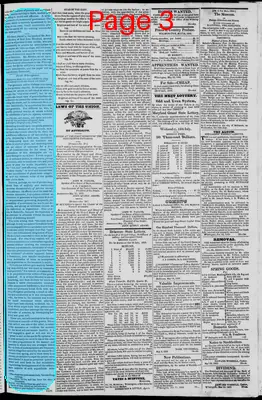
Letter to Editor
June 1, 1826
The Wilmingtonian, And Delaware Advertiser
Wilmington, New Castle County, Delaware
What is this article about?
Editorial commentary on economic inequality under monarchy contrasts with republican ideals, followed by a subscription notice for the Wilmingtonian newspaper, and a moral letter decrying gossip and slander against absent persons as a destructive vice.
Clipping

OCR Quality
95%
Excellent
Full Text
with all the misery of poverty and wretchedness, literally starving to death, another part is rolling in wealth and affluence. A striking picture of a monarchical government. The King, in one year, would comfortably provide for nearly all his starving subjects for the same period.
We have placed in the hands of Mr. Robert Rhodes, of Red Lion Hundred, several accounts of persons in that vicinity, who are considerably in arrears for subscriptions to this paper; and who, we hope, will feel it convenient to settle such accounts when called upon. A little cash would be very acceptable at this time. Mr. Rhodes, as our agent, will also take the names of persons who may wish to become subscribers to the Wilmingtonian: for $2 he will give a receipt for one year's subscription, and the paper will be immediately forwarded.
For the Wilmingtonian.
"If good we plant not, vice will fill the place.
And rankest weeds the richest soil deface."
The generous author disdains descending to low personal ribaldry. In his communications, he selects no individual on whom to empty the "vial of his wrath"; but he occupies the broad base of generalization—he endeavors to correct the errors of one by advising the whole, and he commends their actions individually, by approbating their conduct generally. Far different he, who, to gratify personal enmity, or satiate a thirst for retaliation of private injuries sustained,
"Stalks, and stamps, and stares, and writes
With all the prettiness of feigned alarm
And anger, insignificantly fierce;"
Obtruding himself upon the public attention through the medium of our Journals, making them the vehicle whereby he sheds his pestiferous influence on all surrounding objects, dispensing a libel here, intentionally trespassing upon the tenderest sensation in another place, and rendering some one an object of contempt for a few, or of commiseration for the many. But inclinations of this description are entirely foreign to my object; I write to gratify no personal malice, to redress no private grievances, only to eradicate vice, and plant good; to pass the scythe impartially over the "rich soil" now affording support to the "rankest weeds," to level and convert them to the nourishment of plants more congenial with the intrinsic value of the garden that yields them.
There is, perhaps, no vice of greater magnitude than of wilfully and maliciously speaking disrespectfully of persons during their absence; its effects are of the most deleterious character, it prejudices without an interview, it generates a disposition to avoid an acquaintance, preventing, frequently, the possibility of scrutinizing the merits and demerits, and giving an unbiased decision on the individual so stigmatized. This practice is dastardly, because the reputation of an absentee is attacked without the opportunity of defending himself.
The evils arising from "tea-table slang" although it may not appear formidable to the parties engaged, leaves a prejudice upon their minds less easily deterged than that "spot" which the hallucinated imagination of Lady Macbeth had conceived to exist on her spotless hand. For who of my readers will sit attentive auditors to a conversation regarding persons without imbibing the substance of opinions and sentiments, the shadow of which was only presented to you? upon this "hear say evidence" of certain supposed facts as a foundation, your fanciful imagination erects multitudes of ideas as incongruous and ungenerous as the basement is unjust.
"I think you will not gain much by becoming acquainted, nor lose much by remaining unacquainted," is a remark as customary, as it is prejudicial to the welfare of the person spoken of. It is at least intended to convey something, and from its tenor we would not suppose a warm commendation concealed under an apparent indifference, that will suddenly and gloriously break forth with dazzling effulgence producing a result as effectual and satisfactory as it was unexpected;
—No, far from it; the intention was to chill the social intercourse which otherwise might have been elicited, to abolish the interest which might have been permanently established, and thus interrupt the wise general order of creation, by intercepting harmony and good will.
These are, and will continue to be the consequences of remarks of this genera. You adopt either one side or the other, to assent to the accusation or vindicate the accused; for the mind will not remain inactive, it is ever engaged in good or evil, and we are
"prone to evil as the sparks fly upwards"—
at least certainly we revel in one or the other in a ratio proportionate to the manner and quantity in which they are arranged before us;—a train of contemplations are frequently excited altogether unworthy the source from whence they spring, and to them there is no remedy, no antidote to expel the poison; when once inhaled it must be permitted quietly to fester and send forth its foul exhalations, engendering the unhappiness of all the unfortunate subjects of such unjustifiable strictures.
"Who steals my purse steals trash, 'tis something, nothing;
'Twas mine, 'tis his, and has been slave to thousands.
But he, who filches from my good name,
Robs me of that, which not enriches him,
But makes me poor indeed."
—SHAKSPEARE.
CLIO.
We have placed in the hands of Mr. Robert Rhodes, of Red Lion Hundred, several accounts of persons in that vicinity, who are considerably in arrears for subscriptions to this paper; and who, we hope, will feel it convenient to settle such accounts when called upon. A little cash would be very acceptable at this time. Mr. Rhodes, as our agent, will also take the names of persons who may wish to become subscribers to the Wilmingtonian: for $2 he will give a receipt for one year's subscription, and the paper will be immediately forwarded.
For the Wilmingtonian.
"If good we plant not, vice will fill the place.
And rankest weeds the richest soil deface."
The generous author disdains descending to low personal ribaldry. In his communications, he selects no individual on whom to empty the "vial of his wrath"; but he occupies the broad base of generalization—he endeavors to correct the errors of one by advising the whole, and he commends their actions individually, by approbating their conduct generally. Far different he, who, to gratify personal enmity, or satiate a thirst for retaliation of private injuries sustained,
"Stalks, and stamps, and stares, and writes
With all the prettiness of feigned alarm
And anger, insignificantly fierce;"
Obtruding himself upon the public attention through the medium of our Journals, making them the vehicle whereby he sheds his pestiferous influence on all surrounding objects, dispensing a libel here, intentionally trespassing upon the tenderest sensation in another place, and rendering some one an object of contempt for a few, or of commiseration for the many. But inclinations of this description are entirely foreign to my object; I write to gratify no personal malice, to redress no private grievances, only to eradicate vice, and plant good; to pass the scythe impartially over the "rich soil" now affording support to the "rankest weeds," to level and convert them to the nourishment of plants more congenial with the intrinsic value of the garden that yields them.
There is, perhaps, no vice of greater magnitude than of wilfully and maliciously speaking disrespectfully of persons during their absence; its effects are of the most deleterious character, it prejudices without an interview, it generates a disposition to avoid an acquaintance, preventing, frequently, the possibility of scrutinizing the merits and demerits, and giving an unbiased decision on the individual so stigmatized. This practice is dastardly, because the reputation of an absentee is attacked without the opportunity of defending himself.
The evils arising from "tea-table slang" although it may not appear formidable to the parties engaged, leaves a prejudice upon their minds less easily deterged than that "spot" which the hallucinated imagination of Lady Macbeth had conceived to exist on her spotless hand. For who of my readers will sit attentive auditors to a conversation regarding persons without imbibing the substance of opinions and sentiments, the shadow of which was only presented to you? upon this "hear say evidence" of certain supposed facts as a foundation, your fanciful imagination erects multitudes of ideas as incongruous and ungenerous as the basement is unjust.
"I think you will not gain much by becoming acquainted, nor lose much by remaining unacquainted," is a remark as customary, as it is prejudicial to the welfare of the person spoken of. It is at least intended to convey something, and from its tenor we would not suppose a warm commendation concealed under an apparent indifference, that will suddenly and gloriously break forth with dazzling effulgence producing a result as effectual and satisfactory as it was unexpected;
—No, far from it; the intention was to chill the social intercourse which otherwise might have been elicited, to abolish the interest which might have been permanently established, and thus interrupt the wise general order of creation, by intercepting harmony and good will.
These are, and will continue to be the consequences of remarks of this genera. You adopt either one side or the other, to assent to the accusation or vindicate the accused; for the mind will not remain inactive, it is ever engaged in good or evil, and we are
"prone to evil as the sparks fly upwards"—
at least certainly we revel in one or the other in a ratio proportionate to the manner and quantity in which they are arranged before us;—a train of contemplations are frequently excited altogether unworthy the source from whence they spring, and to them there is no remedy, no antidote to expel the poison; when once inhaled it must be permitted quietly to fester and send forth its foul exhalations, engendering the unhappiness of all the unfortunate subjects of such unjustifiable strictures.
"Who steals my purse steals trash, 'tis something, nothing;
'Twas mine, 'tis his, and has been slave to thousands.
But he, who filches from my good name,
Robs me of that, which not enriches him,
But makes me poor indeed."
—SHAKSPEARE.
CLIO.
What sub-type of article is it?
Ethical Moral
Reflective
Social Critique
What themes does it cover?
Morality
Social Issues
What keywords are associated?
Gossip
Reputation
Moral Vice
Absentee Slander
Tea Table Slang
Social Prejudice
What entities or persons were involved?
Clio
The Wilmingtonian
Letter to Editor Details
Author
Clio
Recipient
The Wilmingtonian
Main Argument
the letter condemns the vice of maliciously speaking disrespectfully about absent individuals, such as through gossip or 'tea-table slang,' as it unfairly prejudices reputations without allowing defense and fosters social discord; it advocates for general moral improvement over personal attacks.
Notable Details
Quotes Poetry On Planting Good Versus Vice
References Shakespeare On The Value Of Reputation
Mentions Lady Macbeth's Imagined Spot As Metaphor For Indelible Prejudice