Thank you for visiting SNEWPapers!
Sign up free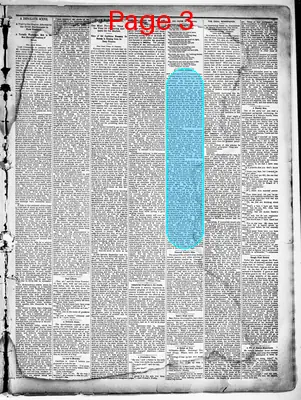
Literary
October 22, 1886
The Hope Pioneer
Hope, Steele County, Griggs County, North Dakota
What is this article about?
Bill Arp's sketch describes the laborious yet cheerful task of pulling fodder in rural fields, highlighting the value of willing labor, contentment, and adaptation to one's circumstances for success and reward.
Clipping
OCR Quality
95%
Excellent
Full Text
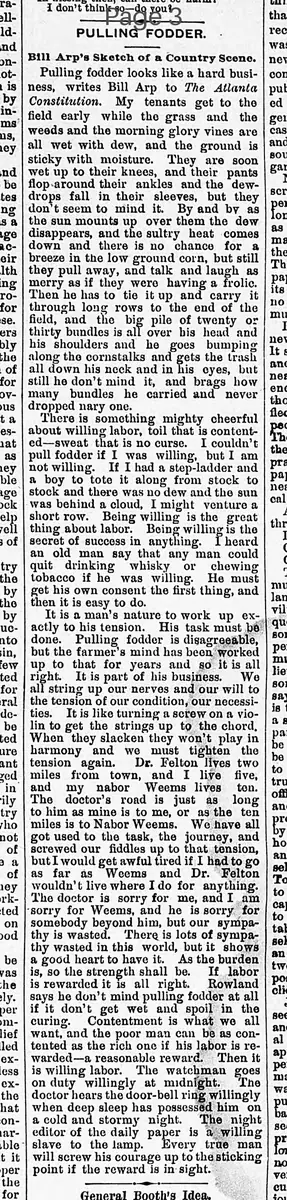
PULLING FODDER.
Bill Arp's Sketch of a Country Scene.
Pulling fodder looks like a hard business, writes Bill Arp to The Atlanta Constitution. My tenants get to the field early while the grass and the weeds and the morning glory vines are all wet with dew, and the ground is sticky with moisture. They are soon wet up to their knees, and their pants flop around their ankles and the dew-drops fall in their sleeves, but they don't seem to mind it. By and by as the sun mounts up over them the dew disappears, and the sultry heat comes down and there is no chance for a breeze in the low ground corn, but still they pull away, and talk and laugh as merry as if they were having a frolic. Then he has to tie it up and carry it through long rows to the end of the field, and the big pile of twenty or thirty bundles is all over his head and his shoulders and he goes bumping along the cornstalks and gets the trash all down his neck and in his eyes, but still he don't mind it, and brags how many bundles he carried and never dropped nary one.
There is something mighty cheerful about willing labor, toil that is contented—sweat that is no curse. I couldn't pull fodder if I was willing, but I am not willing. If I had a step-ladder and a boy to tote it along from stock to stock and there was no dew and the sun was behind a cloud, I might venture a short row. Being willing is the great thing about labor. Being willing is the secret of success in anything. I heard an old man say that any man could quit drinking whisky or chewing tobacco if he was willing. He must get his own consent the first thing, and then it is easy to do.
It is a man's nature to work up exactly to his tension. His task must be done. Pulling fodder is disagreeable, but the farmer's mind has been worked up to that for years and so it is all right. It is part of his business. We all string up our nerves and our will to the tension of our condition, our necessities. It is like turning a screw on a violin to get the strings up to the chord. When they slacken they won't play in harmony and we must tighten the tension again. Dr. Felton lives two miles from town, and I live five, and my neighbor Weems lives ten. The doctor's road is just as long to him as mine is to me, or as the ten miles is to Neighbor Weems. We have all got used to the task, the journey, and screwed our fiddles up to that tension, but I would get awful tired if I had to go as far as Weems and Dr. Felton wouldn't live where I do for anything. The doctor is sorry for me, and I am sorry for Weems, and he is sorry for somebody beyond him, but our sympathy is wasted. There is lots of sympathy wasted in this world, but it shows a good heart to have it. As the burden is, so the strength shall be. If labor is rewarded it is all right. Rowland says he don't mind pulling fodder at all if it don't get wet and spoil in the curing. Contentment is what we all want, and the poor man can be as contented as the rich one if his labor is rewarded—a reasonable reward. Then it is willing labor. The watchman goes on duty willingly at midnight. The doctor hears the door-bell ring willingly when deep sleep has possessed him on a cold and stormy night. The night editor of the daily paper is a willing slave to the lamp. Every true man will screw his courage up to the sticking point if the reward is in sight.
Bill Arp's Sketch of a Country Scene.
Pulling fodder looks like a hard business, writes Bill Arp to The Atlanta Constitution. My tenants get to the field early while the grass and the weeds and the morning glory vines are all wet with dew, and the ground is sticky with moisture. They are soon wet up to their knees, and their pants flop around their ankles and the dew-drops fall in their sleeves, but they don't seem to mind it. By and by as the sun mounts up over them the dew disappears, and the sultry heat comes down and there is no chance for a breeze in the low ground corn, but still they pull away, and talk and laugh as merry as if they were having a frolic. Then he has to tie it up and carry it through long rows to the end of the field, and the big pile of twenty or thirty bundles is all over his head and his shoulders and he goes bumping along the cornstalks and gets the trash all down his neck and in his eyes, but still he don't mind it, and brags how many bundles he carried and never dropped nary one.
There is something mighty cheerful about willing labor, toil that is contented—sweat that is no curse. I couldn't pull fodder if I was willing, but I am not willing. If I had a step-ladder and a boy to tote it along from stock to stock and there was no dew and the sun was behind a cloud, I might venture a short row. Being willing is the great thing about labor. Being willing is the secret of success in anything. I heard an old man say that any man could quit drinking whisky or chewing tobacco if he was willing. He must get his own consent the first thing, and then it is easy to do.
It is a man's nature to work up exactly to his tension. His task must be done. Pulling fodder is disagreeable, but the farmer's mind has been worked up to that for years and so it is all right. It is part of his business. We all string up our nerves and our will to the tension of our condition, our necessities. It is like turning a screw on a violin to get the strings up to the chord. When they slacken they won't play in harmony and we must tighten the tension again. Dr. Felton lives two miles from town, and I live five, and my neighbor Weems lives ten. The doctor's road is just as long to him as mine is to me, or as the ten miles is to Neighbor Weems. We have all got used to the task, the journey, and screwed our fiddles up to that tension, but I would get awful tired if I had to go as far as Weems and Dr. Felton wouldn't live where I do for anything. The doctor is sorry for me, and I am sorry for Weems, and he is sorry for somebody beyond him, but our sympathy is wasted. There is lots of sympathy wasted in this world, but it shows a good heart to have it. As the burden is, so the strength shall be. If labor is rewarded it is all right. Rowland says he don't mind pulling fodder at all if it don't get wet and spoil in the curing. Contentment is what we all want, and the poor man can be as contented as the rich one if his labor is rewarded—a reasonable reward. Then it is willing labor. The watchman goes on duty willingly at midnight. The doctor hears the door-bell ring willingly when deep sleep has possessed him on a cold and stormy night. The night editor of the daily paper is a willing slave to the lamp. Every true man will screw his courage up to the sticking point if the reward is in sight.
What sub-type of article is it?
Essay
What themes does it cover?
Agriculture Rural
Moral Virtue
What keywords are associated?
Pulling Fodder
Rural Labor
Willing Work
Contentment
Country Life
Moral Lesson
What entities or persons were involved?
Bill Arp
Literary Details
Title
Pulling Fodder.
Author
Bill Arp
Subject
Sketch Of A Country Scene
Key Lines
There Is Something Mighty Cheerful About Willing Labor, Toil That Is Contented—Sweat That Is No Curse.
Being Willing Is The Great Thing About Labor. Being Willing Is The Secret Of Success In Anything.
We All String Up Our Nerves And Our Will To The Tension Of Our Condition, Our Necessities.
As The Burden Is, So The Strength Shall Be.
Contentment Is What We All Want, And The Poor Man Can Be As Contented As The Rich One If His Labor Is Rewarded—A Reasonable Reward.