Thank you for visiting SNEWPapers!
Sign up free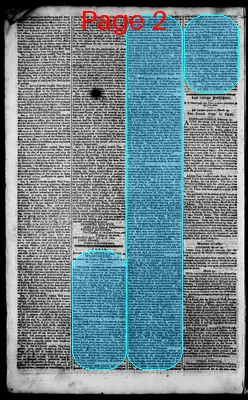
Literary
May 28, 1800
The Providence Journal, And Town And Country Advertiser
Providence, Providence County, Rhode Island
What is this article about?
Extracts from Louis Fontanes' funeral oration for George Washington, delivered in Paris on February 11, 1800. It praises Washington's role in the American Revolution, his virtues of moderation and humanity, and calls for peace and alliance between France and America, honoring him alongside French heroes like Turenne and Condé.
Clipping
OCR Quality
85%
Good
Full Text
Extracts from the FUNERAL ORATION
WASHINGTON
Delivered in the Temple of Mars, February 11
By Louis Fontanes.
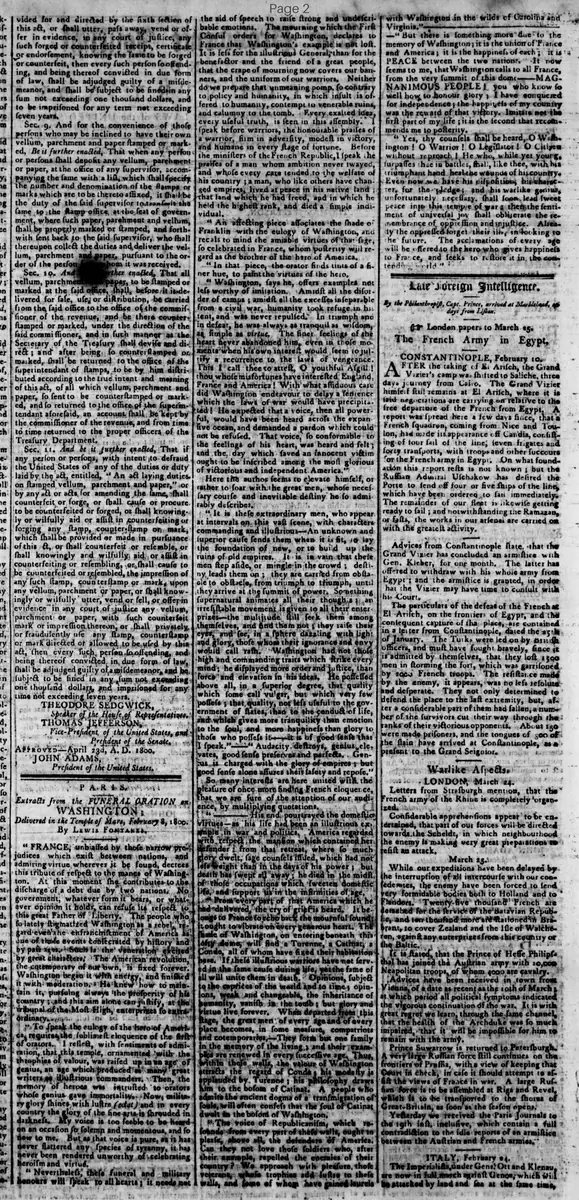
"FRANCE, unbiased by those narrow prejudices which exist between nations, and admiring virtue, wherever it be found, decrees this tribute of respect to the manes of Washington. At this moment she contributes to the discharge of a debt due by two nations. No government, whatever form it bears, or whatever opinion it holds, can refuse its respect to this great Father of Liberty. The people who so lately stigmatized Washington as a rebel, regard even the enfranchisement of America one of those events consecrated by history and by past ages. Such is the veneration excited by great characters. The American revolution, the contemporary of our own, is fixed forever. Washington began it with energy, and finished it with moderation. He knew how to maintain it, pursuing always the prosperity of his country; grand his aim alone can justify, at the tribunal of the Most High, enterprises so extraordinary.
To speak the eulogy of the hero of America, requires the sublime eloquence of the first of orators. I reflect with sentiments of admiration, that this temple, ornamented with the trophies of valour, was raised up in an age of genius, an age which produced as many great writers as illustrious commanders. When, the memory of heroes was intrusted to orators whose genius gave immortality. Now military glory shines with lustre (etc.) and in every country the glory of the fine arts is shrouded in darkness. My voice is too feeble to be heard on an occasion so solemn and momentous, and so new to me. But as that voice is pure, as it has never flattered any species of tyranny, it has never been rendered unworthy of celebrating heroism and virtue.
Nevertheless, these funeral and military honours will speak to all hearts; it needs not the aid of speech to raise strong and indescribable emotions. The mourning which the First Consul orders for Washington, declares to France that Washington's example is not lost. It is less for the illustrious General than for the benefactor and the friend of a great people, that the crape of mourning now covers our banners, and the uniform of our warriors. Neither do we prepare that unmeaning pomp, so contrary to policy and humanity, in which insult is offered to humanity, contempt to venerable ruins and calumny to the tomb. Every exalted idea every useful truth, is seen in this assembly. Speak before warriors, the honourable praises of a warrior, firm in adversity, modest in victory, and humane in every stage of fortune. Before the ministers of the French Republic, I speak the praises of a man whom ambition never swayed, and whose every care tended to the welfare of his country; a man, who like others have changed empires; lived at peace in his native land; that land which he had freed, and in which he held the highest rank, and died a simple individual.
As affecting piece associates the shade of Franklin with the eulogy of Washington, and recalls to mind the amiable virtues of that age, so celebrated in France, whom posterity will regard as the brother of the hero of America.
In that piece, the orator finds tints of a higher hue, to paint the virtues of the hero. "Washington, says he, offers examples not less worthy of imitation. Amidst all the disorder of camps; amidst all the excess inseparable from a civil war, humanity took refuge in his tent, and was never repulsed. In triumph and in defeat, he was always as tranquil as wisdom, as simple as virtue. The finer feelings of the heart never abandoned him, even in those moments when his own interest would seem to justify a recurrence to the laws of vengeance. This I call thee to attest, O youthful Asgill! thou whose misfortunes have interested England, France and America! With what assiduous care did Washington endeavour to delay a sentence which the laws of war would have precipitated! He expected that a voice, then all powerful, would have been heard across the expansive ocean, and demanded a pardon which could not be refused. That voice, so conformable to the feelings of his heart, was heard and felt; and the day which saved an innocent victim ought to be inscribed among the most glorious of victorious and independent America."
Here the author seems to elevate himself, or rather to soar with the great men, whose necessary course, and inevitable destiny, he so admirably describes. It is these extraordinary men, who appear at intervals on this vast scene, with characters commanding and illustrious. An unknown and superior cause sends them when it is time to lay the foundation of new, or to build up the ruins of old empires. It is in vain that these men step aside, or mingle in the crowd; destiny leads them on; they are carried from obstacle to obstacle, from triumph to triumph, until they arrive at the summit of power. Something supernatural animates all their thoughts; an irresistible movement is given to all their enterprises; the multitude still seek them among themselves, and find them not; they raise their eyes, and see, in a sphere dazzling with light and glory, those whom their ignorance and envy would call rash. Washington had not those high and commanding traits which strike every mind: he displayed more order and justice, than force and elevation in his ideas. He possessed above all, in a superior degree, that quality which some call vulgar, but which very few possess; that quality, not less useful to the government of nations, than to the conduct of life, and which gives more tranquility than emotion to the soul, and more happiness than glory to those who possess it; it is of good sense that I speak. "Audacity destroys, genius elevates, good sense preserves and perfects. Genius is charged with the glory of empires: but good sense alone assures their safety and repose."
So many interests are here united with the pleasure of once more finding French eloquence, that we are sure of the attention of our audience, by multiplying quotations.
His end portrayed the domestic piety in war and politics. America regarded with respect the mansion which contained her defender! from that retreat, where so much glory dwelt, sage counsels issued, which had not less weight than in the days of his power; but death has wept all away he died in the midst of those occupations which sweeten domestic life, and support us in the infirmities of age. From every part of that America which he had delivered the cry of grief is heard. It belongs to France to echo back the mournful sound thought to vibrate on every generous heart. The shade of Washington, on entering beneath this dome, will find a Turenne, a Catinat; a Condé, all of whom have fixed their habitation here. If held illustrious warriors have not served in the same cause during life, yet the fame of all will unite them in death. Opinions, subject to the caprices of the world and to times opinions, weak and changeable, the inheritance of humanity, vanish in the tomb; but glory and Virtue live forever. When departed from this stage, the great men of every age and of every place becomes, in some measure, compatriots and contemporaries, They form but one family in the memory of the living; and their examples are renewed in every successive age. Thus, within these walls, the valour of Washington attracts the regard of Condé; his modesty is applauded by Turenne; his philosophy draws him to the bosom of Catinat. A people who admire the ancient dogma of transmigration of souls, will often confess that the Soul of Catinat dwelt in the bosom of Washington.
The voice of Republicanism, which resounds from every part of these walls, ought to please, above all, the defenders of America! Can they not love those soldiers who, after their example, repelled the enemies of their country? We approach with pleasure, those veterans, whose trophies add lustre to these walls, and some of whom have gained laurels
with Washington in the wilds of Canada, Virginia.
But there is something more due to the memory of Washington; it is the union of France and America; it is the happiness of each; it is PEACE between the two nations. It now seems to me, that Washington calls to all France, from the very summit of this dome—MGNANIMOUS PEOPLE! you who know so well how to honour glory; I have conquered for independence; the happiness of my country was the reward of that victory. Imitate not the first part of my life; it is the second that recommends me to posterity.
Yes, thy counsels shall be heard, O Washington! O Warrior! O Legislator! O Citizen without reproach! He who, while yet young, surpasses thee in battles, shall, like thee, with his triumphant hand heal the wounds of his country. Even now we have his dispositions his character, for the legislature and his warlike genius, unfortunately necessary, shall soon lead sweet peace into this temple of war; then the enjoyment of universal joy shall obliterate the remembrance of oppression and injustice. Already the oppressed forget their ills, in looking to the future. The acclamations of every age will be offered to the hero who gives happiness to France, and seeks to restore it in the contending world.
WASHINGTON
Delivered in the Temple of Mars, February 11
By Louis Fontanes.
"FRANCE, unbiased by those narrow prejudices which exist between nations, and admiring virtue, wherever it be found, decrees this tribute of respect to the manes of Washington. At this moment she contributes to the discharge of a debt due by two nations. No government, whatever form it bears, or whatever opinion it holds, can refuse its respect to this great Father of Liberty. The people who so lately stigmatized Washington as a rebel, regard even the enfranchisement of America one of those events consecrated by history and by past ages. Such is the veneration excited by great characters. The American revolution, the contemporary of our own, is fixed forever. Washington began it with energy, and finished it with moderation. He knew how to maintain it, pursuing always the prosperity of his country; grand his aim alone can justify, at the tribunal of the Most High, enterprises so extraordinary.
To speak the eulogy of the hero of America, requires the sublime eloquence of the first of orators. I reflect with sentiments of admiration, that this temple, ornamented with the trophies of valour, was raised up in an age of genius, an age which produced as many great writers as illustrious commanders. When, the memory of heroes was intrusted to orators whose genius gave immortality. Now military glory shines with lustre (etc.) and in every country the glory of the fine arts is shrouded in darkness. My voice is too feeble to be heard on an occasion so solemn and momentous, and so new to me. But as that voice is pure, as it has never flattered any species of tyranny, it has never been rendered unworthy of celebrating heroism and virtue.
Nevertheless, these funeral and military honours will speak to all hearts; it needs not the aid of speech to raise strong and indescribable emotions. The mourning which the First Consul orders for Washington, declares to France that Washington's example is not lost. It is less for the illustrious General than for the benefactor and the friend of a great people, that the crape of mourning now covers our banners, and the uniform of our warriors. Neither do we prepare that unmeaning pomp, so contrary to policy and humanity, in which insult is offered to humanity, contempt to venerable ruins and calumny to the tomb. Every exalted idea every useful truth, is seen in this assembly. Speak before warriors, the honourable praises of a warrior, firm in adversity, modest in victory, and humane in every stage of fortune. Before the ministers of the French Republic, I speak the praises of a man whom ambition never swayed, and whose every care tended to the welfare of his country; a man, who like others have changed empires; lived at peace in his native land; that land which he had freed, and in which he held the highest rank, and died a simple individual.
As affecting piece associates the shade of Franklin with the eulogy of Washington, and recalls to mind the amiable virtues of that age, so celebrated in France, whom posterity will regard as the brother of the hero of America.
In that piece, the orator finds tints of a higher hue, to paint the virtues of the hero. "Washington, says he, offers examples not less worthy of imitation. Amidst all the disorder of camps; amidst all the excess inseparable from a civil war, humanity took refuge in his tent, and was never repulsed. In triumph and in defeat, he was always as tranquil as wisdom, as simple as virtue. The finer feelings of the heart never abandoned him, even in those moments when his own interest would seem to justify a recurrence to the laws of vengeance. This I call thee to attest, O youthful Asgill! thou whose misfortunes have interested England, France and America! With what assiduous care did Washington endeavour to delay a sentence which the laws of war would have precipitated! He expected that a voice, then all powerful, would have been heard across the expansive ocean, and demanded a pardon which could not be refused. That voice, so conformable to the feelings of his heart, was heard and felt; and the day which saved an innocent victim ought to be inscribed among the most glorious of victorious and independent America."
Here the author seems to elevate himself, or rather to soar with the great men, whose necessary course, and inevitable destiny, he so admirably describes. It is these extraordinary men, who appear at intervals on this vast scene, with characters commanding and illustrious. An unknown and superior cause sends them when it is time to lay the foundation of new, or to build up the ruins of old empires. It is in vain that these men step aside, or mingle in the crowd; destiny leads them on; they are carried from obstacle to obstacle, from triumph to triumph, until they arrive at the summit of power. Something supernatural animates all their thoughts; an irresistible movement is given to all their enterprises; the multitude still seek them among themselves, and find them not; they raise their eyes, and see, in a sphere dazzling with light and glory, those whom their ignorance and envy would call rash. Washington had not those high and commanding traits which strike every mind: he displayed more order and justice, than force and elevation in his ideas. He possessed above all, in a superior degree, that quality which some call vulgar, but which very few possess; that quality, not less useful to the government of nations, than to the conduct of life, and which gives more tranquility than emotion to the soul, and more happiness than glory to those who possess it; it is of good sense that I speak. "Audacity destroys, genius elevates, good sense preserves and perfects. Genius is charged with the glory of empires: but good sense alone assures their safety and repose."
So many interests are here united with the pleasure of once more finding French eloquence, that we are sure of the attention of our audience, by multiplying quotations.
His end portrayed the domestic piety in war and politics. America regarded with respect the mansion which contained her defender! from that retreat, where so much glory dwelt, sage counsels issued, which had not less weight than in the days of his power; but death has wept all away he died in the midst of those occupations which sweeten domestic life, and support us in the infirmities of age. From every part of that America which he had delivered the cry of grief is heard. It belongs to France to echo back the mournful sound thought to vibrate on every generous heart. The shade of Washington, on entering beneath this dome, will find a Turenne, a Catinat; a Condé, all of whom have fixed their habitation here. If held illustrious warriors have not served in the same cause during life, yet the fame of all will unite them in death. Opinions, subject to the caprices of the world and to times opinions, weak and changeable, the inheritance of humanity, vanish in the tomb; but glory and Virtue live forever. When departed from this stage, the great men of every age and of every place becomes, in some measure, compatriots and contemporaries, They form but one family in the memory of the living; and their examples are renewed in every successive age. Thus, within these walls, the valour of Washington attracts the regard of Condé; his modesty is applauded by Turenne; his philosophy draws him to the bosom of Catinat. A people who admire the ancient dogma of transmigration of souls, will often confess that the Soul of Catinat dwelt in the bosom of Washington.
The voice of Republicanism, which resounds from every part of these walls, ought to please, above all, the defenders of America! Can they not love those soldiers who, after their example, repelled the enemies of their country? We approach with pleasure, those veterans, whose trophies add lustre to these walls, and some of whom have gained laurels
with Washington in the wilds of Canada, Virginia.
But there is something more due to the memory of Washington; it is the union of France and America; it is the happiness of each; it is PEACE between the two nations. It now seems to me, that Washington calls to all France, from the very summit of this dome—MGNANIMOUS PEOPLE! you who know so well how to honour glory; I have conquered for independence; the happiness of my country was the reward of that victory. Imitate not the first part of my life; it is the second that recommends me to posterity.
Yes, thy counsels shall be heard, O Washington! O Warrior! O Legislator! O Citizen without reproach! He who, while yet young, surpasses thee in battles, shall, like thee, with his triumphant hand heal the wounds of his country. Even now we have his dispositions his character, for the legislature and his warlike genius, unfortunately necessary, shall soon lead sweet peace into this temple of war; then the enjoyment of universal joy shall obliterate the remembrance of oppression and injustice. Already the oppressed forget their ills, in looking to the future. The acclamations of every age will be offered to the hero who gives happiness to France, and seeks to restore it in the contending world.
What sub-type of article is it?
Essay
What themes does it cover?
Liberty Freedom
Political
Patriotism
What keywords are associated?
Washington Eulogy
French Oration
American Revolution
Virtue Heroism
France America Alliance
What entities or persons were involved?
By Louis Fontanes.
Literary Details
Title
Extracts From The Funeral Oration Washington Delivered In The Temple Of Mars, February 11 By Louis Fontanes.
Author
By Louis Fontanes.
Subject
Funeral Oration For George Washington
Form / Style
Eulogistic Prose Oration
Key Lines
France, Unbiased By Those Narrow Prejudices Which Exist Between Nations, And Admiring Virtue, Wherever It Be Found, Decrees This Tribute Of Respect To The Manes Of Washington.