Thank you for visiting SNEWPapers!
Sign up free
Story
May 20, 1887
Vermont Phœnix
Brattleboro, Bellows Falls, Ludlow, Windham County, Windsor County, Vermont
What is this article about?
Excerpt from The Industrialist of Kansas Agricultural College advising against early pasturing, as it causes animals to lose flesh and damages wet, soft pastures, especially grasses not yet vigorous; recommends two more weeks on dry feed for better gains.
Clipping
OCR Quality
98%
Excellent
Full Text
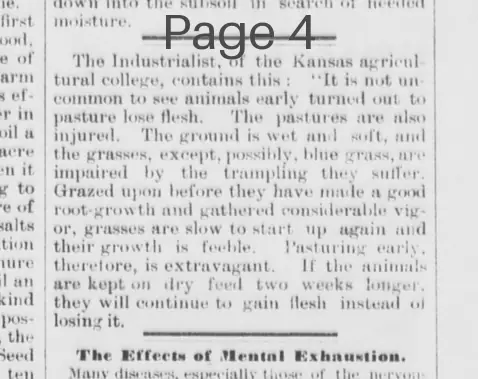
The Industrialist, of the Kansas agricultural college, contains this: "It is not uncommon to see animals early turned out to pasture lose flesh. The pastures are also injured. The ground is wet and soft, and the grasses, except, possibly, blue grass, are impaired by the trampling they suffer. Grazed upon before they have made a good root growth and gathered considerable vigor, grasses are slow to start up again and their growth is feeble. Pasturing early, therefore, is extravagant. If the animals are kept on dry feed two weeks longer they will continue to gain flesh instead of losing it."
What sub-type of article is it?
Agricultural Advice
What keywords are associated?
Early Pasturing
Animal Flesh Loss
Pasture Damage
Blue Grass
Dry Feed
Grass Root Growth
Where did it happen?
Kansas Agricultural College
Story Details
Location
Kansas Agricultural College
Story Details
Animals turned out early to pasture lose flesh while injuring wet, soft ground and grasses like blue grass through trampling; early grazing is extravagant as grasses haven't developed strong roots; keeping animals on dry feed two weeks longer allows them to gain flesh.