Thank you for visiting SNEWPapers!
Sign up free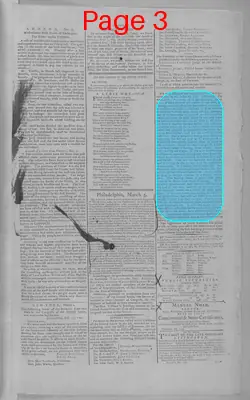
Editorial
March 5, 1791
Gazette Of The United States
New York, New York County, New York
What is this article about?
The editorial argues that the absence of a national government after the Revolutionary War led to massive financial losses from unpaid debts and interest, exceeding 20 million dollars, while higher taxes burdened the country without benefiting creditors. It praises duties under the new constitution for promoting frugality, domestic manufactures, and economic recovery, warning against anarchy that would cost more than decades of work to recover from.
Clipping
OCR Quality
98%
Excellent
Full Text
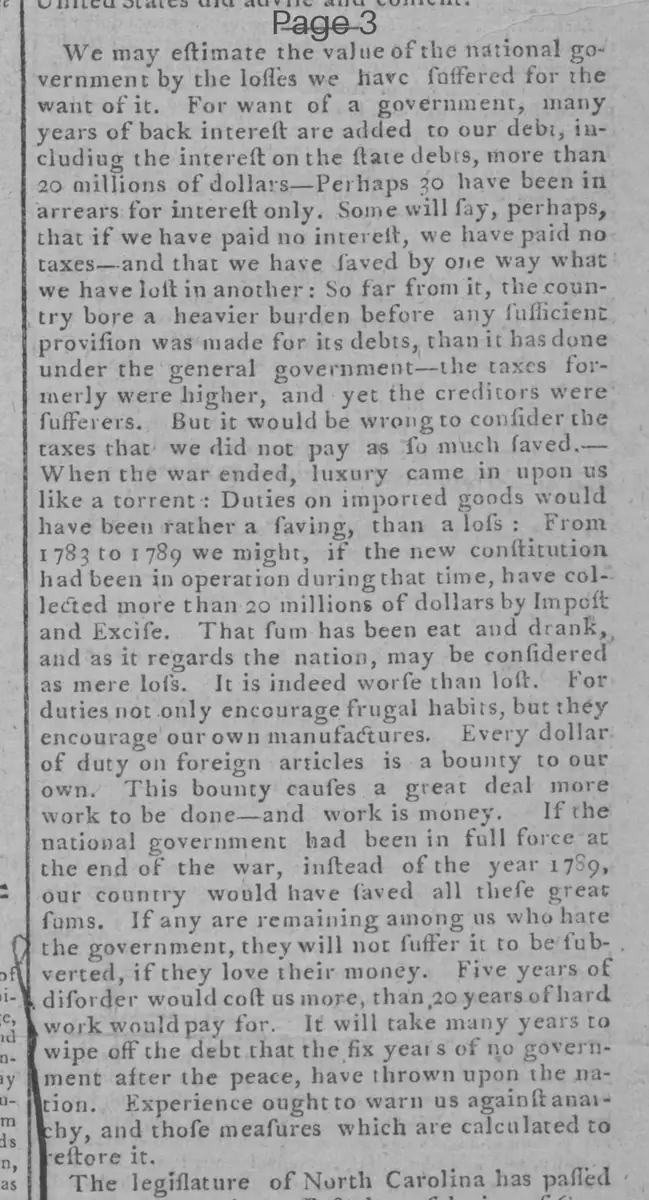
We may estimate the value of the national government by the loss we have suffered for the want of it. For want of a government, many years of back interest are added to our debt, including the interest on the state debts, more than 20 millions of dollars—Perhaps 30 have been in arrears for interest only. Some will say, perhaps, that if we have paid no interest, we have paid no taxes—and that we have saved by one way what we have lost in another: So far from it, the country bore a heavier burden before any sufficient provision was made for its debts, than it has done under the general government—the taxes formerly were higher, and yet the creditors were sufferers. But it would be wrong to consider the taxes that we did not pay as so much saved.—When the war ended, luxury came in upon us like a torrent: Duties on imported goods would have been rather a saving, than a loss: From 1783 to 1789 we might, if the new constitution had been in operation during that time, have collected more than 20 millions of dollars by Impost and Excise. That sum has been eaten and drunk, and as it regards the nation, may be considered as mere loss. It is indeed worse than lost. For duties not only encourage frugal habits, but they encourage our own manufactures. Every dollar of duty on foreign articles is a bounty to our own. This bounty causes a great deal more work to be done—and work is money. If the national government had been in full force at the end of the war, instead of the year 1789, our country would have saved all these great sums. If any are remaining among us who hate the government, they will not suffer it to be subverted, if they love their money. Five years of disorder would cost us more, than 20 years of hard work would pay for. It will take many years to wipe off the debt that the six years of no government after the peace, have thrown upon the nation. Experience ought to warn us against anarchy, and those measures which are calculated to restore it.
What sub-type of article is it?
Economic Policy
Constitutional
What keywords are associated?
National Government
Post War Debt
Back Interest
Impost Duties
Domestic Manufactures
Anarchy Warning
Economic Recovery
What entities or persons were involved?
National Government
Creditors
Editorial Details
Primary Topic
Value Of National Government In Managing Post War Debt And Economy
Stance / Tone
Strongly Supportive Of National Government And Anti Anarchy
Key Figures
National Government
Creditors
Key Arguments
Absence Of Government Added Over 20 Million Dollars In Back Interest To Debts
Pre Constitution Taxes Were Higher Yet Creditors Suffered
Unpaid Duties From 1783 1789 Led To Luxury And Loss Of Over 20 Million Dollars
Duties Promote Frugality And Domestic Manufactures
Every Dollar Of Duty On Imports Is A Bounty To American Industry
Anarchy Would Cost More Than 20 Years Of Hard Work To Recover
Experience Warns Against Measures Restoring Disorder