Thank you for visiting SNEWPapers!
Sign up free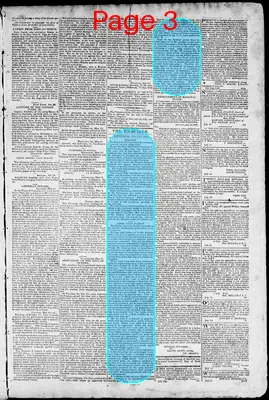
Editorial
July 25, 1809
The Enquirer
Richmond, Henrico County, Virginia
What is this article about?
Editorial from Richmond Enquirer summarizes key European war developments involving France, Austria, Russia, and Britain, then sharply criticizes British Foreign Secretary Canning's disavowal of U.S. envoy David Erskine's agreement to revoke Orders in Council, accusing Britain of perfidy and urging Americans to rally behind their government's embargo policy against Federalist opposition.
Clipping
OCR Quality
98%
Excellent
Full Text
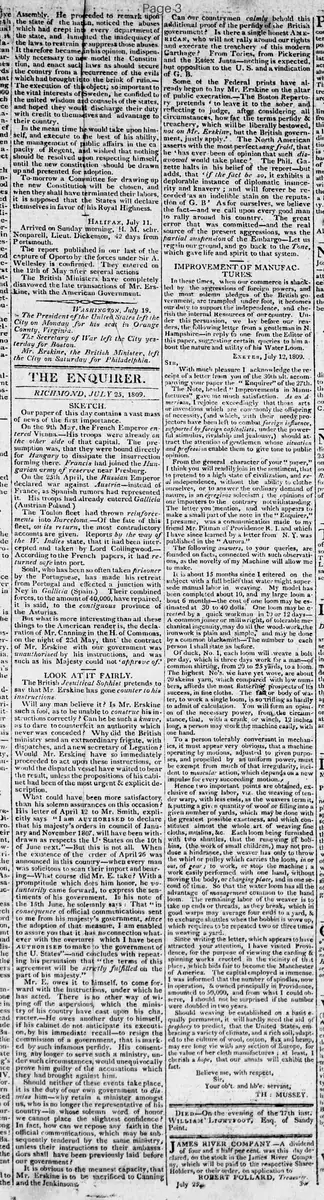
THE ENQUIRER.
RICHMOND, JULY 25, 1809.
SKETCH.
Our paper of this day contains a vast mass of news of the first importance.
On the 9th May, the French Emperor entered Vienna. His troops were already on the other side of that capital. The presumption was, that they were bound directly for Hungary to dissipate the insurrection forming there. Francis had joined the Hungarian army of reserve near Presburg.
On the 25th April, the Russian Emperor declared war against Austria—instead of France, as Spanish rumors had represented it. His troops had already entered Gallicia (Austrian Poland).
The Toulon fleet had thrown reinforcements into Barcelona. Of the fate of this fleet, on its return, the most contradictory accounts are given. Reports by the way of the W. Indies state, that it had been intercepted and taken by Lord Collingwood. According to the French papers, it had returned safe into port.
Soult, who has been so often taken prisoner by the Portuguese, has made his retreat from Portugal and effected a junction with Ney in Gallicia (Spain.) Their combined forces, to the amount of 40,000, have repaired, it is said, to the contiguous province of the Asturias.
But what is more interesting than all these things to the American reader is, the declaration of Mr. Canning in the H. of Commons, on the night of 23d May, that the contract of Mr. Erskine with our government was unauthorised by his instructions, and was such as his Majesty could not 'approve of.'
LOOK AT IT FAIRLY.
The British Jesuitical Sophist pretends to say that Mr. Erskine has gone counter to his instructions.
Will any man believe it? Is Mr. Erskine such a fool, as to be unable to construe his instructions correctly? Can he be such a knave, as to dare to counterfeit an authority which never was conceded? Why did the British ministry send an extraordinary frigate, with dispatches, and a new secretary of Legation? Would Mr. Erskine have so immediately proceeded to act upon these instructions, or would the dispatch vessel have waited to bear the result, unless the propositions of his cabinet had been of the most urgent & explicit description.
What could have been more satisfactory than his solemn assurances on this occasion? His letter of April 12 to Mr. Smith, explicitly says 'I am AUTHORISED to declare that his majesty's orders in council of January and November 1807, will have been withdrawn as respects the U. States on the 10th of June next.' But this is not all. When the existence of the order of April 26 was announced in this country—when every man was solicitous to scan their import and bearing—What course did Mr. E. take? With a promptitude which does him honor, he voluntarily came forward, to express the sentiments of his government. In his note of the 15th June, he solemnly says: That 'in consequence of official communications sent to me from his majesty's government, since the adoption of that measure, I am enabled to assure you that it has no connection whatever with the overtures which I have been AUTHORISED to make to the government of the U. States'—and concludes with repeating his persuasion that 'the terms of this agreement will be strictly fulfilled on the part of his majesty.'
Mr. E. owes it to himself, to come forward with the instructions, under which he has acted. There is no other way of wiping off the aspersions, which the ministry of his country have cast upon his character. He owes another duty to himself, if his cabinet do not anticipate its execution, by his immediate recall—to resign the commission of a government, that is marked by such infamous perfidy. His consenting any longer to serve such a ministry, under such circumstances, would unequivocally prove him guilty of the accusations which they had brought against him.
Should neither of these events take place, it is the duty of our own government to dismiss him—why retain a minister amongst us, who is no longer the representative of his country—in whose solemn word of honor we cannot place the slightest confidence?
In fact, how can we repose any faith in the official communications, which may be subsequently tendered by the same ministry, unless their instructions to their ambassadors shall have been previously laid before our government?
It is obvious to the meanest capacity, that Mr. Erskine is to be sacrificed to Canning and the Jenkinsons.
Can our countrymen calmly behold this additional proof of the perfidy of the British government? Is there a single honest American, who will not rally around our rights and execrate the treachery of this modern Carthage? From Tories, from Pickering and the Essex Junto nothing is expected, but opposition to the U. S. and a vindication of G. B.
Some of the Federal prints have already begun to lay Mr. Erskine on the altar of public execration. The Boston Repository pretends to leave it to the sober and reflecting to judge, after considering all circumstances, how far the terms perfidy & treachery, which will be liberally bestowed, not on Mr. Erskine, but the British government, justly apply? The North American asserts with the most perfect sang froid, that he has ever been of opinion that such disavowal would take place: The Phil. Gazette halts in his belief of the report—but adds, that 'if the fact be so, it exhibits a deplorable instance of diplomatic insincerity and knavery; and will forever be recorded as an indelible stain on the reputation of G. B.' As for ourselves, we believe the fact—and we call upon every good man to rally around his country. The great error that was committed—and the real source of the present aggressions, was the partial suspension of the Embargo—Let us regain our ground, and go back to the tone, which gave life and spirit to that system.
RICHMOND, JULY 25, 1809.
SKETCH.
Our paper of this day contains a vast mass of news of the first importance.
On the 9th May, the French Emperor entered Vienna. His troops were already on the other side of that capital. The presumption was, that they were bound directly for Hungary to dissipate the insurrection forming there. Francis had joined the Hungarian army of reserve near Presburg.
On the 25th April, the Russian Emperor declared war against Austria—instead of France, as Spanish rumors had represented it. His troops had already entered Gallicia (Austrian Poland).
The Toulon fleet had thrown reinforcements into Barcelona. Of the fate of this fleet, on its return, the most contradictory accounts are given. Reports by the way of the W. Indies state, that it had been intercepted and taken by Lord Collingwood. According to the French papers, it had returned safe into port.
Soult, who has been so often taken prisoner by the Portuguese, has made his retreat from Portugal and effected a junction with Ney in Gallicia (Spain.) Their combined forces, to the amount of 40,000, have repaired, it is said, to the contiguous province of the Asturias.
But what is more interesting than all these things to the American reader is, the declaration of Mr. Canning in the H. of Commons, on the night of 23d May, that the contract of Mr. Erskine with our government was unauthorised by his instructions, and was such as his Majesty could not 'approve of.'
LOOK AT IT FAIRLY.
The British Jesuitical Sophist pretends to say that Mr. Erskine has gone counter to his instructions.
Will any man believe it? Is Mr. Erskine such a fool, as to be unable to construe his instructions correctly? Can he be such a knave, as to dare to counterfeit an authority which never was conceded? Why did the British ministry send an extraordinary frigate, with dispatches, and a new secretary of Legation? Would Mr. Erskine have so immediately proceeded to act upon these instructions, or would the dispatch vessel have waited to bear the result, unless the propositions of his cabinet had been of the most urgent & explicit description.
What could have been more satisfactory than his solemn assurances on this occasion? His letter of April 12 to Mr. Smith, explicitly says 'I am AUTHORISED to declare that his majesty's orders in council of January and November 1807, will have been withdrawn as respects the U. States on the 10th of June next.' But this is not all. When the existence of the order of April 26 was announced in this country—when every man was solicitous to scan their import and bearing—What course did Mr. E. take? With a promptitude which does him honor, he voluntarily came forward, to express the sentiments of his government. In his note of the 15th June, he solemnly says: That 'in consequence of official communications sent to me from his majesty's government, since the adoption of that measure, I am enabled to assure you that it has no connection whatever with the overtures which I have been AUTHORISED to make to the government of the U. States'—and concludes with repeating his persuasion that 'the terms of this agreement will be strictly fulfilled on the part of his majesty.'
Mr. E. owes it to himself, to come forward with the instructions, under which he has acted. There is no other way of wiping off the aspersions, which the ministry of his country have cast upon his character. He owes another duty to himself, if his cabinet do not anticipate its execution, by his immediate recall—to resign the commission of a government, that is marked by such infamous perfidy. His consenting any longer to serve such a ministry, under such circumstances, would unequivocally prove him guilty of the accusations which they had brought against him.
Should neither of these events take place, it is the duty of our own government to dismiss him—why retain a minister amongst us, who is no longer the representative of his country—in whose solemn word of honor we cannot place the slightest confidence?
In fact, how can we repose any faith in the official communications, which may be subsequently tendered by the same ministry, unless their instructions to their ambassadors shall have been previously laid before our government?
It is obvious to the meanest capacity, that Mr. Erskine is to be sacrificed to Canning and the Jenkinsons.
Can our countrymen calmly behold this additional proof of the perfidy of the British government? Is there a single honest American, who will not rally around our rights and execrate the treachery of this modern Carthage? From Tories, from Pickering and the Essex Junto nothing is expected, but opposition to the U. S. and a vindication of G. B.
Some of the Federal prints have already begun to lay Mr. Erskine on the altar of public execration. The Boston Repository pretends to leave it to the sober and reflecting to judge, after considering all circumstances, how far the terms perfidy & treachery, which will be liberally bestowed, not on Mr. Erskine, but the British government, justly apply? The North American asserts with the most perfect sang froid, that he has ever been of opinion that such disavowal would take place: The Phil. Gazette halts in his belief of the report—but adds, that 'if the fact be so, it exhibits a deplorable instance of diplomatic insincerity and knavery; and will forever be recorded as an indelible stain on the reputation of G. B.' As for ourselves, we believe the fact—and we call upon every good man to rally around his country. The great error that was committed—and the real source of the present aggressions, was the partial suspension of the Embargo—Let us regain our ground, and go back to the tone, which gave life and spirit to that system.
What sub-type of article is it?
Foreign Affairs
Partisan Politics
What keywords are associated?
Erskine Agreement
British Perfidy
Canning Disavowal
Orders In Council
Us Embargo
European War News
Federalist Opposition
What entities or persons were involved?
Mr. Canning
Mr. Erskine
British Ministry
Mr. Smith
Soult
Ney
French Emperor
Russian Emperor
Francis
Tories
Pickering
Essex Junto
Editorial Details
Primary Topic
British Disavowal Of Erskine Agreement And Call To Support Us Embargo
Stance / Tone
Strongly Anti British Perfidy, Pro Us Government Policy
Key Figures
Mr. Canning
Mr. Erskine
British Ministry
Mr. Smith
Soult
Ney
French Emperor
Russian Emperor
Francis
Tories
Pickering
Essex Junto
Key Arguments
Erskine's Actions Were Authorized By Explicit British Instructions
Canning's Disavowal Is Jesuitical Sophistry And Perfidy
Erskine Should Publish Instructions Or Resign
Us Government Should Dismiss Erskine If He Does Not
British Government Cannot Be Trusted In Future Negotiations
Americans Must Rally Against British Treachery And Federalist Opposition
Partial Suspension Of Embargo Was A Mistake; Reinstate Full Embargo